
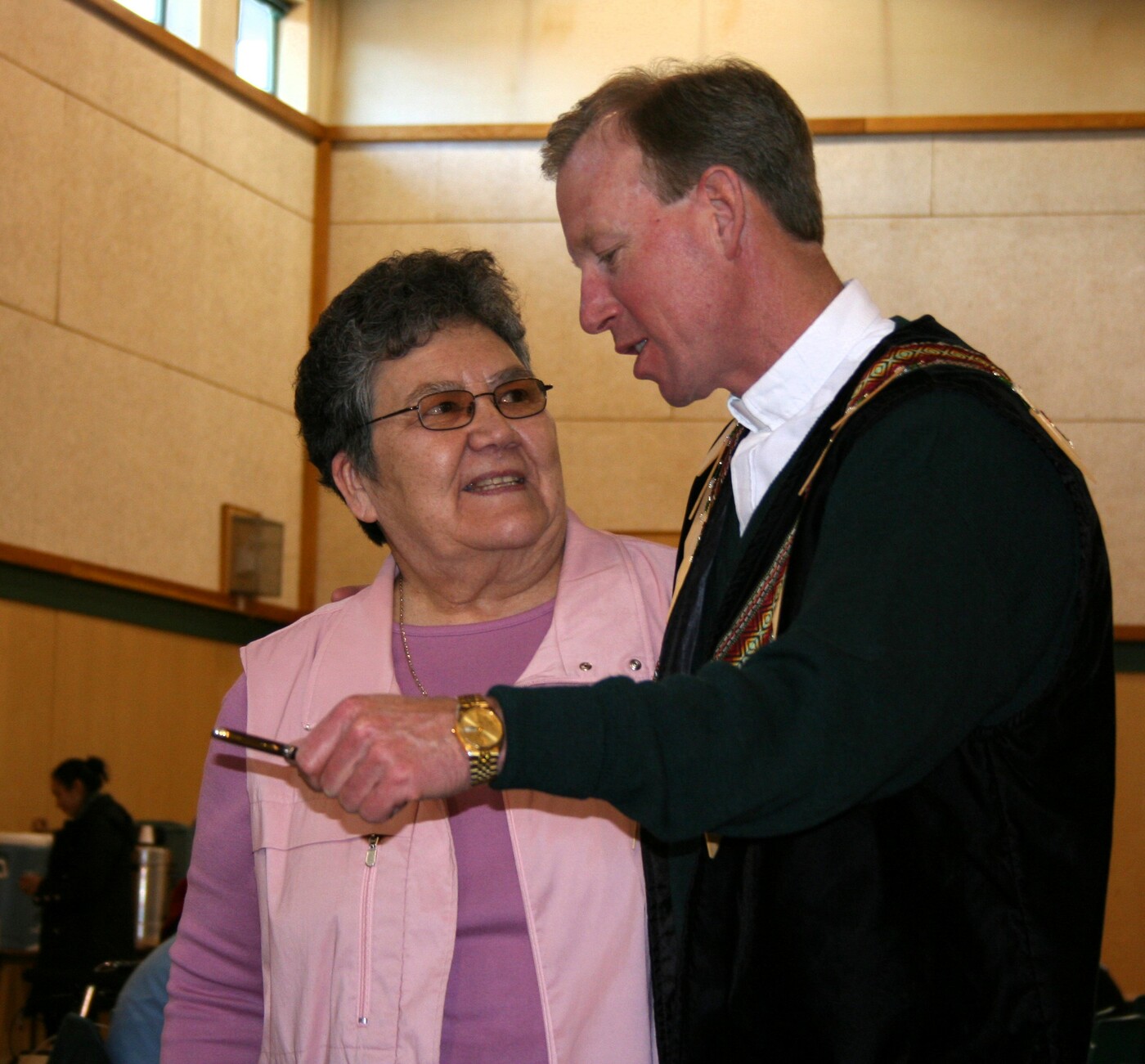
Archbishop Roussin offered first residential schools apology from Archdiocese of Vancouver: a century of Indigenous and Church relationship and reconciliation
A continuing series looking at progress made in healing and reconciliation initiatives between the Archdiocese of Vancouver and Canada’s Indigenous peoples since their first encounter. This week, the Archdiocesan Synod’s recommendations on First Nations, and Archbishop Raymond Roussin.
Part 1. ‘Dialogue and sharing’: a century of Indigenous and Church relationship and reconciliation
In November 1998, Archbisop Adam Exner joined B.C. faith leaders in signing a statement supporting in principle the Nisga’a Treaty, giving the Nisga’a control over 2,000 square kilometers of land, self-government, and $190 million.
Archbishop Exner said he didn’t necessarily endorse all aspects of the agreement but he supported it in the interest of justice and because it was negotiated by all parties.
In 2001 the federal government started negotiations with the Christian churches on a compensation plan for settlements with former students claiming abuse. The government ultimately agreed to pay 70 per cent of the settlement costs.
The complexity of the issue of jurisdiction, responsibility, and vicarious liability was evident in two Supreme Court of Canada decisions in 2005. The court ruled the United Church of Canada was 25 per cent liable and the government of Canada 75 per cent liable for general damages in a B.C. residential school case involving sexual abuse.
In a separate ruling, the court ruled the Oblates of Mary Immaculate in B.C. were not vicariously liable for sexual assaults an employee carried out at another residential school because the employee in question had not been hired to supervise children.
In November 2005, an offer by 41 Catholic religious orders and dioceses was included in an agreement-in-principle to settle Indian residential schools abuse claims.
Described as an “historic milestone” by Assembly of First Nations National Chief Phil Fontaine, the $2-billion compensation package would give $10,000 to each of 86,000 residential school survivors, plus $3,000 for each year spent at a school. An advance payment of $8,000 would go to survivors 65 and over. The average age of former students was 60. The 41 entities would contribute $29 million in cash and real property and $25 million in “in-kind” contributions for programs such as Returning to Spirit, programs on self-esteem, programs for healthy mums and healthy babies, and other works the groups do in Aboriginal communities. The agreement settled the liability of the 41 groups in various class-action suits.
Sacred encounter: deacon-surgeon sees his call to service more deeply after operating on priest
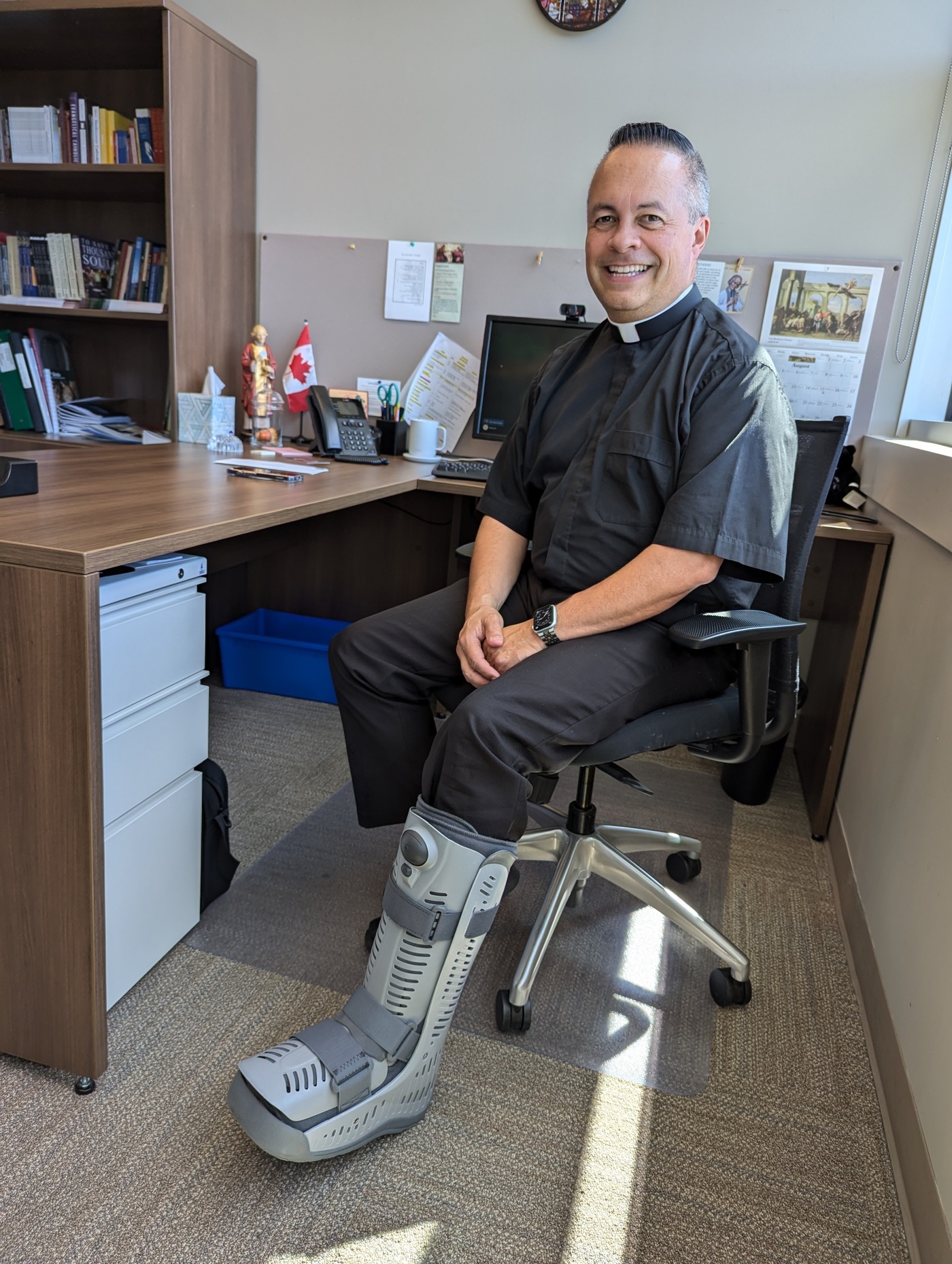
In the few short months since his ordination to the permanent diaconate on June 1, Deacon Tim Kostamo has done it all – weddings, funerals, and everything in between. But he recently went far beyond the deacon’s call of duty when the orthopedic surgeon found himself performing surgery on Our Lady of the Assumption pastor Father James Hughes after the Port Coquitlam priest ruptured his Achilles tendon.
Father Hughes recounted how the injury happened, with his getting a bit carried away during a basketball game with some young parishioners.
“In my pride and hubris, I decided to show these students what Michael Jordan used to look like,” Father Hughes told The B.C. Catholic.
He jumped, and when his feet hit the ground, he felt a tear and knew something was wrong.
As fate would have it, his doctor recommended Dr. Tim Kostamo, of Christ the Redeemer in West Vancouver and a recent addition to the growing ranks of Vancouver’s permanent deacons.
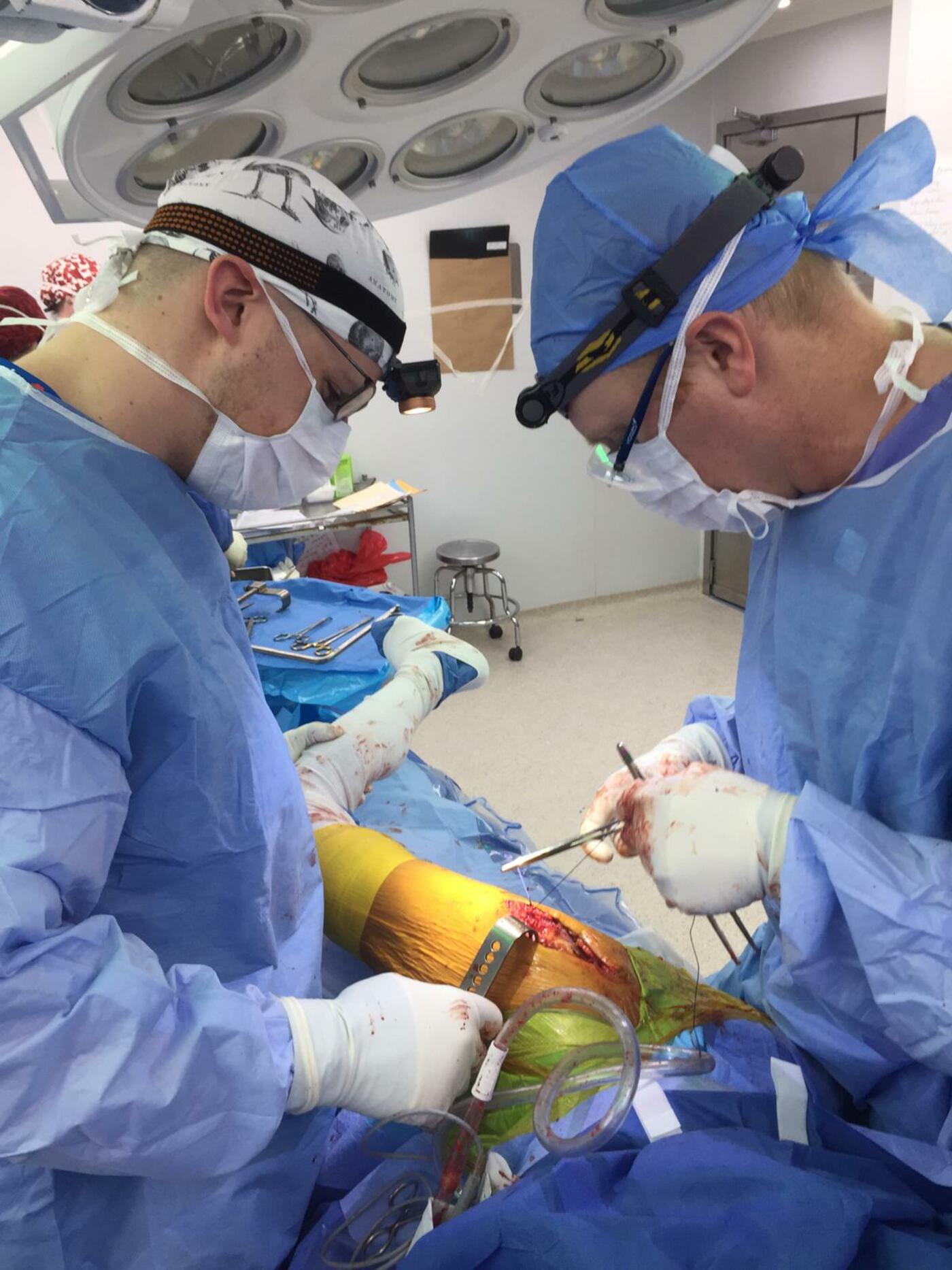
Father Hughes remembered joking with Deacon Kostamo just before the operation, warning him, “You’d better do a good job, because if you’re ever assigned [as a deacon] to my parish, I’ll remember!”
Thankfully, there will be no need for that. The surgery went well, and Father Hughes is recovering apace. At the time of writing, he is walking without assistance.
For his part, Deacon Kostamo, who has 23 years’ experience as a surgeon, described the experience of operating on a priest, or any of his patients since his ordination, as more profound now.
“It’s a completely different spiritual avenue. I can feel it in my practice – like how I listen to people,” he said. “I can feel it will be a big part of my life.”
While his vocation has given him a deeper sense of purpose within his profession, something else happened during Father Hughes’ surgery that emphasized the deacon’s role as a helper of priests.
“I was cradling him” on the operating table, said Deacon Kostamo.
Because the Achilles rupture surgery is performed with the patient face-down, at some point Father Hughes needed to be rolled onto his back again. Deacon Kostamo found himself cradling an unconscious Father Hughes like a small child.
Holding the priest in his arms brought home for him the essence of his vocation, as well as the need to care for priests. “It hammered it home for me,” he said. “What struck me was I felt the care more deeply.”
Although he’s still freshly ordained, his experience with Father Hughes in the operating room helped him feel more strongly the deacon’s vocation of service.
‘Our civic participation, particularly on election day, is essential’: Archbishop Miller
Archbishop J. Michael Miller released the following letter in advance of the B.C. provincial election, Saturday, Oct. 19, 2024.
October 10, 2024
Dear Brothers and Sisters in Christ,
A provincial election is a rare and important opportunity for British Columbians to directly influence the direction of government. It is a time to prayerfully discern how to exercise our civic responsibilities and put our Christian values into action in ways that aren’t possible in the years between elections.
It is disappointing that many Catholics have chosen to stay home on election day in recent years. Polls show that we vote less than our secular counterparts, giving them a greater influence than we do over the government responsible for more than 5 million people who live in this province.
On Saturday, Oct. 19, I urge you to take the important step of positively influencing our society by going to vote. There are many critical issues where our informed Catholic conscience must be heard: religious liberty, conscience rights, Catholic and public education, the economy, health care, the drug overdose crisis, and certainly life issues, including the rise in euthanasia – misleadingly called MAiD – and the more than 13,000 abortions that occur every year in our province.
No party perfectly aligns with the needs of British Columbia, and only you can decide which candidate is best suited to bring your values to the legislature, whether as an independent or a member of a political party. But our civic participation, particularly on election day, is essential.
We are living in a time of immense social change, and Pope Francis has even raised his concern in Fratelli Tutti that the very notion of democracy as “government by the people” may be in jeopardy. If so, none of us knows what impact our vote might have on society in the years to come.
I urge all Catholics and people of goodwill to bring Christ’s compassion for humanity to those we live with and contribute to the common good by making a responsible decision at the ballot box.
With the assurance of my prayers, I remain
Sincerely yours in Christ,
+ J. Michael Miller, CSB
Archbishop of Vancouver
Your voice matters! Join the conversation by submitting a Letter to the Editor here.
Religious order learns humanity from the mentally ill
People with mental health problems have much to teach, especially in humanity, a much-needed virtue in our individualistic world, say members of a religious congregation dedicated to caring for people with mental illnesses, intellectual disabilities, and other special needs.
World Mental Health Day is marked on Oct. 10, 2024, with the theme: “Mental Health at Work.” In an interview with Vatican News, Sister Idília Carneiro, Superior General of the Sisters Hospitallers, emphasized that the first step is to welcome those who have mental illness “in their reality and also their families when the situation is more comprehensive.”
Illness, she noted, does not entirely define a person, it only affects certain dimensions, and each of these people possess great human richness and sensitivity.
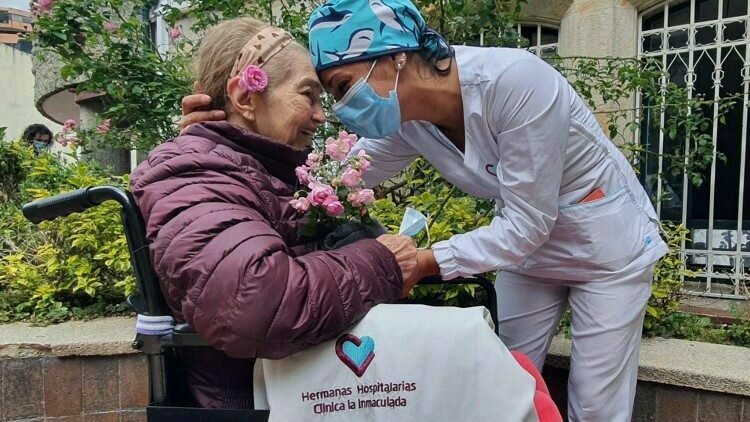
The Sisters Hospitallers experience that sensitivity and teach them to be more empathetic and “more attentive to one another, which can be a very enriching message for the society in which we live and which is increasingly individualistic. They help us to become more human, to live life with a deep appreciation for the smallest moments each day brings,” she said.
October 10: World Mental Health Day
This year’s theme “Mental Health at Work” reflects a concern, said Sister Carneiro: that work, with its stress and demands, can lead to personal disintegration, causing even more stress. This, in turn, can make a person’s life more fragile.
According to the nun, the greatest challenge is finding a balance in work, “which also carries the dimensions of personal fulfillment, meaning, and contributing to a greater good.” Balancing work with everything a human being can offer, from their knowledge to their very being, is key.
“This, I believe, is the greatest challenge and one that contributes to mental health. Life’s rhythm, beyond just work, should help us feel human, not the other way around. It’s not just about work and mental health, but about how everything we experience helps us cultivate integral well-being.”
What the congregation does
In hospitals, the nuns are helping people with depression, including offering outpatient treatment for more resistant cases, supporting young people with personality disorders, including dependencies to the internet and other media. The congregation is also making progress in the area of brain injuries and damage, including tumour-related neurological issues, along with rehabilitation, which is another important area. They continue to grow in all mental health fields, including treatments for anxiety and cases of suicide attempts, working to help young people and older adults feel that their lives have meaning.
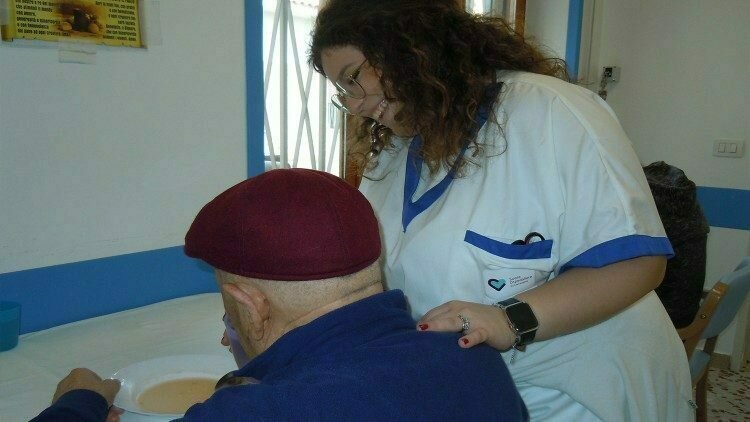
They are also advancing in palliative care, helping and accompanying people and their families to find peace during the final stages of life, with a sense of hope.
Education, accompaniment, advocacy ‘crucial for mental health ministry’: World Mental Health Day
The education of priests and lay people, accompaniment in parishes for individuals with mental health challenges, and advocacy for institutional and societal support for those needing professional psychological or psychiatric care are the three essential components of mental health ministry in the Church, says a bishop who is personally involved in the ministry.
Speaking with Vatican News ahead of World Mental Health Day on Oct. 10, Bishop John Dolan of Phoenix underscored the importance of eliminating the stigma surrounding mental health issues, saying: “There is no shame in having mental health problems. It is like someone with a broken arm.”
Education
Bishop Dolan noted that a crucial component of mental health ministry is education, stressing the need for both the clergy and laity to be well-informed about mental health services.
“Mental health ministry focuses on educating the people in the pews… but also training priests, religious, and deacons on the value of mental health services, including counselling, psychology, psychiatry, and neurology,” he said.
The bishop noted that this education empowers clergy to speak about these issues and refer parishioners to professional help when needed.
Accompaniment
Another critical aspect of the ministry is accompaniment, which involves creating spaces where people struggling with mental health issues, as well as their families, can come together to share their experiences.
“We have accompaniment, which allows people to gather, share their struggles with mental health, or maybe allow family members whose loved ones are living with mental health issues to navigate life at home,” he said.
The bishop also highlighted the role of spiritual direction as a form of mental health support. “We do not diagnose, prescribe, or treat. We cannot do that for legal reasons, and it is not within our scope,” he noted. “We can offer spiritual guidance and assistance.”
Advocacy
Bishop Dolan emphasized the need for advocacy in promoting mental health services, speaking about encouraging government support for mental health professionals and increasing public access to care.
“We try to encourage the government to ensure proper funding to educate students of psychology, psychiatry, and neuroscience,” he said, pointing out that the lack of sufficient counsellors and psychologists is a global issue. “We need to advocate for that.”
Bishop Dolan shared the positive impact of mental health ministry on the lives of those involved.
“Thousands of people have responded beautifully to this mental health ministry,” he said.
The Association of Catholic Mental Health Ministers
Bishop Dolan highlighted the crucial work of the Association of Catholic Mental Health Ministers (CMHM), a lay organization that significantly supports the mental health ministry.
The CMHM describes itself as a “lay Association of the Christian Faithful whose members are called to be a healing presence in the lives of people with mental illness.”
Keep perfume out of churches along with balloons
Thank you for publishing the Sept. 2 article “Balloons over sacraments?” concerning safety for parishioners.
The article raises an issue that is not well understood or attended to in many of our churches. I would like to add perfumed incense and perfumes in general as products that should not be allowed in our churches.
Many places of business, professional groups, and others have banned such products for 40 years or more. I continue to suffer from the effects of exposure to a highly perfumed incense from more than six months ago. Fortunately, the church responded positively to my expressed concern. However, my personal health continues to be affected.
Our churches should always be safe havens for parishioners. This requires knowledge, planning, commitment, education, and monitoring.
M. Bara
Vancouver
Your voice matters! Join the conversation by submitting a Letter to the Editor here.
Never tell the vinyl plank party ‘it’s impossible’
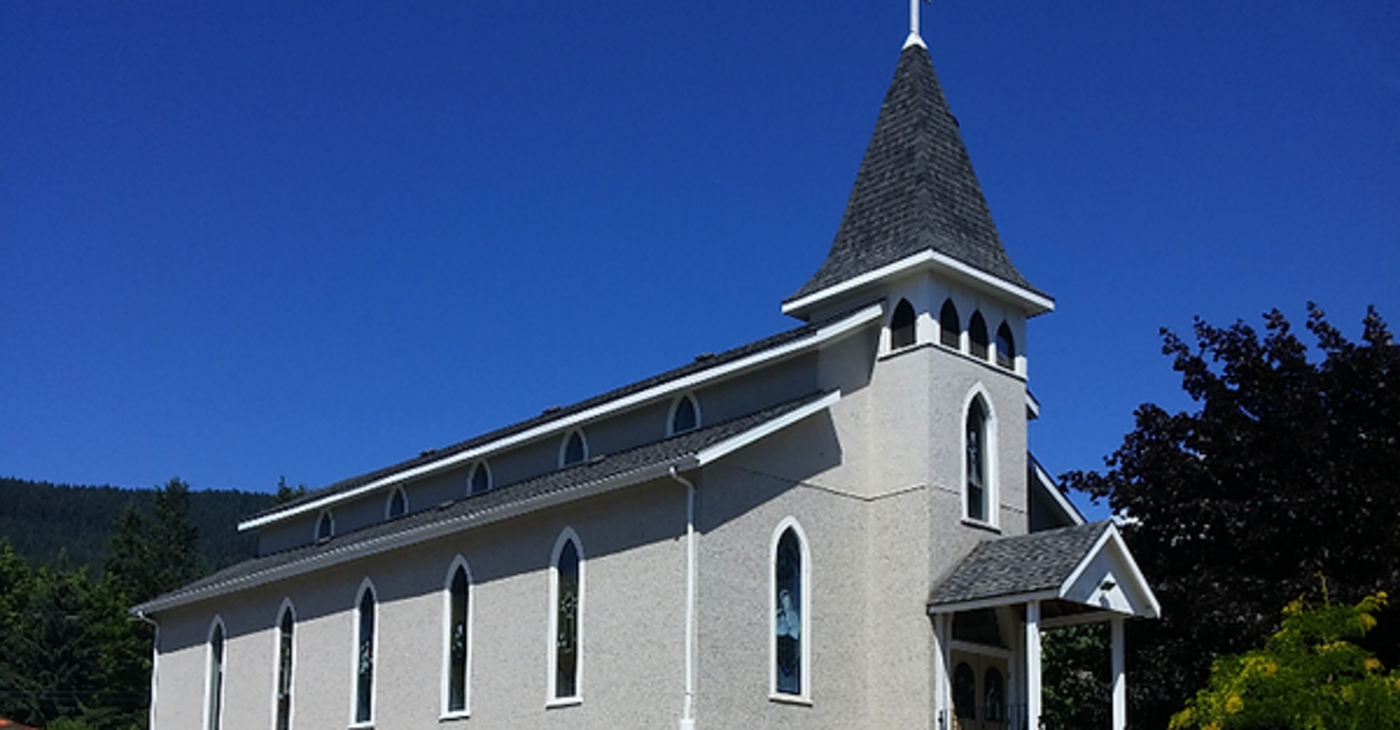
Sacred Heart Church in Lumby is set to celebrate its 100-year anniversary on Oct. 15, but in preparing for the momentous event, Father Thomas Arackal found himself in a bind.
He had hoped to complete an enormous renovation of the old church before Bishop Joseph Nguyen arrived to celebrate the centennial Mass. Father Arackal, however, had very little money. And with less than 30 days to finish the massive project, he hadn’t yet found the funds, nor the team to start the work.
Then, a few weeks ago, a Kamloops parishioner, Albert Leduc, started making phone calls to see if anyone was available to install vinyl plank flooring for Father Arackal on a tight schedule, and a tighter budget.
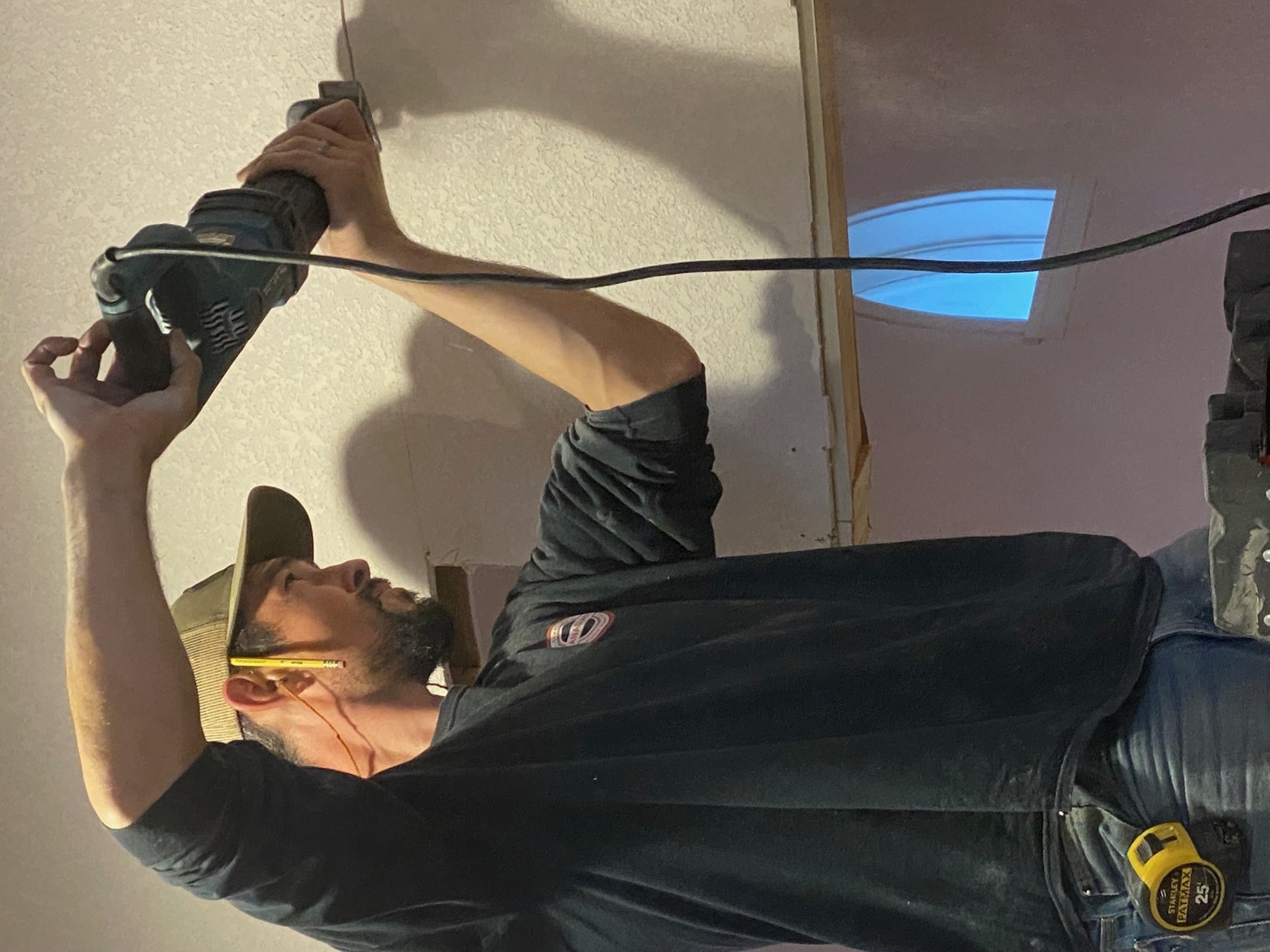
Immediately a group of Catholic men in Salmon Arm went into action.
The pitch was a hit – but hopes of a quick and easy work bee were dashed to pieces when one of the Salmon Arm contractors returned home from assessing the project at Sacred Heart. “It’s impossible – there’s simply too much work to do.” It seemed clear that the project would take hundreds of labour hours to complete.
So, Catholic contractors from Salmon Arm consulted each other over a three-day brainstorm and finally arrived at a plan. They would bring every professional contractor and journeyman to the church to complete the most challenging parts of the renovation. Then, the following day, they would manage 26 workers in a streamlined effort to start 2,000+ square feet of vinyl plank and tile flooring, along with a long list of miscellaneous tasks.
The Catholic women in Lumby fed the work crew on both days with pizza, subs, pies, and non-stop praise.
The last plank of vinyl was installed in the final hour, to the sound of an overjoyed Father Arackal. In total, 30+ workers contributed to the construction, including some from Vernon and half a dozen kitchen and support staff from Lumby.
As the 100-year anniversary celebration approaches quickly, contractors from Salmon Arm continue to wrap up the technical assignments – a custom wood and glass rail system in the choir loft, an oak valence mounted nearly 30 feet in the air, miles of trim, etc.
The anniversary Mass will take place on Sunday, Oct. 15, at 4 p.m.
Your voice matters! Join the conversation by submitting a Letter to the Editor here.
Archbishop Miller calls for ‘robust limitations’ on child access to explicit online material
Vancouver Archbishop J. Michael Miller has sent a letter to Members of Parliament within the Archdiocese of Vancouver, urging them to support Bill S-210, which would restrict young people’s access to sexually explicit material online.
Toronto Archbishop Francis Leo has written a similar letter to MPs in his jurisdiction.
According to the Parliament of Canada website, the purpose of Bill S-210 is “to protect public health and public safety and, in particular, to:
- protect the mental health of young persons by restricting their access to sexually explicit material;
- protect Canadians — in particular, young persons and women — from the harmful effects of the exposure of young persons to sexually explicit material, including demeaning material and material depicting sexual violence; and
- deter organizations that make sexually explicit material available on the Internet for commercial purposes from allowing young persons to access that material.”
Catholics wishing to respectfully express their views on this matter are welcome to contact their local MP. Contact information can be found at ourcommons.ca/members/en.
September 12, 2024
An Open Letter to All Federal Members of Parliament
in the Archdiocese of Vancouver
On behalf of the Archdiocese of Vancouver, I am writing to express concern regarding the unrestricted access to online pornography in Canada, particularly in relation to the active Bill S-210, An Act to Restrict Young Persons’ Online Access to Sexually Explicit Material. The Archdiocese of Vancouver, with close to 400,000 Catholics and over 16,000 students in our 52 schools, is requesting your support to pass Bill S-210 for the safety of all individuals, and especially that of the most vulnerable: our children and youth.
Teachers and administrators in Canadian schools, as well as all levels of government, must support parents in their responsibility of providing care, health and safety for their children. Parents need the collaboration of government in demanding that internet companies, such as Pornhub, put in place robust limitations so that children with cell phones and other devices cannot unwittingly be exposed to pornography.
Bill S-210 seeks to prevent sexually explicit material from being available to underage youth on the internet. It would require internet service providers and sites reliably to verify the age of the potential users. It would restrict children and youth from premature access to adult content on the internet.
Research shows that there are serious long-term detrimental effects on children’s psychological development when viewing pornography, including the increased risk of sexual exploitation and violence. Canada would do well to follow other countries, such as Australia and the UK, that have already taken steps to prioritize protecting underage youth from exposure to pornography over the interests of the online industry, which must be held accountable for allowing underage youth to access adult sites.
The healing power of genuine apology
An apology has great power to heal a wrong suffered.
I witnessed an apology by a Catholic deacon (having no involvement with the case) offered to a Baptist woman who alleged abuse by a pastor in her denomination. She broke down in tears saying how meaningful it was to see a man wearing clerical garb providing an expression of compassion and regret as to how a fellow cleric had acted towards her.
If apologies are so helpful, why then are they sometimes so difficult to obtain in cases involving allegations of sexual abuse within faith communities? How is pastoral care to be offered when Church leaders are told by insurers not to speak with those alleging abuse?
To explore possible answers to such questions, I spoke with Elizabeth Grace, who brought a wealth of experience, a laser-focused legal mind, and a compassionate heart to our discussion.
Grace, a partner at Lerner’s LLP, a law firm based in Toronto, has 30 years’ experience in sexual abuse and harassment claims. She has represented plaintiffs and defendants in cases involving such organizations as the Anglican, United, Presbyterian, and Roman Catholic churches, as well as many other non-profit organizations.
She has also conducted and been involved as counsel in investigations. Although she primarily practices in Ontario, she also has experience with cases in Saskatchewan, Manitoba, and British Columbia.
We discussed apology laws, such as the Apology Act, 2009 of Ontario, that make it possible for someone to express sympathy or regret without having their words used as an admission of fault or liability in civil cases.
Despite the existence of such recent laws enacted specifically to encourage apologies, Grace finds enormous reluctance by lawyers and particularly insurers to offer up apologies outside of the mediation context (where conversations are ‘without prejudice,’ that is, that any statements made during the mediation would not be put before a court as an admission of guilt or liability). There remains a concern that somehow the apology will be used against the person or institution offering it.
Based on her experience representing both sides of cases, she is “a big believer in offering opportunities to meet with the other side and to hear and to receive an apology, often without lawyers involved.” Apologies, she finds, are beneficial both to plaintiffs and defendants: plaintiffs can find them healing, and defendants find that they “soften up the plaintiff a little bit [towards them], but appropriately so.”
“It has to be a genuine apology,” Grace cautions, “so, the ‘I’m sorry you feel that way’ doesn’t cut it.” She finds that some apologies are “grossly inadequate and the good of the apology is almost immediately erased.”
‘Healing begins when we listen attentively to one another’
Archbishop J. Michael Miller released the following letter to mark National Truth and Reconciliation Day, Sept. 30, 2024.
September 30, 2024
Dear Brothers and Sisters in Christ,
As we observe National Truth and Reconciliation Day, let us reflect on this time of remembrance and renew our commitment to walking together in solidarity with Indigenous Peoples.
Reconciliation must always be rooted in relationships. Healing begins when we listen attentively to one another, so that we can understand and share in the joys and sorrows that have shaped our lives. As Catholics, we are called to participate in this work of reconciliation, grounded in the love of Christ who reconciled humanity to himself.
Confronting the painful realities of our shared past poses a challenge. True healing requires us to open our hearts to the experiences of Indigenous Peoples, to honour their stories, and to acknowledge the lasting and tragic legacy of residential schools. All this demands that we act today in concrete ways to heal broken relationships.
Reconciliation is more than words or formal acknowledgments. It’s about being present with those who continue to bear a burden from the past. Whether it be through prayer, participation in community events, or working for justice, let us stand alongside our Indigenous brothers and sisters in their journey. In these ways, we can continue the healing ministry of Jesus in our local parishes and Archdiocese.
May the Creator bless our efforts towards healing and reconciliation, and give us the strength to continue this path with hope!
With my blessing and the assurance of my prayers for you and your families, I remain
Sincerely yours in Christ,
+ J. Michael Miller, CSB
Archbishop of Vancouver
Your voice matters! Join the conversation by submitting a Letter to the Editor here.