
Celebrating 125 years of ‘The Marthas’
For all of my life, the Sisters of St. Martha have been a comforting presence.
In the small town of Antigonish, Nova Scotia, the Motherhouse, known as Bethany, was a quiet, constant beacon on a hill overlooking the harbour, just on the outskirts of town. The large, brick building was a favourite place to meet a Sister for tea in one of the visiting parlours. The austere look of the building from the outside was no match for the kind-hearted, jovial and welcoming Sisters on the inside.
The St. Theresa Garden, just behind the convent, was another special spot where a Sister or two could be found walking the trail, often with rosary in hand. One of the first activities in spring, when our kids were younger, was to take them up to the garden and search the pond for frogs. We could never leave before making a visit to the statue of Our Lady of Fatima or walking the outdoor Stations of the Cross.
The Marthas, as they are affectionately known locally, founded the regional hospital, other community hospitals, a nursing school, the largest nursing home in our town, the local radio station, and led many other educational and community-based initiatives. Their lives of service, modelled after the New Testament story of St. Martha serving Christ himself, not only had a profound impact on my own faith story but on the faith stories of so many others far and wide.
The Sisters have been celebrating their 125th anniversary this past year, having arrived at the Antigonish train station in July 1900. The small band of women, dressed in those days in full black habits complete with veils, had been invited by the local bishop and the rector of St. Francis Xavier University to provide housekeeping and food services for the all-male student body at the school. The Sisters, several of whom were originally from the Antigonish Diocese, had left their convent home with the Sisters of Charity in Halifax, to begin a new order and certainly a new adventure.
Within six years of their arrival, the townspeople asked the Sisters to open a hospital, which led to a long and admirable legacy of service not only to the world of education and nursing but also to medicine in general. My oldest sister is a graduate of the St. Martha School of Nursing, which has since closed but graduated hundreds of nurses over several decades. The Sisters also helped staff the School of Nursing at St. Francis Xavier University, from which two more of my sisters graduated.
The Sisters were part of so many aspects of life in rural communities in our diocese that their contribution is impossible to measure.
Stoned, left for dead, and walking back in
Persecution, in the Acts of the Apostles, is never the end of the story. It is a doorway to the next city, the next hearing of the word. Driven from Pisidian Antioch, Paul and Barnabas simply moved on to Iconium, where they spoke so persuasively that a great number of both Jews and Greeks came to believe.
Opposition arose there too, but St. John Chrysostom observes that they had been attacked, not yet driven out — and so they stayed on “for a considerable period, speaking out boldly for the Lord, who confirmed the word about his grace.” Their boldness flowed from the certainty that the Gospel truly is the word of God’s grace, sustaining their preaching from within.
It is worth pausing on why people resist the Gospel at all. Beneath many of the intellectual objections raised against the Church lies something quieter: an unwillingness to let grace touch one’s life. It is not uncommon that once a person makes a sincere and complete confession, the supposed difficulties with the faith dissolve like smoke, because those difficulties were serving chiefly to conceal a moral struggle rather than a doctrinal one. Archbishop Fulton Sheen, soon to be beatified, spoke often from his own experience of exactly this pattern.
At Lystra, the story takes an unexpected turn. Paul heals a man crippled from birth, and the crowd declares the two missionaries gods, come down in human form. The scene deliberately echoes an earlier healing, in chapter 3, when Peter cured a man crippled from birth at the Temple gate.
St. Bede draws out the parallel: “Just as the lame man whom Peter and John cured at the door of the Temple figured the salvation of the Jews, so too this sick man figured the salvation of the Gentiles, who were for a long time remote from the religion of the Law and the Temple.”
Since Lystra lay in pagan territory, the healing there prefigures salvation extended to the nations, just as the Temple healing had prefigured salvation for Israel. Luke also notes that Paul had discerned this man’s faith beforehand — the physical healing follows upon a faith already awakened in the heart.
Yet the crowd errs immediately, turning worship toward the two men. St. John Chrysostom observes that just as the miracle dismantles idolatry at the front door, the devil tries to slip it back in through the back — this time aimed at Paul and Barnabas themselves.
The missionaries tear their garments in protest. Where Paul had earlier addressed a Jewish audience through salvation history, here he turns to the testimony of creation itself (natural theology): one Creator gives “rains from heaven and fruitful seasons, satisfying your hearts with food and gladness.”
Local theatres answer the question: what is worth doing?
When the great G. K. Chesterton paradoxically observed that if a thing is worth doing, it is worth doing badly, he may also have unintentionally prompted people to ask whether, if a thing is not worth doing, it is worth doing well. Certainly, this is my reaction to two local theatre productions.
The Arts Club, true to its mission of bringing contemporary theatre to Vancouver, has mounted a production of The Play That Goes Wrong.
The central idea behind this play is that it shows a rather inept theatrical group attempting to mount a murder mystery. Unfortunately, their efforts are hampered by a multitude of production difficulties, including doors that won’t open, set pieces which collapse in the course of the action, and props that get mislaid, and so on.
Now we have all witnessed moments in a theatre production when something has gone amiss – the result is usually comical, and performers and audience enjoy a moment of laughter. For me, however, the problem with The Play That Goes Wrong is that all the mishaps are scripted and contrived, so that I personally found the whole thing to be nothing more than the tedious repetition of the same joke.
However, let me say at once that the opening night audience laughed uproariously throughout the evening. More importantly, the Arts Club company has certainly given the play superb production values. Supported by an expert stage crew, the cast throw themselves (often quite literally) into the mishaps, pratfalls, and contortions that the script requires – often at apparent risk of life and limb.
As a production, it is every bit as good as that which I attended in London’s West End some years ago. Although even then I thought the play not worth doing. Still, as one has come to expect, the Arts Club has certainly done it well. But don’t take my word for it. Go and see for yourself. I am sure attendees, like those on opening night, will love it!
In a similar vein, Bard on the Beach is presenting, on its main stage, The Merry Wives of Windsor.
Most would agree that Shakespeare’s attempt to bring back his great comic creation, Falstaff, is a weak effort.
The Falstaff in this play is a faint shadow of the wily, self-deprecating, astute and richly comic character of the two parts of Henry IV.
Instead, Shakespeare made him the butt of a farcical and awkward plot as he attempts to seduce two married women. Faced with the weakness of the original play, director Rebecca Northan has chosen to lend the production a series of inventions. Set, in timely fashion, in a soccer clubhouse, patronized by middle-class suburbanites, we get such unexpected things as a spa, a yoga class, and even a life drawing class.
Capturing beauty in joy: Local Artist testifies to the power of the Holy Spirit
On the morning before Pentecost, Chiara Umali lost her voice. The young artist was preparing to share her testimony at the Fire & Wind faith night taking place later that day, and she was worried.
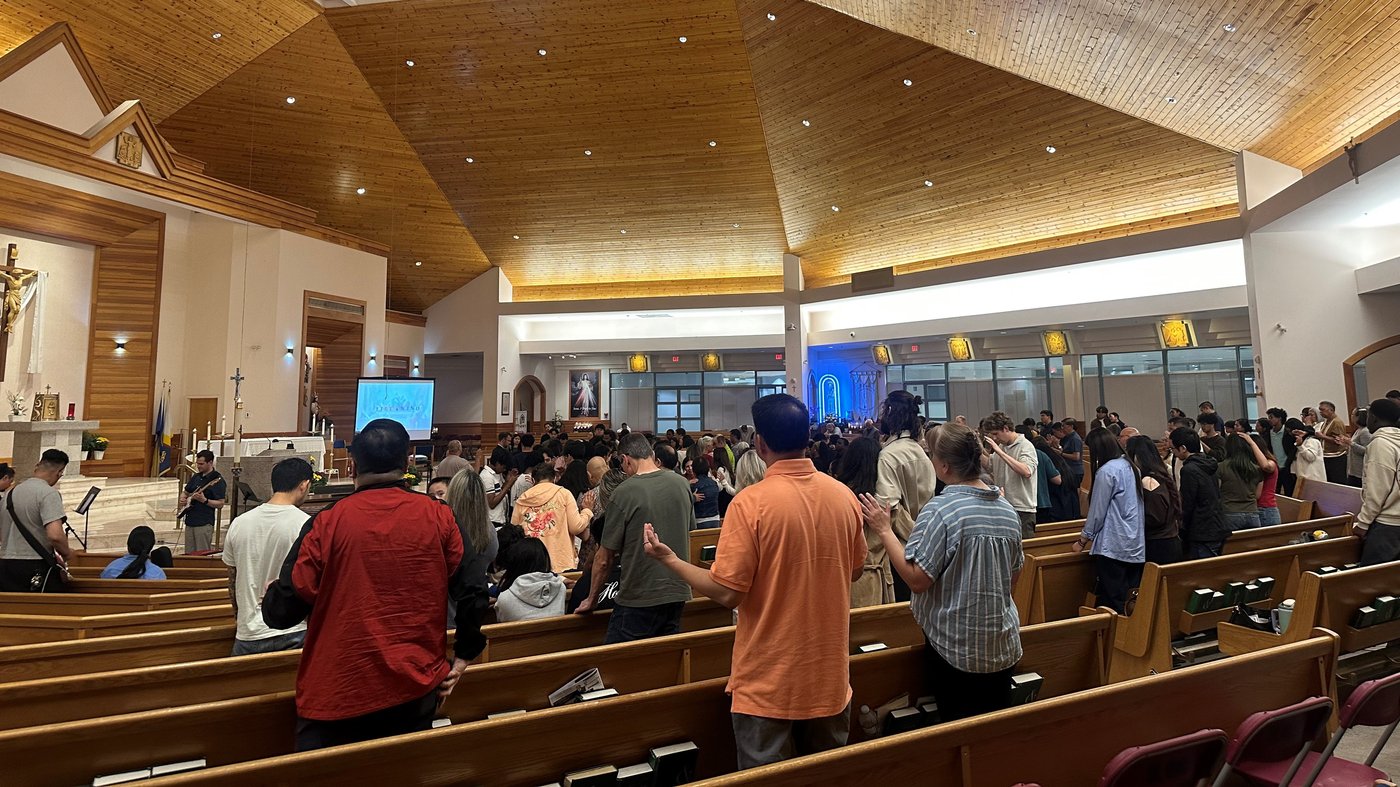
The event was held at her home parish, St. Matthew’s in Surrey, and organized by Catholic Young Adults of Surrey (CYAS) in celebration of Pentecost, the Church’s birthday. Activities focused on the renewing power of the Holy Spirit, and attendees were invited to participate in a Vigil Mass, enjoy a potluck dinner, and listen to personal testimonies (including Umali’s). The night ended with praise and worship music.
Umali prayed for the healing of her voice during the Vigil Mass. “Jesus, I can’t tell my story if I can’t talk,” she prayed. After receiving the Eucharist and asking to be healed, her voice was immediately restored. This moment of healing and trusting in God’s plan fits perfectly within a larger story of how he saved Umali “from the grave” and gave her “new life” through the Holy Spirit.
“For the past eight years, I’ve suffered from an illness called major depressive disorder also known as depression,” she told The B.C. Catholic, and described the experience as a distinct feeling of emptiness that she couldn’t fill.
By the beginning of this year, Umali was convinced that “God had made a mistake.” “I tried everything.” she said. “I tried prayer, years of therapy, so many medications, sleep studies, blood tests, specialists, and none of it worked.”
Then everything changed on Palm Sunday.
“I was at a restaurant with my Mom and Dad,” she said. “Then my Mom said she had something very important to tell me.” Over dinner, her mother told her about a phone call she recently had with a fellow parishioner from St. Matthew’s, in which her mother learned that God had revealed to her friend visions of Umali’s struggle with depression. She said she knew what the two of them needed to lift up in prayer.
For over three hours, the two prayed over the phone while Umali was in another room, completely unaware of the prayers being offered for her healing. After three hours of intercessory prayer, Umali’s mother said she heard “a victory cry” followed by “an overwhelming sense of peace.”
As Umali listened to this story, she felt confused and lost. “I remember being scared to put my hope in God because I had put my hope in doctors and medicine which disappointed me every single time.”
Thousands of errors found in B.C. MAiD cases, internal report shows
VANCOUVER (CCN) — An internal B.C. government document obtained by Canadian Catholic News through a freedom of information request shows doctors, nurse practitioners and pharmacists in the province made thousands of errors in managing euthanasia in 2024.
According to the report of the Ministry of Health, more than half of all MAiD cases in B.C that year were found to have had errors requiring government follow-up.
Page 3 of the “Medical Assistance in Dying (MAiD) Oversight 2024 Year End Report” states 4,169 individuals requested MAiD in 2024 — a nearly 10 per cent increase since 2023.
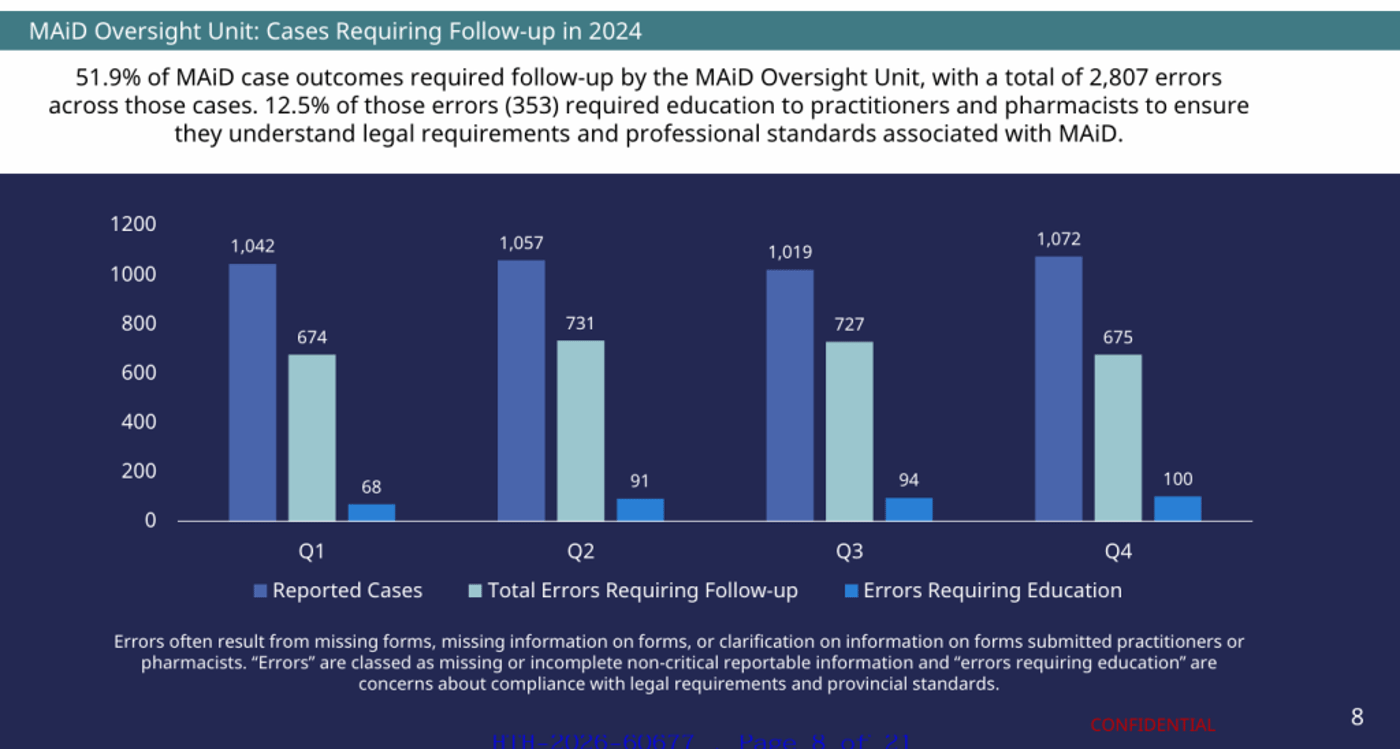
However a bar graph from the report, included with this article, indicates a total of 4,190 MAiD cases in 2024. It also indicates the MAiD Oversight Unit found 2,807 errors among 51.9 per cent of “MAiD case outcomes” requiring corrective “follow-up.” The report says “follow-up” means obtaining missing information or clarifying existing information.
Among these thousands of errors, 353 cases — or about 12.5 per cent — raised compliance concerns and “required education” of practitioners and pharmacists “to ensure they understand legal requirements and the professional standards associated with MAiD,” the report says.
Other data associated with 4,169 total MAiD cases indicate 72 per cent of these individuals died by MAiD; 23 per cent died of other causes, and 4 per cent were found ineligible to access MAiD. Only 1.4 per cent of individuals withdrew their request.
The 2024 findings closely mirror those from 2023, which included 2,833 errors in the management of 3,808 MAiD cases, as reported in The B.C. Catholic last year. These findings suggest that concerns identified in 2023 persisted in 2024.
“It’s all very shocking that you have such a large amount and percentage of errors in British Columbia,” said Alex Schadenberg, executive director of the Euthanasia Prevention Coalition, based in London, Ontario. “It’s clear there are huge problems.”
The situation is particularly acute because B.C. leads the country in percentage of deaths caused by MAiD, Schadenberg told CCN. In 2024, 6.5 per cent of B.C. deaths were attributed to euthanasia, compared with the national average of 5.1 per cent.
Amanda Achtman, ethics director of Canadian Physicians for Life, said the report has troubling implications, indicating MAiD is not medical care “but rather abandonment.”
“The staggering level of errors surrounding the practice of euthanasia in Canada betrays a level of indifference and callousness toward Canadian patients at end of life,” Achtman said in an interview.
‘It feels sort of surreal’: Seminarian prepares for diaconate ordination
With great joy, the Archdiocese of Vancouver has announced the diaconal Ordination of Jerome Robles. The ordination will take place through the laying on of hands and the invocation of the Holy Spirit by Archbishop Richard W. Smith on Friday, October 16, at Holy Rosary Cathedral.
Robles, who currently serves at Corpus Christi parish in Vancouver, told The B.C. Catholic, he is excited for the diaconal ordination. “It’s been a long time coming for me,” he said. “So it feels sort of surreal.”
“I have a lot of gratitude to God, to the archdiocese and to my formators,” he said. Adding that he appreciates the contributions of all the communities he has been blessed to serve through his time as a seminarian.
The faithful are warmly invited to attend the ordination and join in prayer for Jerome as he prepares to serve the Church as a deacon.
View original post at BC Catholic
Author: {authorlink}
Posted on July 8, 2026… Read more “‘It feels sort of surreal’: Seminarian prepares for diaconate ordination”
Former Freemason and Catholic convert celebrates Nordic bishops’ clarification on Freemasonry
Before his conversion to Catholicism, EWTN Norway’s editor-in-chief, Pål Nes, was a Freemason. But when he joined the Catholic Church, he left Freemasonry behind.
The Nordic bishops, as well as the Church’s hierarchy, agree: A formal association with Freemasonry is incompatible with Catholicism.
But this issue, which has come up in public conversation among Catholics around the world, is often controversial in the Nordic countries of Denmark, Finland, Iceland, Norway, and Sweden, where some mistakenly believe that there is an exception to the Catholic Church’s instruction.
This week, the Nordic Bishops’ Conference clarified the teaching.
“We write to you at this time as shepherds to clarify a matter that for many years, if not decades, has generated uncertainty, speculation, and diverging opinions in our countries: the question of whether or not Catholic faithful in the Nordic countries may be Freemasons or belong to a Masonic lodge,” the bishops wrote.
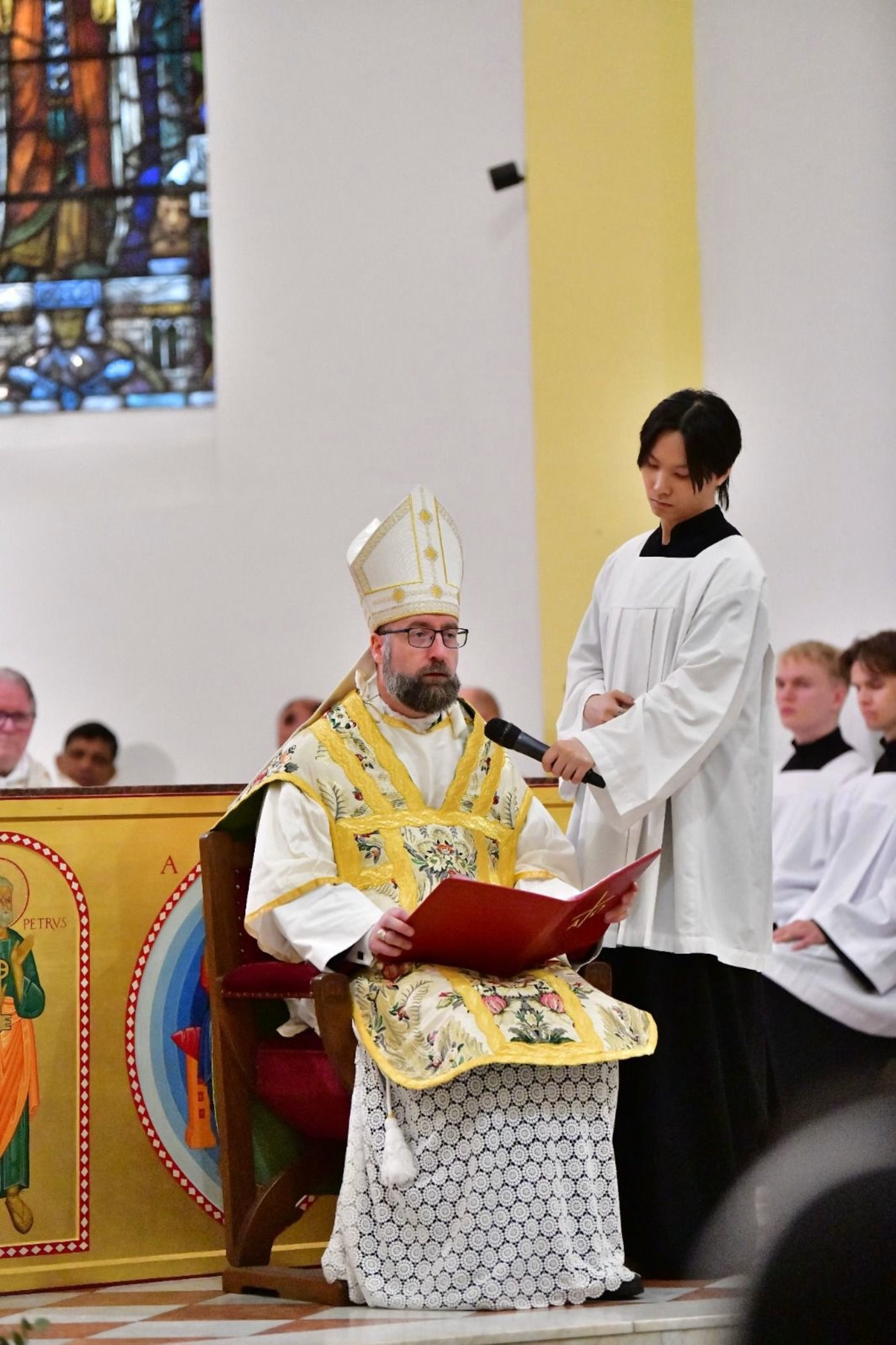
In the June 29 letter to parish priests signed by Nordic Bishops’ Conference president Bishop Erik Varden of Trondheim and others, the bishops stated that there is “no exception” for Catholics in Nordic countries from the “universal law of the Church” regarding Freemasonry.
The Nordic bishops had met with officials from the Dicastery for the Doctrine of the Faith during a plenary assembly in Rome from Sept. 1–5, 2025, to discuss the matter. The dicastery’s response was unequivocal.
The bishops said the Church’s teaching applies “in full and without exception in the territory of the Nordic Bishops’ Conference.”
The letter is not to detract Freemasonry but rather a clarification that its principles clash with those of the Church, according to the bishops.
“We wish to stress that the Catholic Church’s firmness on the question of adherence to Freemasonry is not a negative judgment on the goodwill or good works of individuals,” the bishops wrote.
“The Church’s position springs from awareness that the theological and philosophical principles of freemasonry are incompatible with confession of the Catholic faith,” the bishops said.
Nes told EWTN News the bishops’ statement helped give clarity on the issue in his home country of Norway.
“Their statement gives priests and lay faithful the clarity that many of us have needed for a long time,” he said.
Nes has seen confusion in his home country, largely because of “a myth developed that the Scandinavian form of Freemasonry was somehow an exception, and that Catholics in the Nordic countries could belong to a lodge without contradicting the teaching of the Church.”
Canadian aid groups mobilize Venezuela earthquake relief
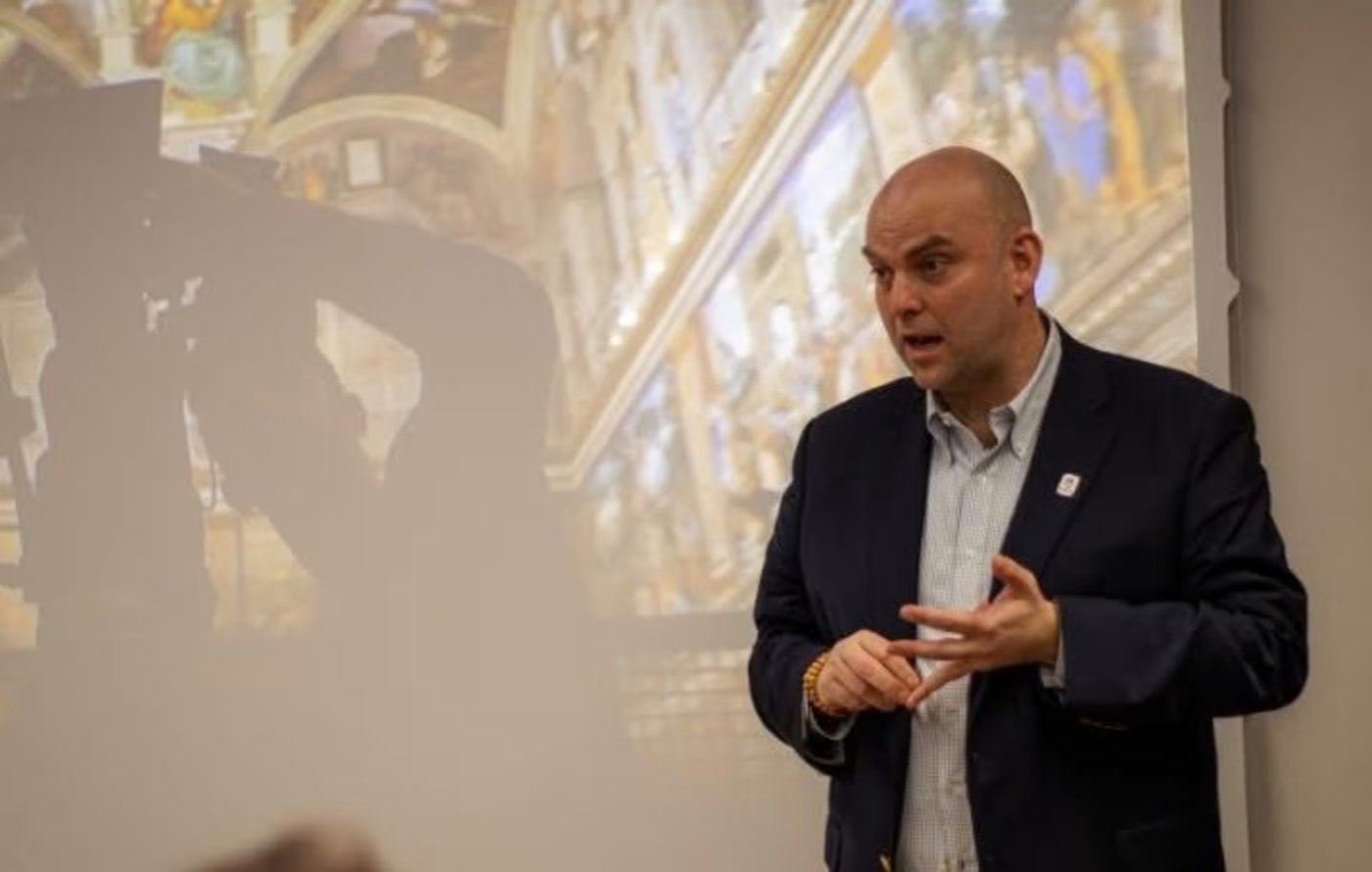
Disaster response teams are continuing to deploy to Venezuela and ongoing relief efforts from organizations around the world is pouring in as the death toll from the devastating earthquakes surpasses 1,450, with tens of thousands reported missing and more than 12,700 people finding themselves displaced.
Canadian organizations have launched fundraising appeals to aid survivors of the two June 24 earthquakes that struck northwestern and central Venezuela, specifically in the city of San Felipe in Yaracuy. The first shock was measured as a 7.2, followed a minute later by a 7.5 mainshock. Both caused widespread damage across Venezuela, namely throughout La Guaira and Caracas, with 46,600 currently reported missing.
Today, rescue efforts for survivors are still taking place. While promising reports are emerging, including a 21-year-old man having been pulled from rubble in Venezuela’s La Guaira state after being trapped for 106 hours according to acting president Delcy Rodríguez, rescuers remain in “critical hours” to save lives, says national assembly head Jorge Rodríguez.
Just two days after the initial tremors, Canadian Jesuits International launched an appeal for donations to support humanitarian relief efforts in the region. It was reported that Jesuit Refugee Service, Fe y Alegria and other CJI Jesuit partners in Venezuela were already on the ground to provide emergency support to individuals and families affected with temporary shelter, relief items, protection services and psycho-social support.
While the CJI team continues its rapid assessments in the affected areas to identify most urgent needs through their long-standing partners in the country, further donations will allow for a quick response toward life-saving assistance and accompaniment toward affected communities.
The Government of Canada released a statement of solidarity for the people of Venezuela, saying that “while the full scale of the tragedy is still unknown, it may affect hundreds of thousands of people, and humanitarian efforts must be urgently scaled up to ensure life-saving assistance reaches those most in need.”
On June 25, Minister of Foreign Affairs Anita Anand and Secretary of State (International Development) Randeep Sarai announced Canada would provide an initial $5 million in humanitarian assistance funding to support emergency relief efforts in Venezuela — building on the $4.5 million in ongoing humanitarian assistance funding allocated by Sarai earlier this year to respond to the needs of the country.
The release confirmed that the Canadian government will continue to monitor the situation and remain in contact with its partners to “assess and respond to evolving needs over the coming days and weeks ahead as the needs become clearer.”
A day later, Development and Peace – Caritas Canada announced its initial contribution of $50,000 to help local partner Caritas Venezuela respond to the emergency, while calling on Canadians to give generously to ongoing support ventures.
The Priest Who Had to Lose Golf to Find God
A little over a century to the day, golfer Bobby Jones prepared to hit an iron shot out of the rough on the 11th hole of Worcester Country Club during the first round of the 1925 U.S. Open. During his routine, Jones felt his club move the ball slightly from its set position. While no one else seemed to notice, the amateur golfer, sure that he had committed a foul, chose to penalize himself.
The decision would go on to cost Jones the title, giving way to the now infamous line, “You might as well praise me for not robbing a bank,” a line he dropped when thanked for his morality. Today, Jones’ decision during the major tournament remains one of the most celebrated examples of fair play in all of sport, let alone golf.
Some may note Jones’ integrity as a reflection of his faith, having been raised a devout Baptist in his family tradition. Three days before his death in 1971, he converted to Catholicism and received the sacraments as an act of love for his wife, a devout Catholic.
In more ways than the faithful might realize, the game of golf has long held rich parallels to the faith — whether in its unique rhythms and rituals, constant patience, radical honesty with oneself or even moments of grace in Jones’ case. As the 126th edition of the U.S. Open teed off on June 18, Fr. Richard Conlin shared his insights on the comparison as someone with a truly unique read of it.
“ Growing up, golf became the most important thing in my life. It was the one thing that was truly all-consuming. It was an idol or a god in my life, and my whole world revolved around the game of golf,” Conlin said.
“If golf was good, life was good, but if golf was bad, my life felt horrible. My identity and my purpose and my mission, everything revolved around the game of golf.”
Thanks to his all-consuming commitment to the sport, Conlin would eventually go on to play high-level college golf at St. Mary’s College in California on an NCAA Division 1 scholarship as well as for Team Canada’s National Golf Team. Despite a strong final college year — where he was St. Mary’s top finisher in four of the 10 events he played in — and a strong consideration to turn pro, Conlin was slowly coming to terms with the truth of “what we idolize, we eventually despise.”
“ I started to realize that God never wanted me to view the game of golf in that way, and I remember one of my retreat directors said with a big smile, ‘Rich, don’t you know that God had to ruin your golf game?’
Our Lady’s Sentinel: Tales of Churchill, thunderstorms, and a roast pig
The first edition of Our Lady’s Sentinel reached its readers in September 1943 just as the Allied invasion of Italy was commencing, and the Soviets were pushing ever deeper into Ukraine. On the first page, there is an editor’s note which reads:
“This little effort is to let you know that you are in our thoughts and prayers daily. We hope that you will find it interesting as it brings you each month a glimpse of [Our Lady of Perpetual Hope].”
That “little effort” lasted twenty-seven months, and the publication only stopped when the war had been won and the men were on their way home. All twenty-seven issues can now be found in the digitized print collection of archives of the Archdiocese of Vancouver.
Our Lady’s Sentinel was the brainchild of Jim O’Loane and pastor, Redemptorist Father James Farrell, C.Ss.R., who, in August 1943, decided the deployed enlisted men from Our Lady of Perpetual Hope in Vancouver needed something to keep their spirits up. Additionally, their mothers were worried, and everyone was anxious for news about their whereabouts and safety.
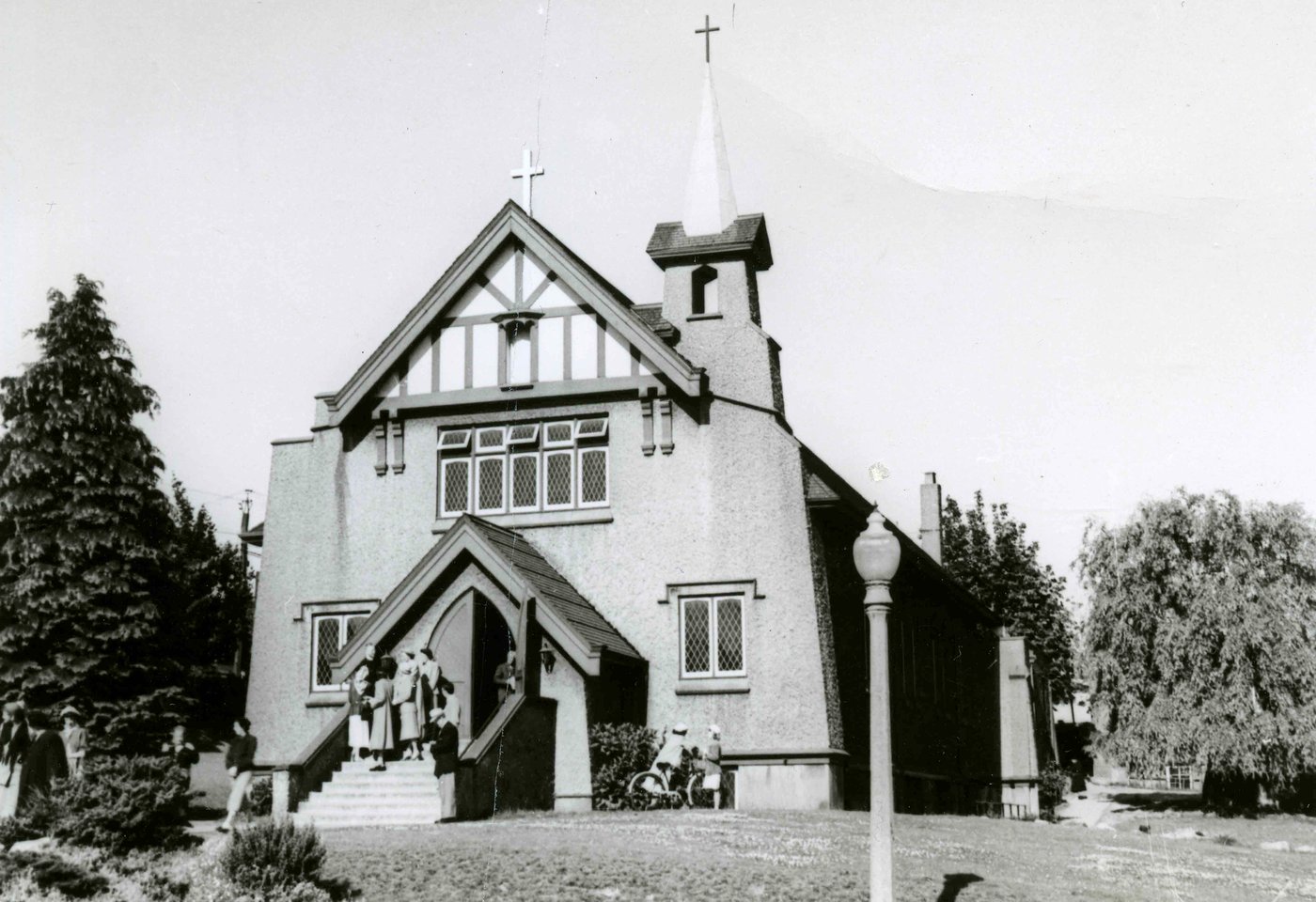
“Every mother was comparing with every other mother about what was going on, and where their sons were,” O’Loane’s daughter, Patricia Lambin, told The B.C. Catholic. Rather than having them confer amongst themselves, “he thought they should just contact him,” she said. “My dad took that on as a real project for the parish.”
With that, their family house became a news office, with the network of parish women serving in place of dedicated reporters. Phone calls and ringing doorbells would announce the arrival of more news: “so-and-so was stationed here; so-and-so is being deployed over there.” Mothers talking to mothers fed the paper a steady stream of intel which would be the envy of any wartime intelligence agency.
Lambin, nearly ninety-nine, remembers working on the paper—at fourteen years old, she and the other girls from the parish would crowd into their basement ping-pong room to help cut the latest issue.
Father Farrell was the driving force behind the paper. “I remember from the time I was about 13, he was gathering news,” Lambin said. “He almost camped at our house!”
Lambin remembers how he used to care for the young women of the parish. “With the young women left behind, he was either comforting them or taking them roller-skating to get them some entertainment,” she said.
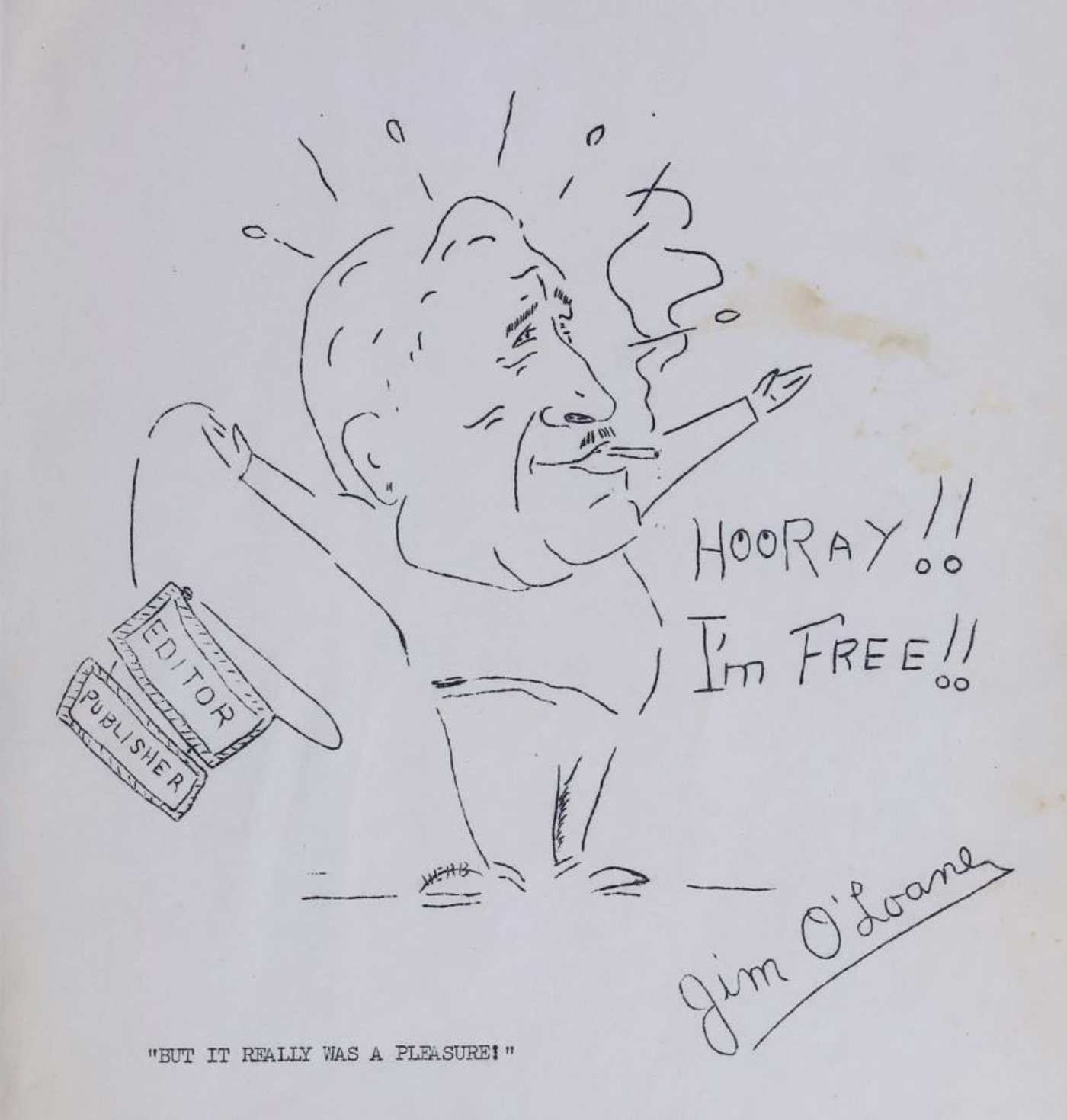
In his final editor’s letter, published December 1945, O’Loane pays homage to the energetic priest: “To Father Farrell,” he writes, “that tower of strength, without whose willing and able assistance at all times, the Sentinel would never have flourished as it did.”