
The hands of a priest
“Let me see your hands,” I said to my three-year-old son after he had finished a large piece of orange chiffon birthday cake.
I took his chubby little fingers in my hands and with a warm cloth wiped away the sticky mess between each finger. When I was close to completing my task, he impatiently squirmed and before I was satisfied that all the icing had been wiped away he was on the escape and rushing to play ball with his older cousins and younger brothers. It was just a fleeting moment in time, but a moment that I cherished and held onto. I knew how quickly time would fly by and just as he had escaped my motherly gestures in that moment he would soon be escaping into the world to find his own way in school, in work, in life.
“Hold your hands tighter on the bat,” the baseball coach yelled to my now 12-year-old son. Sitting beside my husband in the small stands, we, along with all the other parents, called out encouragement to our young, energetic ball players. I watched my almost-teenage boy grip the bat as he swung and connected with the ball that had been pitched to him. The stands erupted into cheers as he slid safely into first base. Just like baseball’s first base, he would soon be sliding into high school.
“Wake up, they’re not home yet,” I would sometimes say to my husband, nudging him awake. During the busy years of four teenagers, we had a hard and fast rule in our home; it didn’t matter what time of the night each of the kids came home, but they had to come into our bedroom and let us know they were okay. My husband is a deep sleeper, and my side of the bed was closest to the door, so the kids would always come and talk to me, sometimes just to say they were home before slipping down to their bedroom and other times sitting on the side of the bed talking for hours about things happening in their lives. On one of these nights, our now 19-year-old son stared down at his trembling hands and shared with me his desire to enter into the seminary and, if God willing, become a priest.
This had not been on my radar at all. Our son was in his first year of business administration at university, and I knew he had been thinking of applying to larger universities in Vancouver. This meant he would soon be moving away. But this news sucked all the breath out of my lungs. I never thought about any of our children going into religious life, it had never really been a topic of conversation in our home.
Parents of priests also said ‘yes’ to God
“Faith is God’s gift, received in baptism, and not our own work, yet parents are the means that God uses for it to grow and develop,” writes Pope Francis in his book Amoris Laetitia (The Joy of Love). To get a sense of the vocational journey that parents witness in their child’s formation of faith, we spoke with the parents of priests in the Archdiocese of Vancouver.
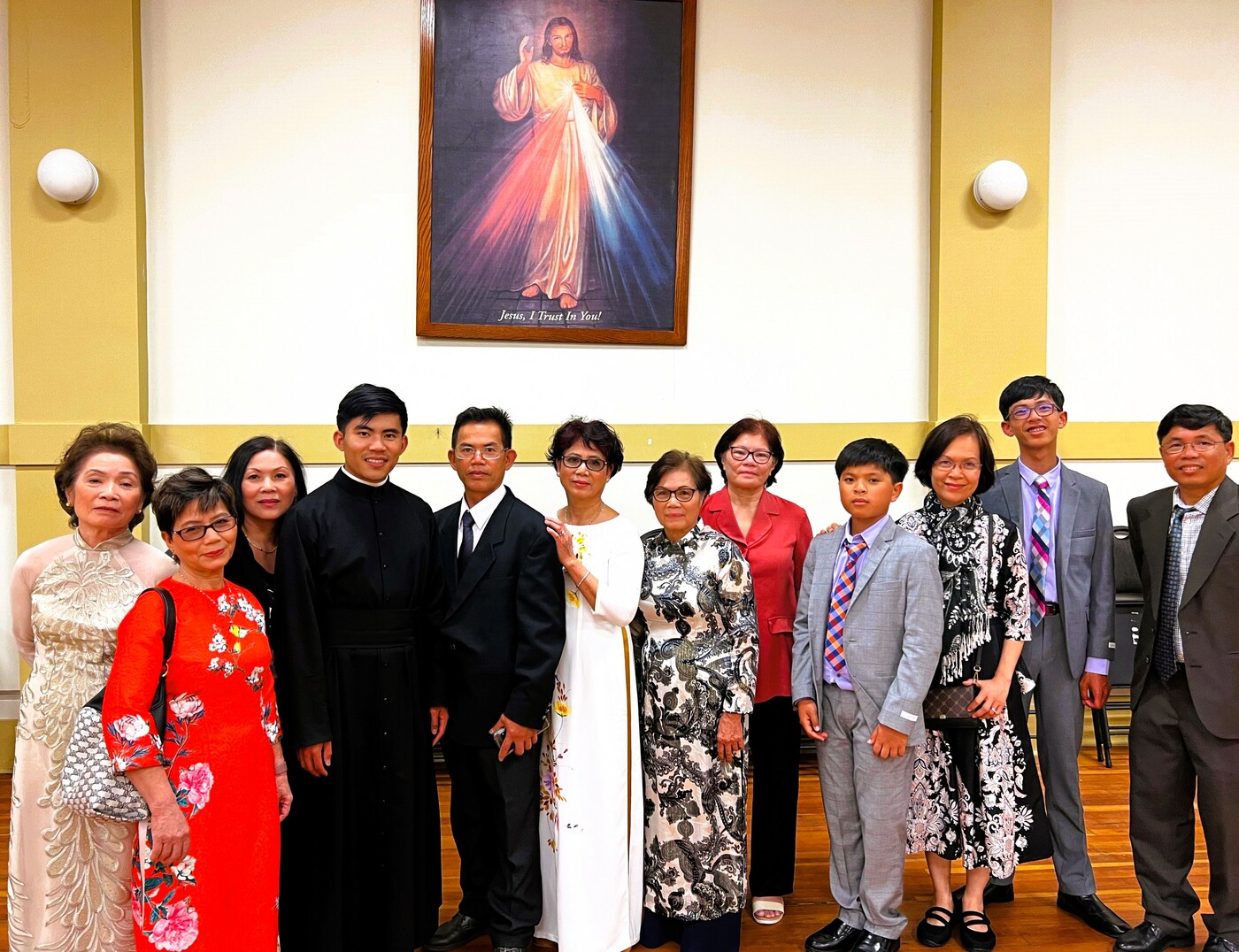
Mr. Tong Lê and Mrs. Mai Nguyễn (Le) are the parents of recently ordained Father Patrick Le, who is now an assistant pastor at St. Matthew’s Parish in Surrey. They are also long-time parishioners of St. Patrick’s Parish in Maple Ridge, their home church. Both Mr. and Mrs. Le credit St. Patrick’s Parish and Father Richard Au for playing a crucial role in their son’s discerning to join the seminary and become a priest.
Can you describe Father Patrick at a young age?
Mr: Le: Before the seminary, he was really picky. He wanted to do things his way. Even from the way he’s eating, he asked his Mom to cook a different meal every day.
Mrs. Le: I’m a hairstylist and when Patrick was 4, I would bring him to work. He always brought his notebook and a pen. One day I asked him, “What are you writing in the book?” And he said, “I’m writing the Bible.” He showed me the book and there were drawings of different shapes, a square or a dot, things like that, then a heart and a cross. I asked him, “What is this for?” He said, “It’s a heart for the mother. Mother Maria. And the cross is Jesus.” In my mind, I thought that this boy is going to become a priest. But I kept it to myself. I just kept praying.
How did you react to him going to the seminary?
Mrs. Le: It was a big reaction. He was in Grade 6 and we said, “No, no.” We thought he was too young to think that way.
Mr. Le: Then one of my wife’s customers, a former seminarian, came to us for a haircut. He just asked one question: “If your child wants to play soccer, would you tell him to wait until he’s 25 years old to start playing? Or would you let him play right now?” Only a simple question like that caught our hearts. I said, “Okay, we should let him go.”
What have you learned as parents witnessing him become the person he is today?
Mr. Le: Do simple things. Pray. A little bit of reading the Bible at night.
Why I’m Catholic: It’s a Force for Good
Maura’s Story
Around a dozen girls, sporting the reliable Catholic school plaid, sat in a classroom tucked away in a side hallway on the third floor of an all-girls high school. During the fall of 2006 and into 2007, the room was filled with raucous, back-and-forth conversations every time the class met. We talked about the genocide in Darfur, homelessness in our city of Boston, and the death penalty. Tough topics, but this was senior year theology at my high school: a yearlong class in social justice.
We read the work of Catholics who dedicate their lives to social justice work, watched Frontline documentaries, and studied the seven themes of Catholic Social Teaching until they were basically second nature. When we weren’t in our classroom chairs, there was a community service requirement to fulfill, because the mission of the sisters who founded our school, the Sisters of St. Joseph, is to “love the dear neighbor without distinction.”
We didn’t always have the same ideas about how to help or even who to help. One classmate sold T-shirts and donated the proceeds to a nonprofit. Another volunteered at a local food pantry. I helped out at a theatre camp focused on building self-esteem in preteen girls. But whatever we did, it all came back to the idea that every life has inherent value and potential.
I’ve been Catholic since my baptism in November 1988, but attempting to live out what I learned during senior year high school theology is why I’m Catholic today.
For me, the heart of the Catholic Church and Jesus’ message, is reaching out and helping others. Different messages and priorities might seem louder or more prominent, depending on who is talking, but my lived experience of being Catholic is one that aligns with the image of a welcoming Jesus — a man who sought out people who were different from him, who helped people who were otherwise overlooked.
There have been times when I’ve been embarrassed to be Catholic, especially with all that continues to come to light with the clergy abuse crisis. Sometimes, it feels like my experience of Catholicism might not exist anymore, and it definitely isn’t the one that gets attention. I’ve worried that people might assume the worst of me when they hear the worst of my Church. But then I remember those conversations in that third-floor classroom, and the group of women who went out into the world to bring justice to others, each in their own way. So I resolve to be that vision of Catholicism, to be representative of the Church at its best, not its worst.
One of my favorite church songs is called “The Servant Song,” and it includes these lyrics: “We are pilgrims on the journey, we are travellers on the road.
How to Navigate Some of Today’s Most Pressing Issues
Research suggests that, on average, we make well more than 200 decisions every day about what we eat and drink. And yet, most people are aware of making only 15 to 20 daily nutrition-related decisions. These findings could easily be extrapolated to other areas of decision-making throughout a typical day. Not only do many of our choices lack intentionality, but often we aren’t even aware we’re making decisions at all.
We humans are an adaptive bunch. Arguably, there are thousands of micro-decisions to be made each day, and it would be overwhelming to deliberate over each one. (Chidi from The Good Place, anyone?) Part of the problem is that our commercialized culture presents us with a dizzying array of choices about things that don’t really matter, as author Thomas Merton famously diagnosed one day while shopping for toothpaste after spending the previous months “off the grid.”
The trick is to identify which decisions are worth weighing carefully and which aren’t. It might help to relearn the art of asking what might be termed “foundational questions.” Foundational questions come packaged in the rawest, most basic language and demand an answer not just from the information in our heads but from the very fabric of how we understand the mysteries of life.
Asking foundational questions is built into the very DNA of toddlers and college students, but somewhere along the way we mistakenly “outgrow” the habit. During our young professional years, many of us are busy developing the expertise and specialization necessary to analyze profit margins, decipher CT scans, or diffuse temper tantrums. Incidentally, the young professional years — when there is the least amount of mental and emotional space for asking foundational questions — are when many of us begin making for ourselves what might equally be called foundational decisions that shape the course of our lives and the type of people we’re becoming: deciding what neighborhood we live in, what kind of work we will do, and what and how much we consume.
For more than two millennia, folks in the Church have been asking foundational questions about life in this beautiful, broken, and messy world in light of three beliefs central to the Catholic Christian faith: 1) God lovingly created a good world; 2) the goodness of creation has been damaged by sin; and 3) God became human and invites us to participate in His saving work here and now toward our final good in the life to come.
Guided by these three tenets, people of faith and goodwill throughout the Church’s history have accumulated questions, time-tested good ideas, and real-life examples in building up what is known as the Catholic social tradition, or CST.
Waste Not, Want Not: Catholic Social Teaching and Reducing Food Waste
“Pass those plates down to the food disposal,” Grandpa would inevitably boom at the end of each meal, scraping sandwich crusts and half-eaten bowls of applesauce into a pile on his plate. Through the doorway of the adjacent dining room, our parents winced as Grandpa smilingly gobbled down his 18 grandchildren’s scraps. They knew that their admonitions to “Eat your dinner or no dessert” had been empty threats, for Grandpa’s presence at the kids’ table and his commitment to letting no food remnant go to waste were as ritual as the Sunday Mass we had just attended.
Grandpa hated wasting food. As he enthusiastically drank the briny juice from a pickle jar once the last spear had been consumed, he passed the value of being conscientious down to his children and grandchildren. Our attitude toward food waste is more than a family tradition, though; it is a value intimately tied with our faith. And it’s particularly linked to one of the greatest treasures of our tradition: Catholic Social Teaching.
Informed by Scripture, the Catechism, Vatican documents, bishops’ letters and more, Catholic Social Teaching offers an abundance of wisdom and guidance on living justly in our current world. The U.S. Council of Catholic Bishops has identified seven key themes that run throughout the tradition, and some of them are especially helpful when considering how we treat the food that passes through our lives.
Option for the poor and vulnerable
Keeping a preferential option for the poor means considering first how the choices we make will impact the most vulnerable members of our world. This includes the small, everyday decisions of our lives. When the burger we ordered is overcooked, do we send it back and ask for a new one? What do we do when we’d prefer a fresh meal to finishing yesterday’s leftovers? When we’re in a hurry, do we take the time to wash and prepare the soon-to-spoil vegetables in the refrigerator? In each of these choices, we are called to keep the poor and vulnerable in mind and to remember that our decisions have repercussions. Refusing to waste may not solve the problems of world hunger, but it can reduce our grocery budgets so that we are able to share more with the poor, and it can act as an antidote to entitlement, reminding us that our priority should be considering the vulnerable, not minding our own preferences.
Rights and responsibilities
Human dignity can only be honored if basic human rights are met, including the rights to food, housing, medical care, education, equality, and freedom of religion. Those of us with full pantries have the responsibility to not only make thoughtful individual choices but also to consider how our food system can better protect the rights of the most vulnerable.
History of St. Anthony’s Roman Catholic Parish
By Patrick Raynard
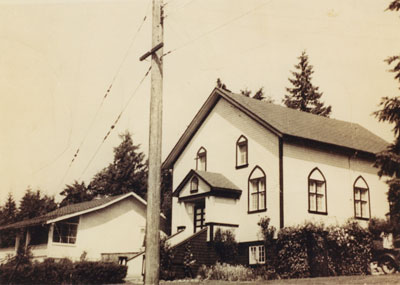 The Roman Catholic presence on the North Shore began almost 160 years ago when the Oblate Missionaries and Chief Snatt of the Squamish First Nation built a mission chapel in what is now North Vancouver. The 1866 building was renovated in 1909 and renamed St. Paul’s in honour of Vancouver Bishop Paul Durieu.
West Vancouver was born from a cluster of summer cabins that were built at Ambleside Beach in the 1880s, following the building of the first lighthouse at Point Atkinson in 1875. The population grew after a ferry connected Vancouver to the foot of Lonsdale in 1890 and Ambleside in 1910. West Vancouver became a municipality in 1912, with a population of 1,500, but Catholic residents had to travel to North Vancouver until one of the Oblates started celebrating Mass in the Ambleside cabins in 1915. Around this time building lots in West Vancouver sold for $450.
As West Vancouver’s Catholics grew in number, their need for larger Mass locations took them from Ambleside Hall to a Dundarave building later known as Sager’s Maple Shop and from there to the Clachan Hotel at the foot of 25th Street (which became Peppi’s Restaurant and is now the Beach House.) Catholic children took the Pacific Great Eastern (PGE) train to North Vancouver and walked up to St. Edmund’s parish where the Sisters of the Child Jesus taught them Catechism and prepared them for the Sacraments.
In 1920, West Vancouver’s 20 Catholic families petitioned Bishop Timothy Casey for a church of their own. He responded by sending an Oblate from St. Paul’s, Father W. Brabender, to establish a mission parish and to start plans for a building at the confluence of Inglewood and Haywood Avenues (where the present church stands); the far-sighted Archdiocese had purchased a property there in 1912. An anonymous wealthy donor from Eastern Canada asked that the parish be named after St. Anthony of Padua.
Father Brabender celebrated the first Mass in the incomplete new church in the early 1920s. The building held 150 people; the Squamish First Nation donated most of the furniture, the sacred vessels, and the bell. In 1924 Bishop Timothy Casey elevated the mission to the status of a full parish, thanked the Oblates for their services, and appointed Father Alex McDonald as the first official pastor. There being no rectory, Father McDonald roomed in the Clachan Hotel.
The next pastor was Father John Kelley, on loan from a diocese in New Mexico, who operated from his sister’s home on Haywood Avenue. His greatest challenge was heating the entire church from one wood-burning stove; he never succeeded and delivered his winter homilies wrapped in a woollen blanket.… Read more “History of St. Anthony’s Roman Catholic Parish”
Our Beliefs
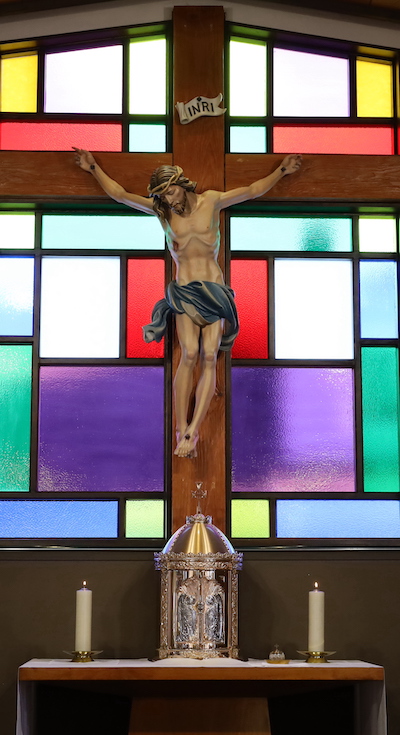 We believe in Jesus Christ.
Jesus Christ is the Son of God, sent to mankind by the Father, so that we may all have everlasting life. We believe that Jesus walked here on earth, just like you and me. He was conceived by the Holy Spirit and was born of the Virgin Mary in a humble manger in Bethlehem. We believe in the Incarnation – that God was made man without ceasing to be God. Thus He is true God and true man. This man is Jesus Christ. Through Him we are called to be heirs of the Kingdom of Heaven. Jesus is the second person of the Holy Trinity: God the Father, God the Son, and God the Holy Spirit.
We have Good News.
God created the heavens and the earth, and all who live in it. As His sons and daughters, we were created to be in relationship with Him forever in paradise. However, through the fault of our first parents, Adam and Eve, sin entered and broke our relationship with God. This created a great divide between us, a barrier that we can never fix on our own. Because of this, God sent His only begotten Son, Jesus Christ, to reconcile us to Him. Jesus was condemned to suffer for our sake — leading to His death on the cross. His death bore our sin and shame and through this one act of love He fixed the broken relationship between us and the Father. We believe that Jesus died and went to the grave, and that in three days He rose again in glory. Through His death and resurrection, He conquered sin. His victory over death is our hope and our salvation. Through Christ we can rise again and through Him we are invited into the heavenly inheritance that awaits us. This is the Gospel or the Good News as we call it. However, it does not end there. The Good News is about hope and the invitation that follows it. It is an invitation to get to know the person of Jesus Christ, in whom we place our trust. It is an invitation to say yes to Him and to encounter the Church.
We belong to a very big family.
During His time on earth, Jesus moved the hearts of many followers. He especially transformed 12 Apostles that He called by name and gave them authority to take care of the Church that He started on Earth. Jesus promised His believers that when He returns to Heaven, He will send for us an advocate. On Pentecost, the Holy Spirit came down to the early Church giving courage to the apostles to become fearless and courageous witnesses to Christ.… Read more “Our Beliefs”
Saint Vincent de Paul

The Society of Saint Vincent de Paul is a lay Catholic organization whose mission is: “To live the Gospel message by serving Christ in the poor with love, respect, justice and joy.” Vincentians see Christ in anyone who suffers; come together as a family; have personal contact with the poor; help in all possible ways. Often these visitations happen weekly at homes of the poor and marginalized or at different community facilities.… Read more “Saint Vincent de Paul”
Hospiltality
Greeters
Greeters serve as part of the Hospitality Ministry at St. Anthony’s by welcoming parishioners and visitors. They promote a sense of welcoming and belonging. Greeters are the first contact that parishioners and visitors have as they enter the Church. They strive to welcome everyone with joy, kindness, reverence and an open heart.
Greeters are responsible for attending the Masses for which they are scheduled, arriving approximately 15 minutes before Mass begins.
If you would like to know more about this Ministry please contact Gloria Lowe by leaving a message for her at the parish office.
Adult Faith Formation
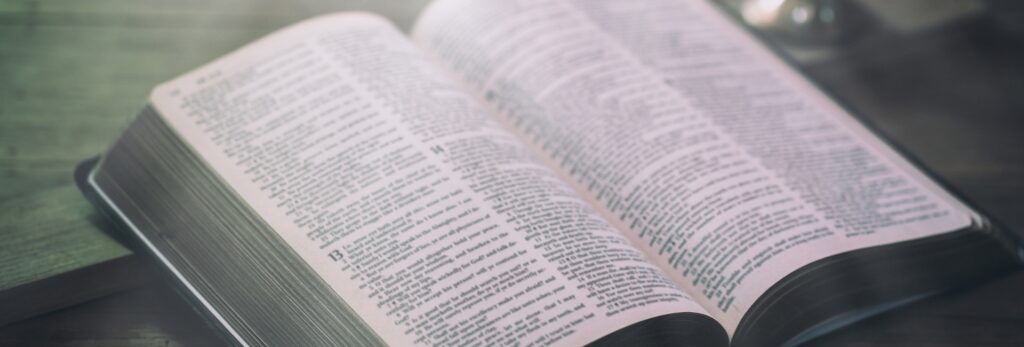
At St. Anthony’s Parish we strive to offer a variety of experiences which will allow all members of ourcommunity to deepen their knowledge and understanding of our Catholic faith.
Each of our programs offers time for us to come together and to share thoughts and ideas, to ask questions, or just to listen and be listened to.
We offer variety. Our programs may be led by a speaker, be group based, be centred around a video and commentary on topics of global or local concern. We may have an eclectic agenda or a single core theme.
We try to follow the seasons of the Church, offering activities which will help prepare ourselves for an upcoming event or a specific holy day.
We are aware that not everyone is on the same schedule or works the same hours of the day. To accommodate this we try to vary the times programs and events which are offered; repeating those wherean alternate time slot is both available and appropriate.
“Another cup of coffee?” Whenever possible we try to provide refreshments which are appropriate to the hour and to the season.
…and we listen. We are always open to your thoughts, ideas and suggestions.… Read more “Adult Faith Formation”