
‘You can not be lonely at this church’: St. Anthony’s in West Van celebrates 100 years
Thirty years ago, Trisha Andrew decided to return to church, and she discovered St. Anthony’s Parish in West Van. She has been a part of the parish ever since. Now, as the parish celebrates its 100th anniversary, Andrew has been reflecting on the significant role the parish community has played in her life.
A bit of a self-described hippie, Andrew said she only went at the behest of a friend, but community and sense of belonging surprised her. “St. Anthony’s has an incredible warmth to it,” she told The B.C. Catholic in an interview.
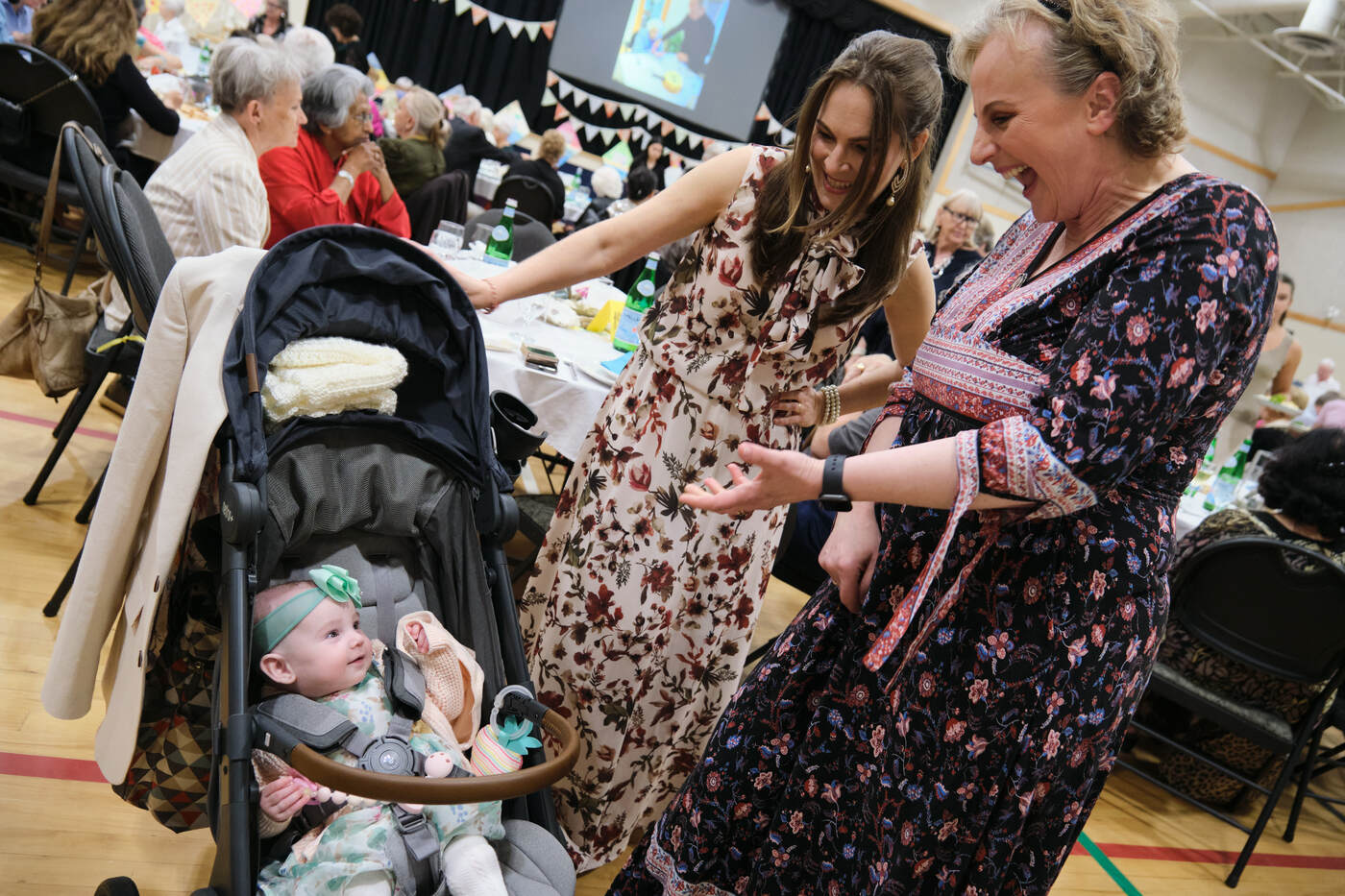
Since then, the parish has become her second home. “I’ve never been to a parish that felt like it was my home,” she said. “I felt accepted and supported – in general the whole community was very welcoming.”
After suffering from cancer several years ago, the parish community “embraced me in prayer,” said Andrew. “You feel like a person; people know you, and they say hello.”
Like many at St. Anthony’s, she has fond memories of all the priests who served during her time there. She especially appreciated the effort that their most recent full-time pastor, now Bishop Gary Franken, put into the community.
“He tried to make everybody fit,” she said. “If you liked to play cards, he would steer you towards someone else who played cards. If you had a special devotion, he would connect you with other people – he would help you find connection.”
“People are so lonely – you cannot be lonely at this church!” she said.
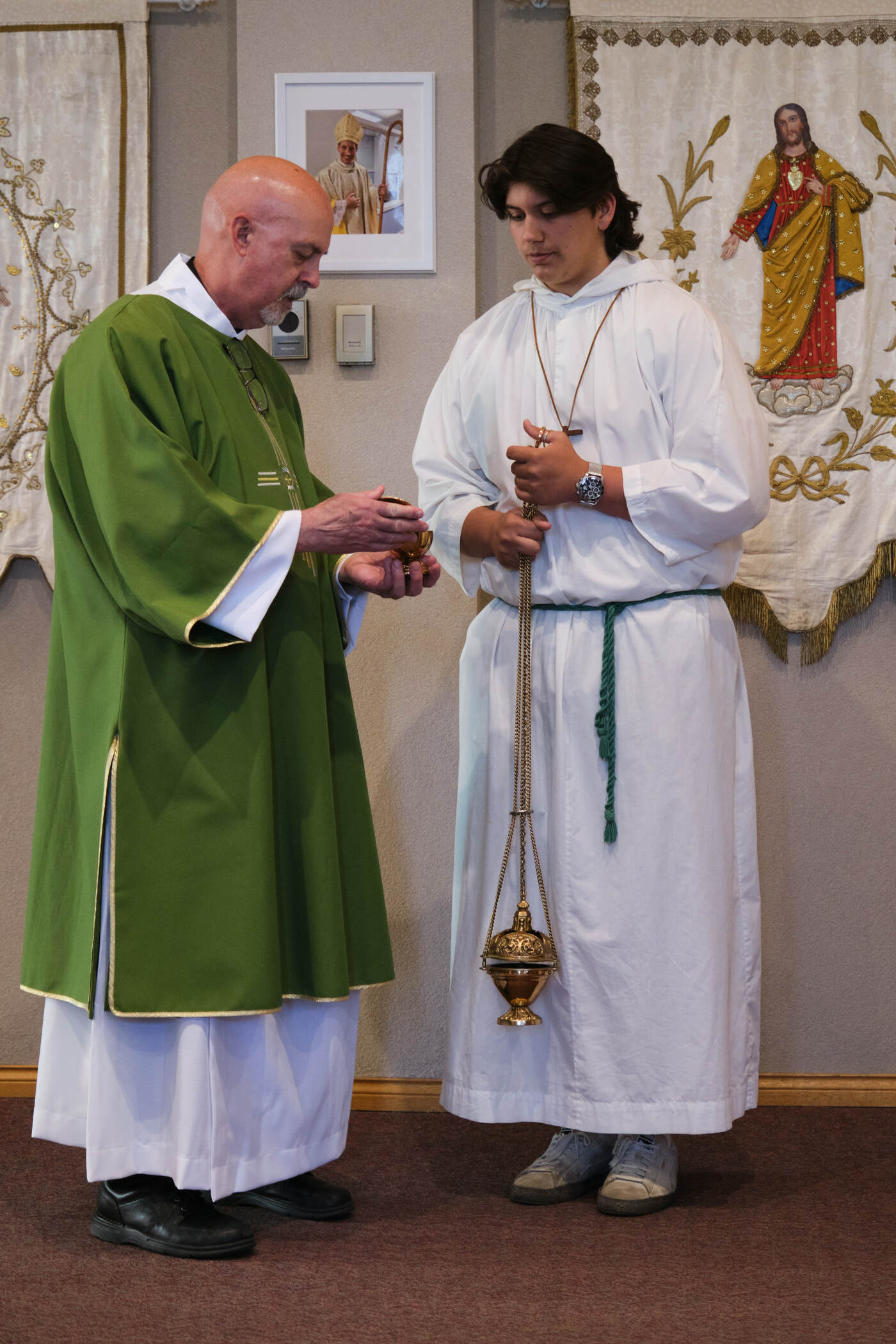
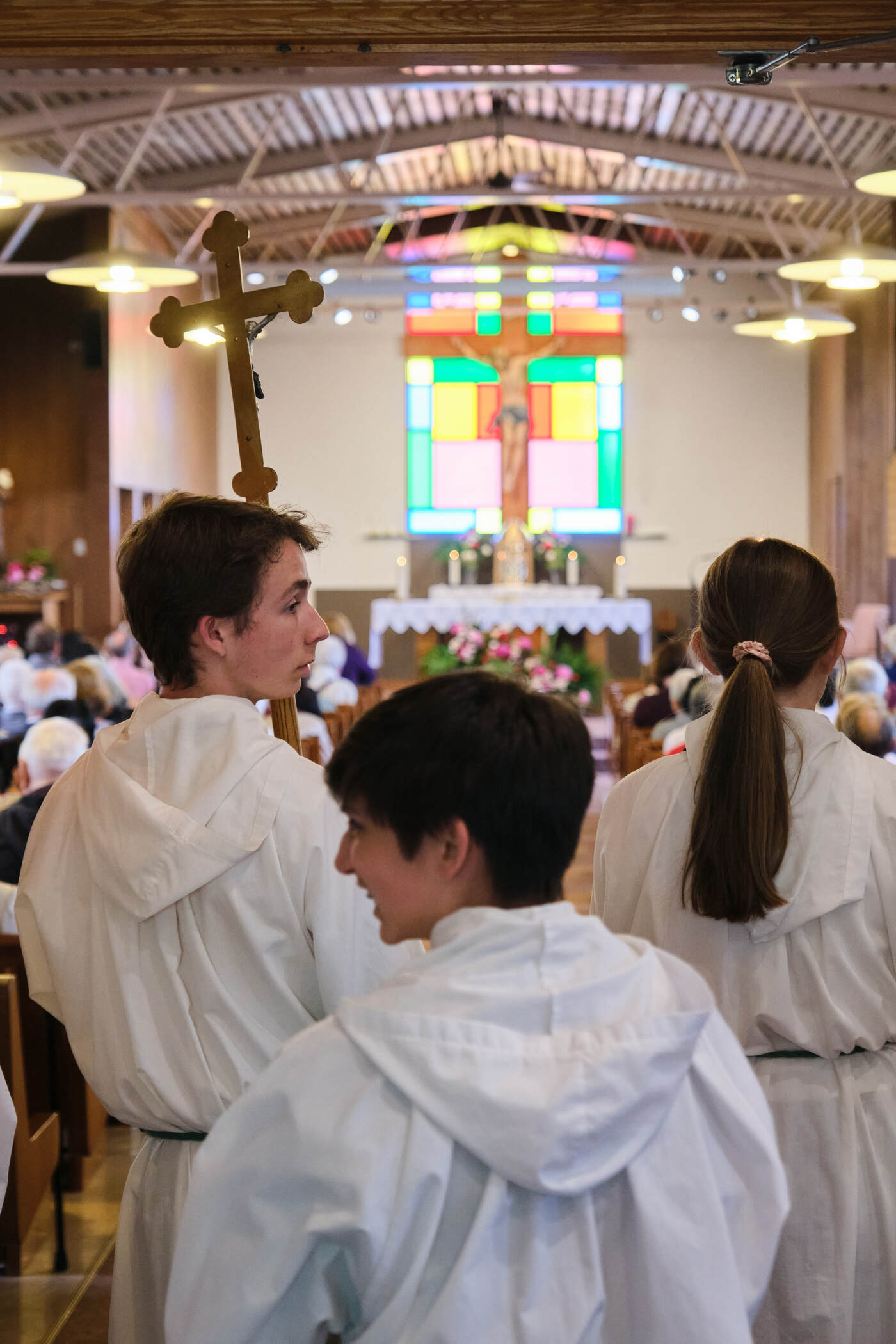
The centennial festivities started with Mass celebrated by Archbishop J. Michael Miller. Other priests and deacons with connections to the parish joined him, including recent parish administrator Father Paul Goo, administrator and one-time pastor of St. Anthony’s Father Vincent Hawkswell, and soon-to-be-installed pastor Father Arsene Dutunge.
Bishop Gary Franken, who served as St. Anthony’s pastor for 11 years, also concelebrated.
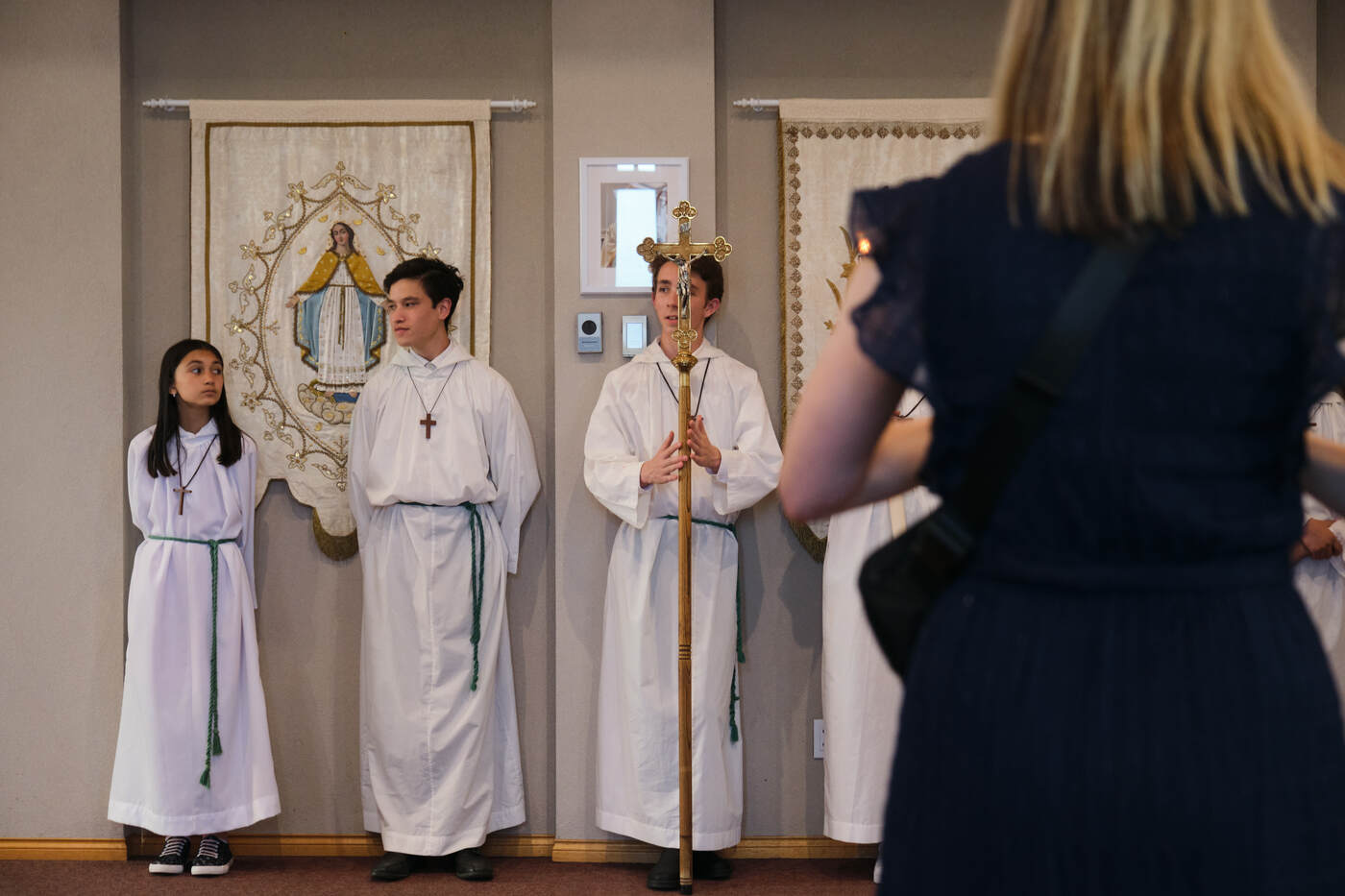
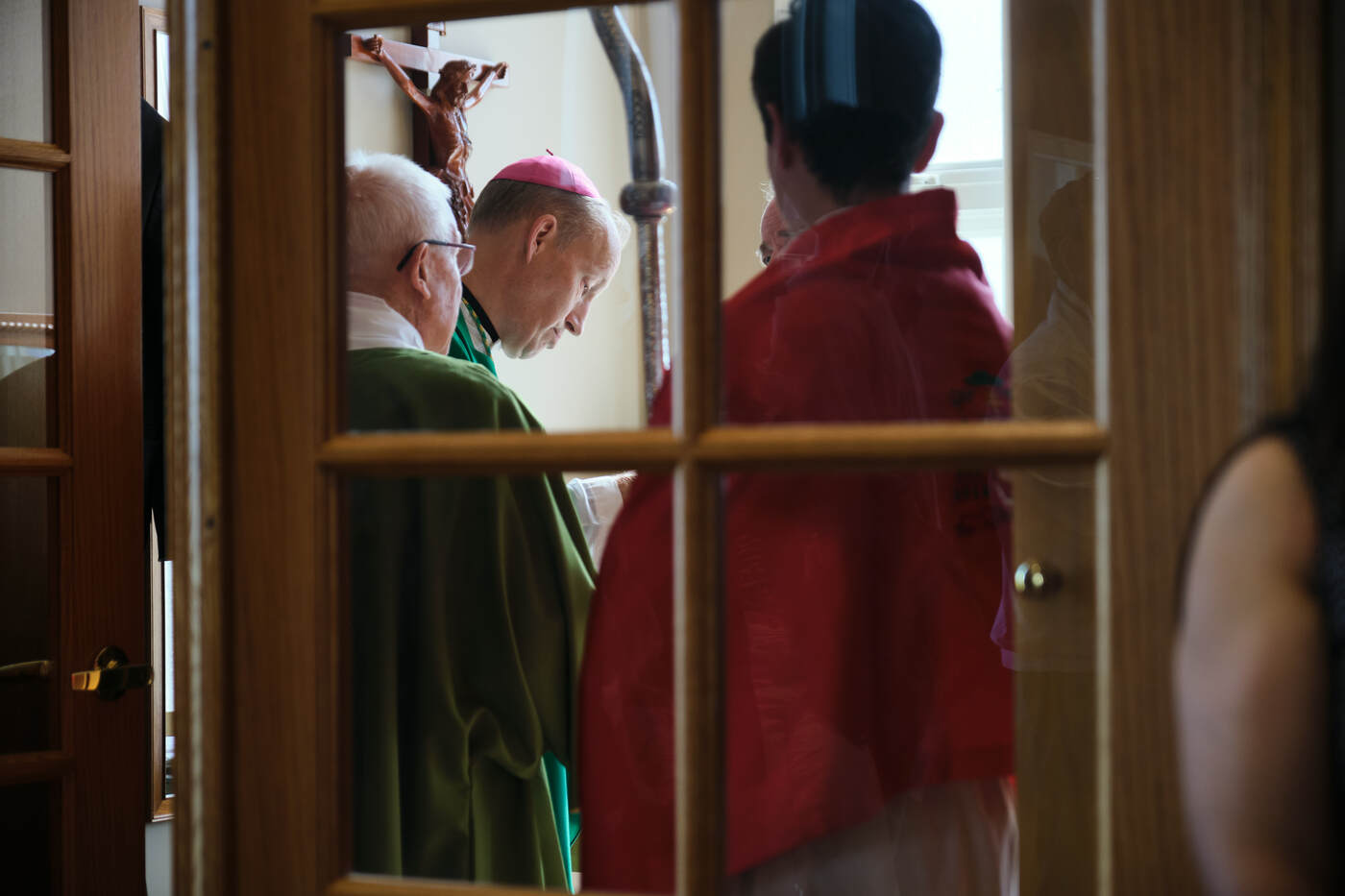
“As we commemorate the 100th anniversary of the founding of this parish erected to honour St. Anthony, this afternoon we rightly look to the past with gratitude,” Archbishop Miller said in his homily.
“What has taken place here in West Vancouver is not unlike what happened in the early Church,” saint the archbishop.
Abbot Peter Novecosky, former Prairie Messenger editor, dies at 79
Abbot Peter Novecosky, OSB, who for more than a quarter century shared the news, and the good news, with Catholics in Western Canada through The Prairie Messenger newspaper, has died at 79.
Abbot Novecosky died on Aug. 14, the Vigil of the Assumption of the Blessed Virgin Mary, in Humboldt, Sask., after battling cancer.
A prayer vigil will take place Monday, Aug. 19, at 7:30 p.m. at St. Peter Cathedral in Muenster, Sask. The funeral will be Tuesday, Aug. 20, at 11 a.m. at St. Augustine Church in Humboldt, followed by interment at St. Peter’s Abbey Cemetery.
In a statement, the Canadian Conference of Catholic Bishops said Abbot Novecosky’s life was a testament to faith, leadership, and dedication. “His journey, marked by a deep commitment to his faith and his community, reflects his motto, ‘My heart is ready, O God,’” the CCCB said.
He was born Wilfred Novecosky on April 17, 1945, in Burr, Sask., where he attended elementary school before going to high school at St. Peter’s College in Muenster.
In 1963, young Wilfred entered the monastic community of St. Peter’s Abbey as a novice. In 1964 he made his profession of vows as a Benedictine monk, changing his name from Wilfred to Peter. He would be the last vocation from the former St. Peter’s Abbacy, a diocese (abbey nullius) that existed between 1921 and 1998 when it became part of the Diocese of Saskatoon.
Peter studied philosophy and theology in the seminary at St. John’s Abbey in Collegeville, Minn., and was ordained to the priesthood in Humboldt in 1970 by Saskatoon Bishop James Mahoney.
After ordination, he became a prefect at St. Peter’s College in Muenster and taught there until the school closed in 1972. He also served as associate pastor of St. Augustine Parish in Humboldt from 1972 to 1977.
In 1972 he began working with The Prairie Messenger, published and printed by the Benedictine community of St. Peter’s Abbey in Muenster.
The Benedictines had been associated with the paper since 1923, when St. Peter’s Messenger was first printed. It became The Prairie Messenger in 1928, but its roots went back to its forerunner, the weekly German newspaper St. Peter’s Bote, which the Benedictines began publishing in 1904.
The Benedictine order publishing tradition dates back to its roots in the Middle Ages preserving books, texts, and culture. Education and printing have been a part of that tradition, and the Benedictine monks, within a year of arriving with German Catholic settlers from Minnesota in the Humboldt/Muenster area in 1903, were printing the German Catholic weekly St. Peter’s Bote (Bote meaning “the messenger” in Winnipeg.)
The Benedictines opened a printing press at Muenster the following year in September of 1905 and for decades they published two newspapers, ceasing publication of The Bote in 1947.
‘This isn’t a matter of compromise’: Bishops commit to goal of unity
The Canadian Conference of Catholic Bishops (CCCB) has unveiled a new strategic vision for enhancing and enlivening future ecumenical and interfaith initiatives.
Several weeks after the CCCB hosted the Triennial Forum for Dialogues with various partners at St. Augustine’s Seminary in Toronto in late June, the bishops unveiled the four ecumenical trajectories assented to by the assembly participants.
The findings of audits of various ecumenical and interfaith dialogues conducted by the CCCB informed this strategy of priorities. The bishops’ National Commission for Christian Unity, Religious Relations with the Jews and Interfaith Dialogue, chaired by Regina Archbishop Donald Bolen, then developed a proposal from the audit resolutions that anchored the discussions at the forum.
First, a commitment is to bolster ecumenical structures within the Canadian Catholic community. The CCCB envisions achieving this objective by launching commissions, hiring ecumenically focused personnel, establishing regional networks and even creating a unifying national syllabus to guide Catholics tapped to helm a diocesan inter-denominational department.
Archbishop Bolen said that inspiring the lay faithful, particularly congregants who are skeptical or indifferent to such pursuits, should be accomplished by informing them that “ecumenical enterprise is not the Church’s idea; it’s the Father’s idea.”
“It comes out of Jesus’ prayer for all his disciples to be one,” said Archbishop Bolen. “We are deeply committed to that goal of unity among Jesus’ disciples. I think framing it that way: this isn’t a matter of compromise; it’s not a liberal-driven agenda. This is about being faithful to the Lord’s desire that we be one and putting ourselves at the service of that in a way that Jesus did.”
The CCCB and its partners also desire an “ecumenism of truth” with Orthodox, Anglican, Lutheran, Jewish, Hindu and other faith communities. Dialogues and relationship-building programs will be at the heart of augmenting this interfaith pathway.
There was also a call to observe Pope Francis’ endorsement of the Lund Principle, which affirms that ecumenical partners should act together in all matters except when deep doctrinal or other significant differences compel the need for separate denominational approaches.
Finally, the bishops and their allies from other faiths seek a greater spiritual ecumenism through praying for unity at greater frequency, adding more ecumenical prayer services and identifying new opportunities for encountering Christians of different denominations.
Presenters at the forum included representatives from the Vatican Dicastery for Promoting Christian Unity, the Anglican–Roman Catholic International Commission (ARCIC) and diocesan/eparchial ecumenical officers across Canada. Roundtable discussions centred on “benefits and challenges of the dialogues, financial sustainability and the importance of making the dialogues more visible and engaging at the local levels,” stated the CCCB in a release.
Archbishop Bolen’s big takeaway of the Triennial Forum for Dialogues is “while we don’t see in the short term a path to full visible unity with our partners, we do see that there’s much that we can do together that we don’t presently do.”
In the Waters of Lourdes
Have you ever had one of those experiences that was a big turning point in your life? In the moment, perhaps you didn’t know how it was going to affect your future, but you knew you’d be different as a result of it?
Yeah, well that was me after I went on a nine-day pilgrimage to France this past Christmas.
A pilgrimage is a journey made to some sacred place as an act of religious devotion, but traveling to different holy sites in France with four friends of mine was so much more than an act of religious devotion — it was a spiritual adventure. I left life behind, logged off all my social media accounts, put my phone in my backpack, and embraced where I was.
Setting out on the trip, I had a few questions stirring in my heart. At 23, I was unsatisfied with my current career path, and wanted clarity on the future, so I left. I don’t know that I was searching for answers to those questions as much as just a greater depth and understanding of who I am, who God is, and what I’m being called to do with my life.
I knew by getting to know the One who created me more intimately, I would understand more about life, myself, and the questions on my heart. The trip gave me the opportunity to quiet my heart and just be. I went in with a wide open heart, and though I didn’t find any concrete answers to the question about where my life was going, I came back with a sense of profound peace.
While I experienced many beautiful blessings on the trip, the biggest ones occurred in Lourdes, a place in France people visit to seek healing because Mary appeared there.
Over several months in 1848, Mary appeared a number of times to a 14-year-old peasant girl named Bernadette. The young girl had little education and when she tried to explain what happened to her, everyone thought she was making it up. During one of the apparitions, though, Mary instructed Bernadette to start digging in the ground and drink from the spring that would appear. People became concerned as the young girl began digging, eating dirt, and drinking muddy water, but soon, a miraculous spring came forth.
That same spring continues to flow even today and has been the source of many miracles. The Church eventually approved Lourdes as an official Marian apparition siteand millions of pilgrims began journeying there each year seeking physical, spiritual, emotional, and mental healing.
And I get it. To many people in the world today, miraculous waters may sound like some kind of ploy to get attention or money.
How I Find God in Everyday Life
At Mass one Sunday morning, as I was kneeling after receiving Communion, I glanced up to see a man pushing his wife’s wheelchair over to the Eucharistic minister. I watched the husband patiently stand by his wife and coax her to open her mouth to receive the host. I found out later that the woman had early onset Alzheimer’s. The tragedy of this disease was eclipsed by the unconditional love I saw in this husband living out his marriage vows. It was an example of pure and beautiful love, a true display of a Godly marriage and faith lived out loud.
During my spiritual journey, I have struggled to feel close to God during Mass, despite knowing He is physically present. I yearn for this closeness, and I feel jealous when I hear others talking about their profound experiences with the Eucharist. This intimacy has always felt unattainable to me, and while I don’t know why I haven’t experienced it, I keep going back. I hope for this one day, but in meantime, God has found other ways to draw me closer to His heart.
God speaks to me through small, day-to-day miracles — through interactions with strangers or in the beauty I find in art or nature. It can be as simple as a funny conversation, witnessing an act of humanity, or observing from afar how people treat one another. When I find a piece of art that is profoundly beautiful, I am always awestruck by how our talents are God-given, and the act of using them is a way of saying “yes” to God. Catholics sometimes have the impression that we must reject all things “worldly,” but my faith experience has led me to embrace the world and to not be afraid of what it has to offer. My mom always describes this approach by saying that we are meant “to be in the world, but not of it.” This doesn’t mean unconditional acceptance of everything, but rather only of the pure, beautiful, and true. It’s so easy to get caught up in the despair, sadness, and unsightly things we come across on a day-to-day basis. The goodness that presents itself in the simple minutiae of life can lead us to God’s presence.
The saints were my first examples of what it means to live a holy and faith-filled life that puts God first. The saints are amazing role models, and their example can teach us how to find God in the everyday. Many found holiness removed from the world, however. The lives of some of these holy men and women seem distant and unattainable — we are not all called to a monastic religious life or to spend hours each day in prayer.
What’s My Vocation?
“What should I do with my life?” It’s a question on many hearts, maybe even our own.
In this video, Father Mike Schmitz gives some direction that can lead to an answer for ourselves or someone we know. He shares how a vocation is more than just figuring out whether we’re called to married life or religious life, and it’s about more than just finding out what we like to do.
As he breaks down three different types of vocation we all have, he draws a practical path we can follow to pursue holiness.
Letters: Luke 15 House and the ‘gift of networking’
Thank you so much for the beautiful picture of Luke 15 Recovery House, which was painted through the words of the residents, in the July 15 issue.
I’ve been a part of Luke 15 House since 2005, first as a volunteer coming twice a week to help with groceries, menu planning, and cooking. I became assistant to the executive director and then returned as a volunteer, helping with food and facilitating a group session each week.
This environment is not something I had ever given thought to until I assisted at RCIA and met founder Alan Ammerlaan, who was sponsoring two Luke 15 House residents. He invited me to volunteer at the house.
Luke 15 House is one of the greatest gifts God has given me. He fills me with more grace than I could ever ask for. My husband Larry has joined me for several years for groups, often bringing his guitar and getting the guys going. I tell them, “God doesn’t ask you to make a beautiful noise, He asks for a joyful noise!” So, yes, enthusiastic joyful “noise” is what they give!
Larry and I know very well each of the men who were interviewed. We love them deeply and thank God for the love we receive in return. I am so inspired by each of these men and others, and so privileged to witness their transformation. I’m reminded of hearts of stone to hearts of flesh in Ezekiel 36 and of endurance and proven character in Romans 5: 3-4.
A word I never used before this year when referring to the men is “gentlemen,” and that’s what they are today. The Holy Spirit has broken down all barriers between us and our time spent, whether with a group of 25 or one on one, is so natural.
With the gifts God has given Nigel and the great team (some of whom were former residents), we’ve never seen so much fruit from the dedication and love given to each prodigal son, whom God brings to “His” House. To love and to be loved, I would say, is the greatest gift. So much of natural conversation, spoken and heard, includes “the Love of Jesus, the Holy Spirit, and God’s will be done.”
Thanks to the gift of networking, by Nigel and others, the community of support that Luke 15 House receives is truly by God’s grace. If you wonder if God is calling you to share your gifts (no matter what they are) with the Luke 15 community, please seriously pray for the Holy Spirit to guide you. God will not be outdone. You will be blessed beyond imagining.
The middle way in responding to The Last Supper outrage
I am a woke Catholic, I’m sorry to say, and likely so are you.
We are woke because we take personal offence from attacks on Christianity, such as the recent opening ceremonies of the Paris Olympics.
We are woke when we look at this mockery from an all-too-human point of view: It offended me. It’s them against us again. What are we going to do to stop it or to get even? What is our next move? How can we make them see they have offended us?
But this woke-Catholic view is a woke-Marxist view that sees life as a struggle between the victim (us, of course) and the perpetrators (them). This is not a Christian outlook. It is a Catholic version of the Marxian power dynamic.
This idea has been revealed to us by public figures such as Bishop Robert Barron and Father Chris Alar, MIC, of the National Shrine of the Divine Mercy. While they did not actually put it in those terms, they did very vigorously and seriously speak about the Olympics incident as being, primarily, a blasphemy against Our Lord.
The International Olympic Committee has indeed admitted to re-imagining the Last Supper as a gathering of drag queens. It issued a quasi-apology that says in trying to “celebrate tolerance,” it “never intended to show disrespect to any religious group.”
The 2.6 billion Christians in the world seemed to have slipped its mind.
Bishop Barron called the apology a “masterpiece of woke duplicity,” saying it amounts to: “If you are so simple-minded as to be offended, we are sorry.”
Again, it is not about us, but about a direct attack on Jesus himself. Father Alar pointed out it is blasphemy, the very worst of sins. As St. Thomas Aquinas said, every sin is slight compared to this one.
Bishop Barron sees the opening ceremonies as proof that our “deeply secularist post-modern society knows who their enemy is and they are naming it.”
Then again, maybe we aren’t woke-Catholics at all, and we don’t see the point of wasting our time worrying about an opening ceremony that really won’t affect our lives. So we don’t get angry. We don’t bother thinking about it and are not offended.
Yet, there is a middle way between personal outrage and a nonchalant attitude. It is righteous anger.
Father Alar quoted St. Thomas Aquinas, who taught that anger can be justifiable and, in fact, it might be a sin not to get angry in a right-ordered way.
Then Father Alar asks, “What are we going to do?” Burning and rioting are not the Christian way, he says, yet we are called to defend God and our faith.
Olympic organizers ‘abused’ their position in Last Supper mockery, Catholic Civil Rights League says
Canada’s Catholic Civil Rights League rejected the apology offered by Paris Olympic organizers for the controversial depiction of the Last Supper during the Olympic opening ceremonies.
“The worldwide reaction to the mock Last Supper from the opening ceremonies on July 26 makes clear that the Paris Olympics organizers have abused their position,” the league said in a statement.
Organizers’ “weak efforts at a mock apology (if offence was taken, we are genuinely sorry…) further exposes their duplicity,” the CCRL said.
The controversial show, part of the 1.5-billion-euro (about $1.62 billion) spectacle to kick off the Olympic Games, featured drag queens portraying the apostles and an overweight DJ as Jesus in what appeared to be part of a fashion show apparently mocking Leonardo da Vinci’s famous painting of the Last Supper.
The CCRL contrasted the opening ceremonies display with “the efforts of the Catholic Church, which organized prayers and a mass to observe a Peace Truce” during the Olympic Games.
“The Church sought a worldwide cessation of war and violence, while the Olympics organizers sought to mock a core tenet of the Christian, and in particular, the Catholic faith, at the expense of over one billion adherents.”
Anne Descamps, spokesperson for the Paris Olympics, defended the opening ceremonies, saying, “There was never an intention to show disrespect to any religious group.”
She said the goal of the opening ceremony was to “celebrate community tolerance.”
“We believe this ambition was achieved. If people have taken any offence we are really sorry,” Descamps added.
The CCRL responded that “No confusion over the intent was possible,” adding that Barbara Butch, a lesbian who parodied Jesus from Da Vinci’s Last Supper with a silver aureole halo crown, admitted in a now-deleted Instagram post “Oh yes! Oh yes! The new gay testament!”
The league said, “Is there much doubt that the leading edge of the aggressive secular culture seeks to aim its fire on Catholics and Catholic doctrine? May God have mercy.”
Christian as well as other leaders worldwide have spoken out against the opening ceremonies. Bishop Robert Barron panned Descamps’ statement as “anything but an apology.” The world’s wealthiest individual, Elon Musk, called the scene “extremely disrespectful to Christians.”
Top government officials in Iran and Turkey, along with other Muslim religious figures, are speaking out against the drag-queen-led parody of the Last Supper at the Paris Olympics opening ceremony that shocked Christians and others across the world.
The supreme leader of Iran, Ayatollah Ali Khamenei, condemned the “insults” against Jesus Christ, noting that Jesus is a respected figure in Islam.
“Respect for #JesusChrist … is an indisputable, definite matter for Muslims,” Khamenei said in a post on X.
Edmonton Archbishop assures Jasper of prayers as wildfire devastates community
With Parks Canada reporting “significant damage” in Jasper, Alta., from wildfires sweeping through the national park, Edmonton Archbishop Richard Smith offered prayers on behalf of the Catholic community.
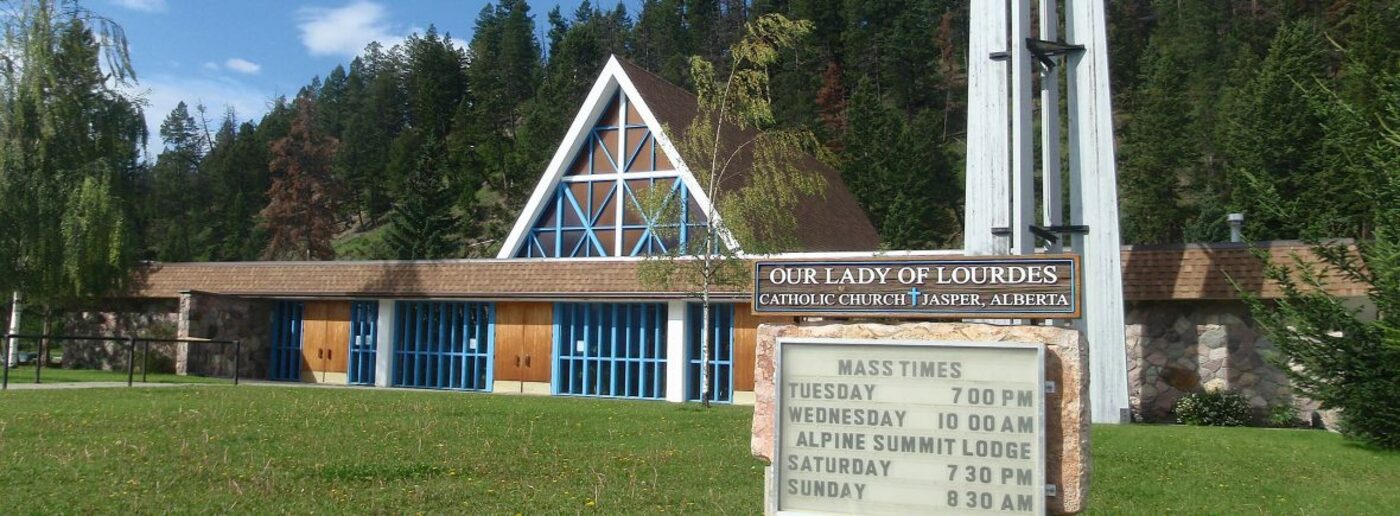
“Today is indeed a very sad day and I wish to convey my sorrow, solidarity and support to the people of Jasper and the parish community of Our Lady of Lourdes,” the Archbishop said in a July 25 statement.
Alberta Premier Danielle Smith said the fast-moving fire had damaged or destroyed up to half the local structures. The status of the Jasper Catholic church is unknown as residents evacuated the community and emergency crews worked to save as much of the town as possible. St. Mary and St. George Anglican Church was destroyed by the flames.
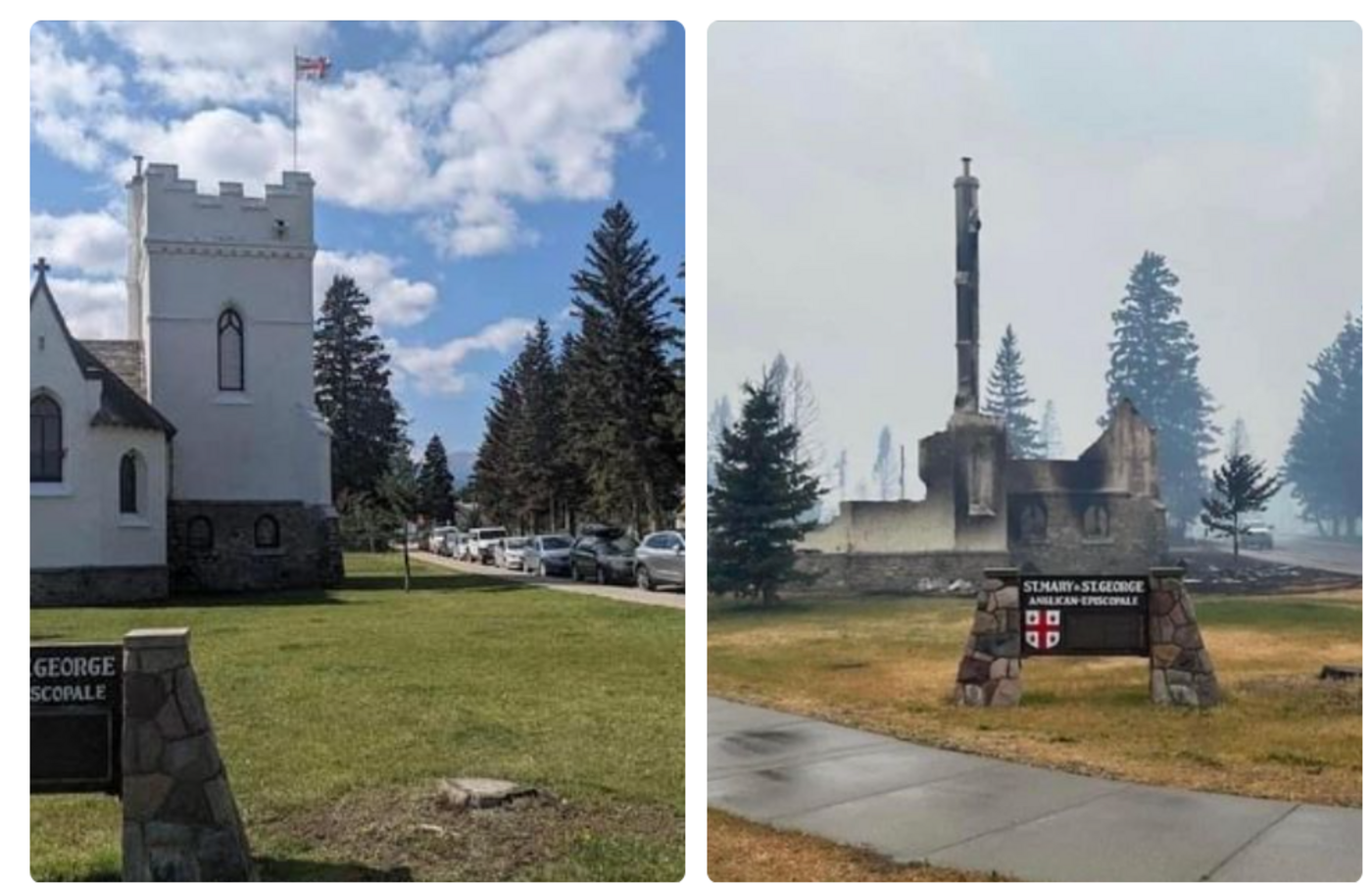
Archbishop Smith noted the far-reaching effects of the devastation on residents as well as visitors.
“Also greatly impacted by this horrific fire are the thousands of people who call Jasper home as permanent and seasonal residents, as well as the surrounding communities. The loss of property is devastating, but even greater is the heartbreak for this world heritage site.”
He reached out to the parish community of Our Lady of Lourdes, including pastor Father Anthony Narisetty and associate pastor Father Marreddy Udumala, saying, “Please be assured of my prayers at this difficult time.”
He said the parish has been a place “where Catholics have gathered for more than five decades to worship and adore Jesus Christ. It is a place of sanctity not only for the close-knit parish community, but for people from around the world who come to visit Jasper and marvel at God’s creation.”
The Archbishop said all those affected by the fire, including first responders and everyone helping the community “will remain in the prayers of the faithful members of the Catholic community throughout the Archdiocese of Edmonton in the days and weeks ahead.”
The Archbishop encouraged the faithful to attend Mass in the community closest to them for the foreseeable future and to watch for updates.
Your voice matters! Join the conversation by submitting a Letter to the Editor here.