
Never tell the vinyl plank party ‘it’s impossible’
Sacred Heart Church in Lumby is set to celebrate its 100-year anniversary on Oct. 15, but in preparing for the momentous event, Father Thomas Arackal found himself in a bind.
He had hoped to complete an enormous renovation of the old church before Bishop Joseph Nguyen arrived to celebrate the centennial Mass. Father Arackal, however, had very little money. And with less than 30 days to finish the massive project, he hadn’t yet found the funds, nor the team to start the work.
Then, a few weeks ago, a Kamloops parishioner, Albert Leduc, started making phone calls to see if anyone was available to install vinyl plank flooring for Father Arackal on a tight schedule, and a tighter budget.
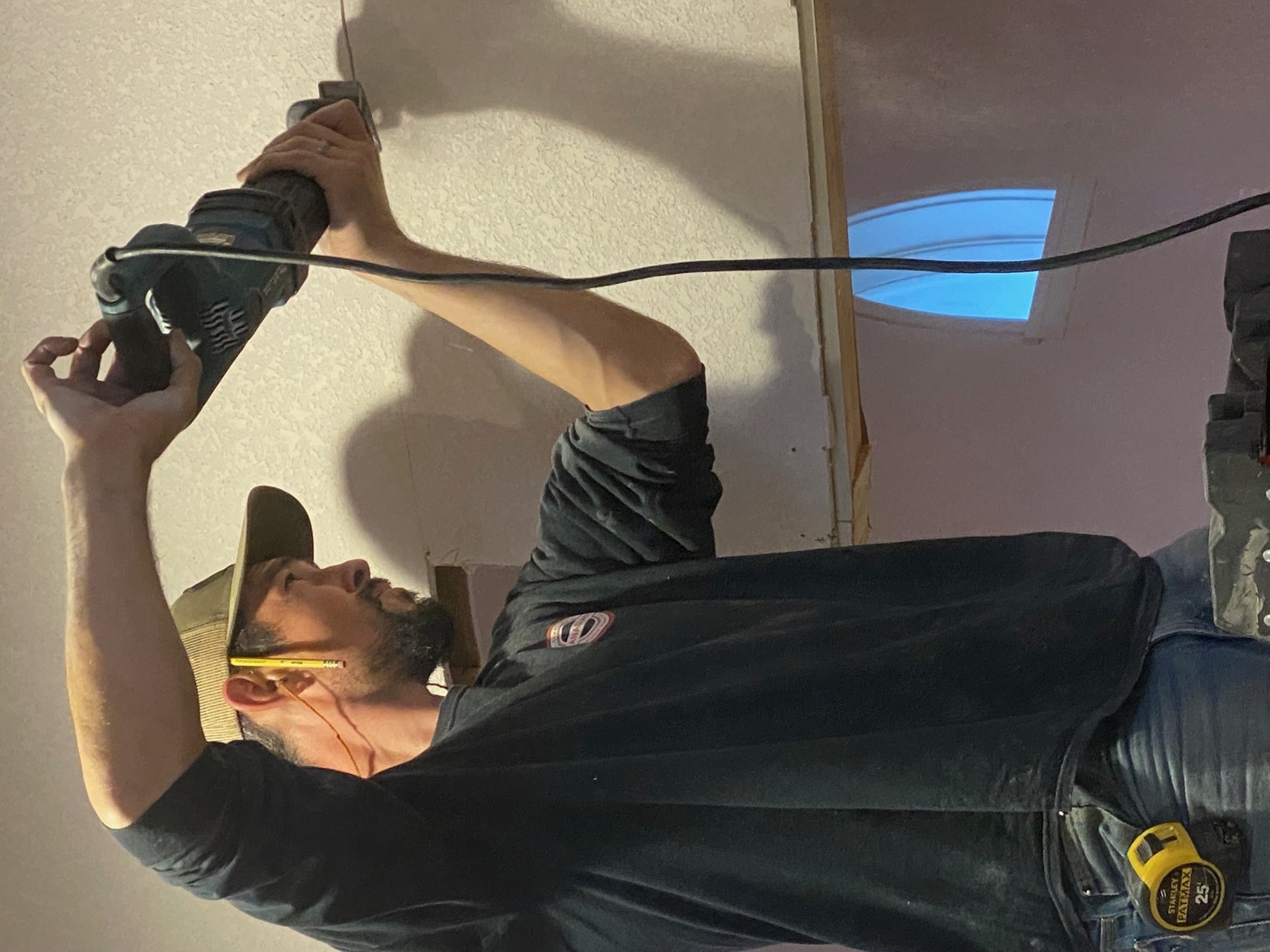
Immediately a group of Catholic men in Salmon Arm went into action.
The pitch was a hit – but hopes of a quick and easy work bee were dashed to pieces when one of the Salmon Arm contractors returned home from assessing the project at Sacred Heart. “It’s impossible – there’s simply too much work to do.” It seemed clear that the project would take hundreds of labour hours to complete.
So, Catholic contractors from Salmon Arm consulted each other over a three-day brainstorm and finally arrived at a plan. They would bring every professional contractor and journeyman to the church to complete the most challenging parts of the renovation. Then, the following day, they would manage 26 workers in a streamlined effort to start 2,000+ square feet of vinyl plank and tile flooring, along with a long list of miscellaneous tasks.

The Catholic women in Lumby fed the work crew on both days with pizza, subs, pies, and non-stop praise.
The last plank of vinyl was installed in the final hour, to the sound of an overjoyed Father Arackal. In total, 30+ workers contributed to the construction, including some from Vernon and half a dozen kitchen and support staff from Lumby.
As the 100-year anniversary celebration approaches quickly, contractors from Salmon Arm continue to wrap up the technical assignments – a custom wood and glass rail system in the choir loft, an oak valence mounted nearly 30 feet in the air, miles of trim, etc.
The anniversary Mass will take place on Sunday, Oct. 15, at 4 p.m.
Your voice matters! Join the conversation by submitting a Letter to the Editor here.
Archbishop Miller calls for ‘robust limitations’ on child access to explicit online material
Vancouver Archbishop J. Michael Miller has sent a letter to Members of Parliament within the Archdiocese of Vancouver, urging them to support Bill S-210, which would restrict young people’s access to sexually explicit material online.
Toronto Archbishop Francis Leo has written a similar letter to MPs in his jurisdiction.
According to the Parliament of Canada website, the purpose of Bill S-210 is “to protect public health and public safety and, in particular, to:
- protect the mental health of young persons by restricting their access to sexually explicit material;
- protect Canadians — in particular, young persons and women — from the harmful effects of the exposure of young persons to sexually explicit material, including demeaning material and material depicting sexual violence; and
- deter organizations that make sexually explicit material available on the Internet for commercial purposes from allowing young persons to access that material.”
Catholics wishing to respectfully express their views on this matter are welcome to contact their local MP. Contact information can be found at ourcommons.ca/members/en.
September 12, 2024
An Open Letter to All Federal Members of Parliament
in the Archdiocese of Vancouver
On behalf of the Archdiocese of Vancouver, I am writing to express concern regarding the unrestricted access to online pornography in Canada, particularly in relation to the active Bill S-210, An Act to Restrict Young Persons’ Online Access to Sexually Explicit Material. The Archdiocese of Vancouver, with close to 400,000 Catholics and over 16,000 students in our 52 schools, is requesting your support to pass Bill S-210 for the safety of all individuals, and especially that of the most vulnerable: our children and youth.
Teachers and administrators in Canadian schools, as well as all levels of government, must support parents in their responsibility of providing care, health and safety for their children. Parents need the collaboration of government in demanding that internet companies, such as Pornhub, put in place robust limitations so that children with cell phones and other devices cannot unwittingly be exposed to pornography.
Bill S-210 seeks to prevent sexually explicit material from being available to underage youth on the internet. It would require internet service providers and sites reliably to verify the age of the potential users. It would restrict children and youth from premature access to adult content on the internet.
Research shows that there are serious long-term detrimental effects on children’s psychological development when viewing pornography, including the increased risk of sexual exploitation and violence. Canada would do well to follow other countries, such as Australia and the UK, that have already taken steps to prioritize protecting underage youth from exposure to pornography over the interests of the online industry, which must be held accountable for allowing underage youth to access adult sites.
The healing power of genuine apology
An apology has great power to heal a wrong suffered.
I witnessed an apology by a Catholic deacon (having no involvement with the case) offered to a Baptist woman who alleged abuse by a pastor in her denomination. She broke down in tears saying how meaningful it was to see a man wearing clerical garb providing an expression of compassion and regret as to how a fellow cleric had acted towards her.
If apologies are so helpful, why then are they sometimes so difficult to obtain in cases involving allegations of sexual abuse within faith communities? How is pastoral care to be offered when Church leaders are told by insurers not to speak with those alleging abuse?
To explore possible answers to such questions, I spoke with Elizabeth Grace, who brought a wealth of experience, a laser-focused legal mind, and a compassionate heart to our discussion.
Grace, a partner at Lerner’s LLP, a law firm based in Toronto, has 30 years’ experience in sexual abuse and harassment claims. She has represented plaintiffs and defendants in cases involving such organizations as the Anglican, United, Presbyterian, and Roman Catholic churches, as well as many other non-profit organizations.
She has also conducted and been involved as counsel in investigations. Although she primarily practices in Ontario, she also has experience with cases in Saskatchewan, Manitoba, and British Columbia.
We discussed apology laws, such as the Apology Act, 2009 of Ontario, that make it possible for someone to express sympathy or regret without having their words used as an admission of fault or liability in civil cases.
Despite the existence of such recent laws enacted specifically to encourage apologies, Grace finds enormous reluctance by lawyers and particularly insurers to offer up apologies outside of the mediation context (where conversations are ‘without prejudice,’ that is, that any statements made during the mediation would not be put before a court as an admission of guilt or liability). There remains a concern that somehow the apology will be used against the person or institution offering it.
Based on her experience representing both sides of cases, she is “a big believer in offering opportunities to meet with the other side and to hear and to receive an apology, often without lawyers involved.” Apologies, she finds, are beneficial both to plaintiffs and defendants: plaintiffs can find them healing, and defendants find that they “soften up the plaintiff a little bit [towards them], but appropriately so.”
“It has to be a genuine apology,” Grace cautions, “so, the ‘I’m sorry you feel that way’ doesn’t cut it.” She finds that some apologies are “grossly inadequate and the good of the apology is almost immediately erased.”
‘Healing begins when we listen attentively to one another’
Archbishop J. Michael Miller released the following letter to mark National Truth and Reconciliation Day, Sept. 30, 2024.
September 30, 2024
Dear Brothers and Sisters in Christ,
As we observe National Truth and Reconciliation Day, let us reflect on this time of remembrance and renew our commitment to walking together in solidarity with Indigenous Peoples.
Reconciliation must always be rooted in relationships. Healing begins when we listen attentively to one another, so that we can understand and share in the joys and sorrows that have shaped our lives. As Catholics, we are called to participate in this work of reconciliation, grounded in the love of Christ who reconciled humanity to himself.
Confronting the painful realities of our shared past poses a challenge. True healing requires us to open our hearts to the experiences of Indigenous Peoples, to honour their stories, and to acknowledge the lasting and tragic legacy of residential schools. All this demands that we act today in concrete ways to heal broken relationships.
Reconciliation is more than words or formal acknowledgments. It’s about being present with those who continue to bear a burden from the past. Whether it be through prayer, participation in community events, or working for justice, let us stand alongside our Indigenous brothers and sisters in their journey. In these ways, we can continue the healing ministry of Jesus in our local parishes and Archdiocese.
May the Creator bless our efforts towards healing and reconciliation, and give us the strength to continue this path with hope!
With my blessing and the assurance of my prayers for you and your families, I remain
Sincerely yours in Christ,
+ J. Michael Miller, CSB
Archbishop of Vancouver
Your voice matters! Join the conversation by submitting a Letter to the Editor here.
Discomfort is a part of truth
Many, many years ago, I was asked to give a pro-life presentation to a large group of young adults. The person who contacted me asked if it was possible that I might tone down, or exclude, some of the issues … like abortion, for example.
Taken totally by surprise I was silent for a moment before replying, “There really isn’t any way for me to give a pro-life talk without talking about the actual issue. So, no, I can’t.”
I was given permission to go ahead, and to this day, I think it was one of my best talks. There were people in total shock, some emotional, who had never heard the reality of abortion, only the meaningless catchphrases used by the other side: a blob of tissue, clump of cells, no heartbeat … whatever. And they thanked me for coming.
Of course, the person who contacted me was trying to walk a tightrope, wanting to tick the box of “pro-life work done,” and avoid any discomfort involved. The idea was my talk could perhaps look like some of the modern anti-bullying or self-esteem programs that suggest lifting people up is also a kind of pro-life work. The benefit is that, because they leave out the bludgeoned babies part, they get a bigger audience. They are saying what everyone already agrees with, so it’s easy. No one cries, no one is offended, and no one is threatened with the loss of tax status.
I wonder how much that last issue has affected many of the choices made by charities these days. We quiver at the thought of missing out on a tax receipt or the option of providing them. We “compromise.” We don’t want to upset people. It doesn’t make for easy living having the world annoyed at us for our beliefs. So, it’s the best of both worlds. We say that all people have value, which is true, and that we should respect everything and everyone (not true). Boom. The work of Christ, done.
I get a little hot under the collar when it comes to this kind. We have lost pro-life organizations to this kind of thing, and it’s very sad.
One person involved in the total secularization of a group told me, “If I had been told that my life matters, if someone had told me that I had value, and there was a good future for me, I would never have had an abortion.”
That’s fine, and it is heartbreaking that she never heard those things. But how many people could use that message for the exact opposite purpose: “My life matters, I have value and a future, and this unwanted pregnancy will get in the way.”
Good should be done ‘without clamour or ostentation,’ Archbishop tells papal honourees
Christ teaches us good “should be done quietly, even stealthily,” Archbishop J. Michael Miller told the recipients of papal honours at a conferral Mass at Holy Rosary Cathedral on Sept. 7.
Sixteen people received the Benemerenti medal, awarded to “the well-deserving” who have shown lasting and exceptional service to the Catholic Church, family, and community.
Pope Gregory XVI instituted the award in 1832 for members of the military and civilians demonstrating extraordinary courage. In 1925 the award was extended to people who go to great lengths to serve the Church.
Three individuals received the Cross Pro Ecclesia et Pontifice, which Pope Leo XIII instituted in 1888 for lay people or clergy. It is the highest recognition the laity can receive from the Pope for distinguished service to the Church.
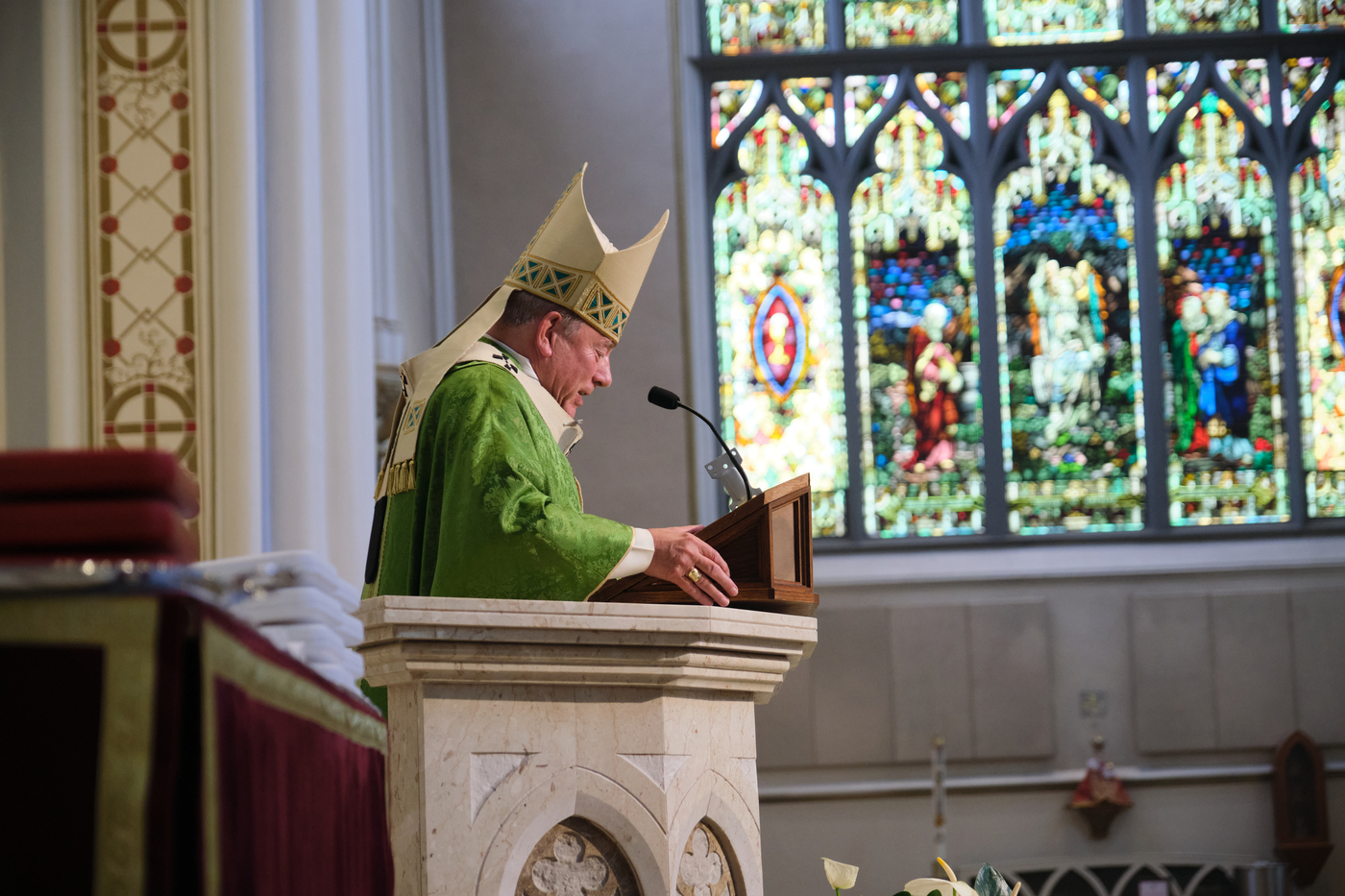
During his homily, the Archbishop expressed profound gratitude to the recipients for their dedication and hard work. He preached on the gospel story of Christ healing a deaf man. After the man is brought to him, Jesus pulls him away from the crowd.
“This miracle wasn’t to be a public spectacle in which Jesus looked for admiration or a ‘wow factor,’” said the Archbishop.
“Here the Lord is teaching us that the good we do – and this is very true in those who are receiving Papal Honours today – is to be done without clamour, without ostentation, without ‘blowing one’s trumpet,’” he said.
Still, “Jesus doesn’t talk about hiding the light of faith under a bushel basket or remaining mute what we should speak out,” said the Archbishop. “‘What I say to you in the dark, tell in the daylight, what you hear in whispers, proclaim from the housetops.’”
“Let us, then, ask the good Lord to heal any lack of hearing or willingness to speak the truth.”

Mass was followed by the blessing of the medals by the Archbishop, after which he presented them while a brief description of each recipient’s contributions was read from the pulpit by Sister John Frances LaFever, FSE.
Benemerenti Medal Recipients
Gwendoline Allison
Gwendoline Allison has a heart for victims of human trafficking and, as a Catholic lawyer and principal of her own law firm, has engaged the issue consistently, including as a member of the Archdiocesan Anti-Human Trafficking Committee since 2015. With other lay and religious collaborators, Gwendoline continues to contribute to articles and workshops to raise awareness of the scourge of human trafficking and prostitution. She has also contributed her expertise and experience to the Archdiocesan Review Board since 2020.
Work still needed to build reconciling trust
The journey toward reconciliation between Canadian churches and Indigenous people continues. Not surprisingly, the report of the Truth and Reconciliation Commission in 2015 did not end that journey.
Indian residential schools operated for more than a century, and the lasting damage they created is enormous. The reconciliation we seek must be based on truth but also on trust. Trust develops slowly. Indeed, the revelations through the TRC process predictably enflamed the hurt and animosity which survivors and relatives of residential school students experience.
Two years ago, an aging Pope Francis came to Canada and apologized in detail for the harm done to those who attended the schools and to Indigenous cultures. His presence and words fulfilled one of the 94 calls to action in the TRC report.
A year earlier, research at the site of the former Kamloops Indian Residential School, one of the largest schools, found about 200 anomalies in the ground, which might be unmarked graves of former students. In the minds of many, “might be” quickly became “are.” Although no bodies have been found, it was quickly assumed that there were in fact 200 unmarked graves of former students. It was a plausible assumption but is still not a proven fact.
On June 21, National Indigenous Peoples Day, the Tk’emlúps Te Secwépemc Nation, the Vancouver Archdiocese and the Kamloops Diocese released the text of a covenant among the three groups. The covenant includes a cautious agreed-upon statement of facts about Catholic teaching regarding Indigenous people, the situation at residential schools in general and the “anomalies” at the Kamloops school.
The statement of facts does not chart new territory. But that is the point. Stating only what is known is crucial to building a foundation for reconciliation. Even what is known is damning to the Church and the federal government. Once again for example, there is the admission that Catholics perpetrated cultural, emotional, physical and sexual abuse at the school. The system itself separated children from their families.
Cautious as it is, the statement of facts offers solid ground for reasoned discussion and concrete action. Those who sincerely want reconciliation should read the document on the website of Canadian Catholic News.
Bishops across Canada have wisely chosen not to respond to the array of allegations made about possible gravesites at residential schools at least until the facts are known. As well, they have refrained from making unsubstantiated comments about the large number of church burnings in recent years. Comments which may turn out to be false can only increase polarization.
The Church has a wealth of experience with forgiveness and the renewal of damaged relationships. However, it is only in recent decades that it has found the courage to admit that its sons and daughters acting in the name of the Church have inflicted grave wounds on the human family.
Young adults kick up their heels at Night Under the Stars
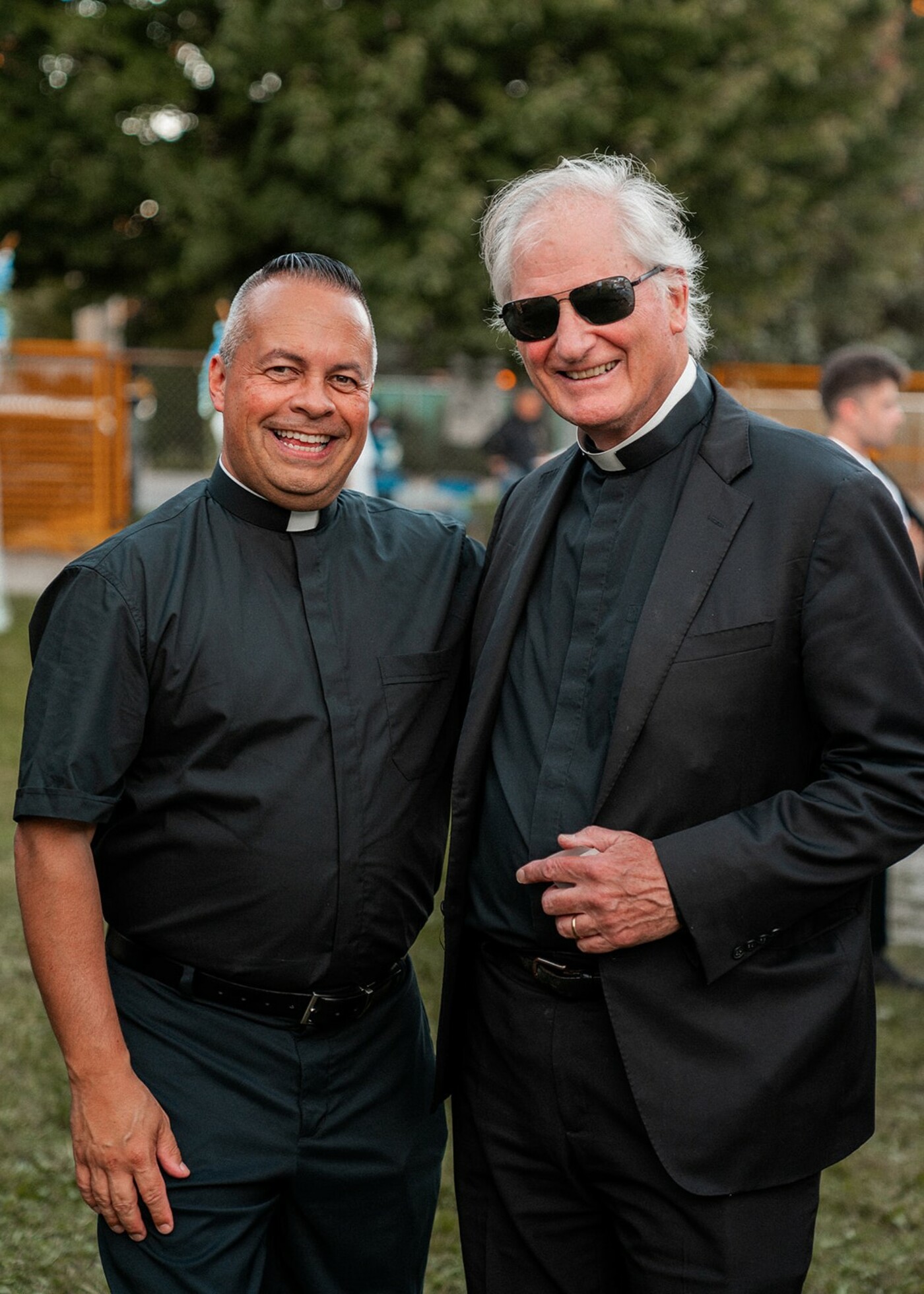
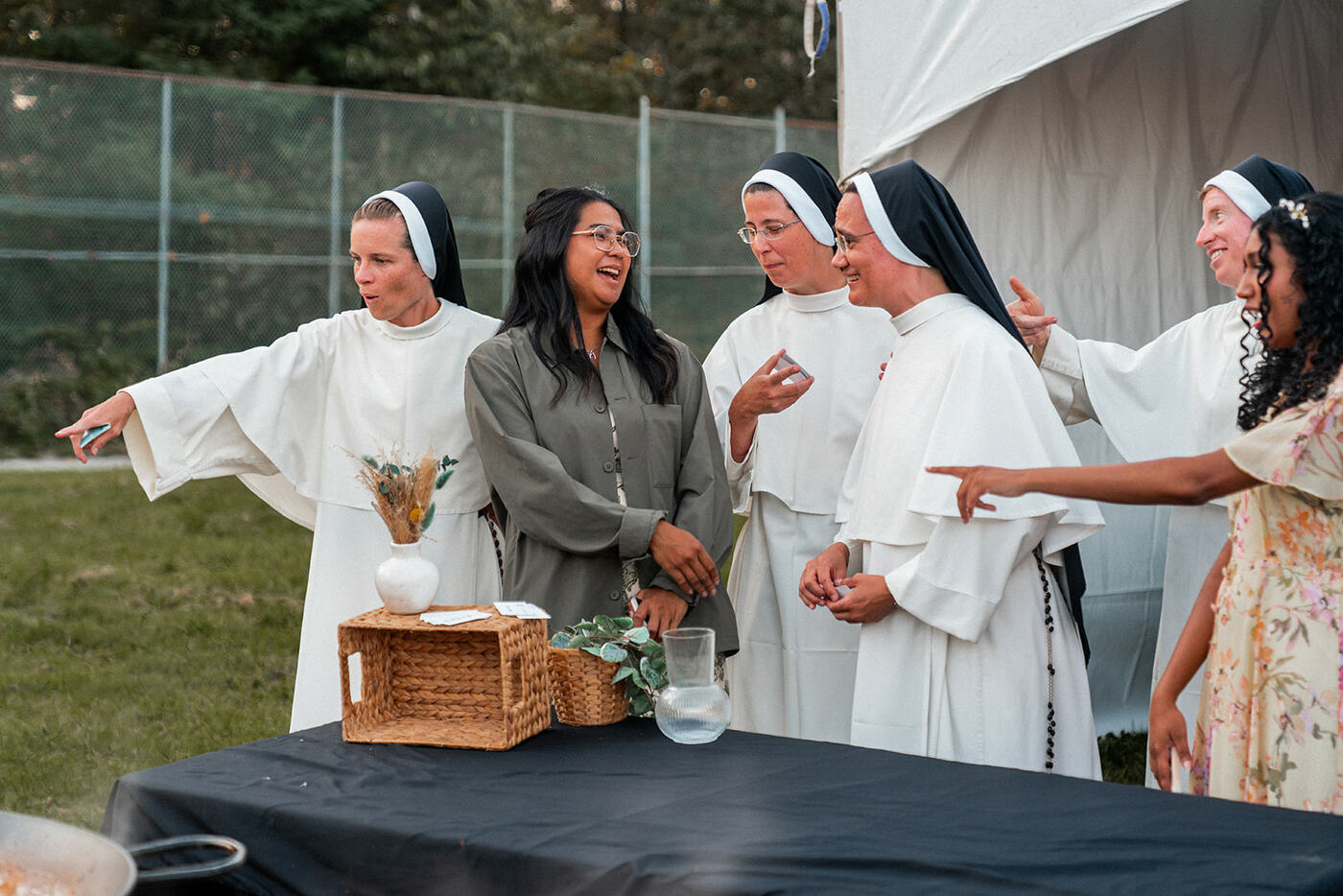
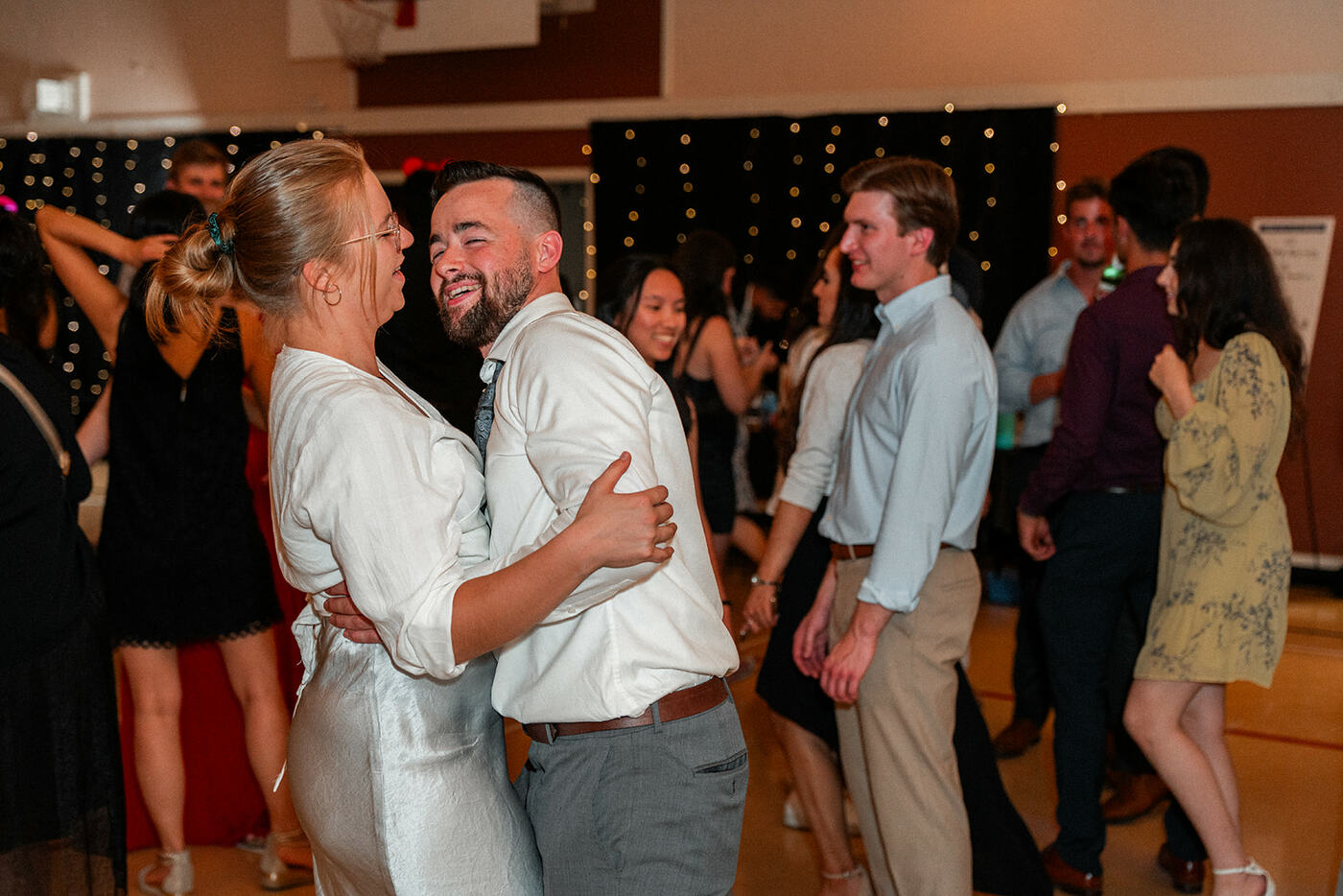
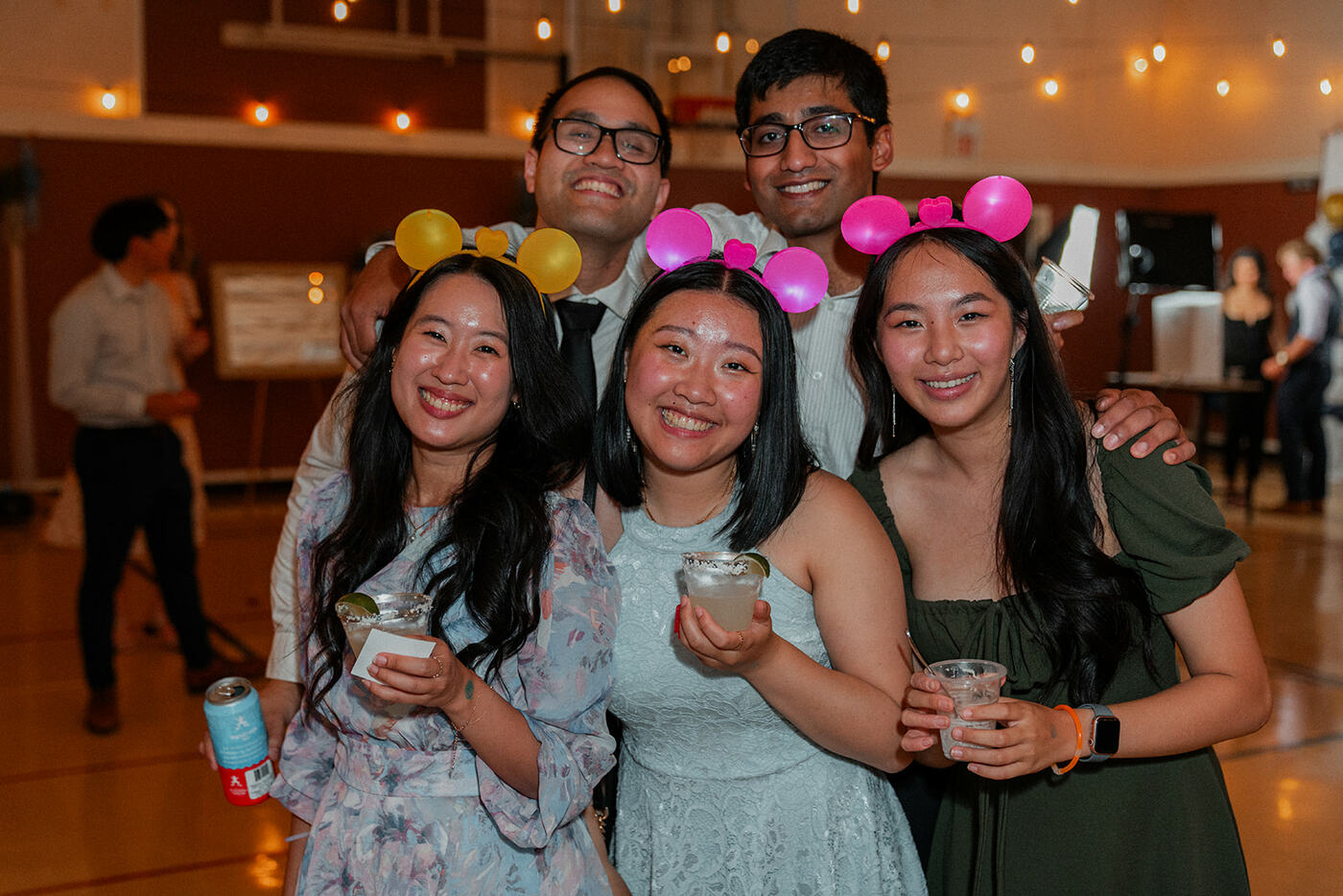
More than 200 Catholic young adults lit up the dance floor at Our Lady of the Assumption Church in Port Coquitlam for a dinner and dance. The event was organized by Assumption Young Adults.
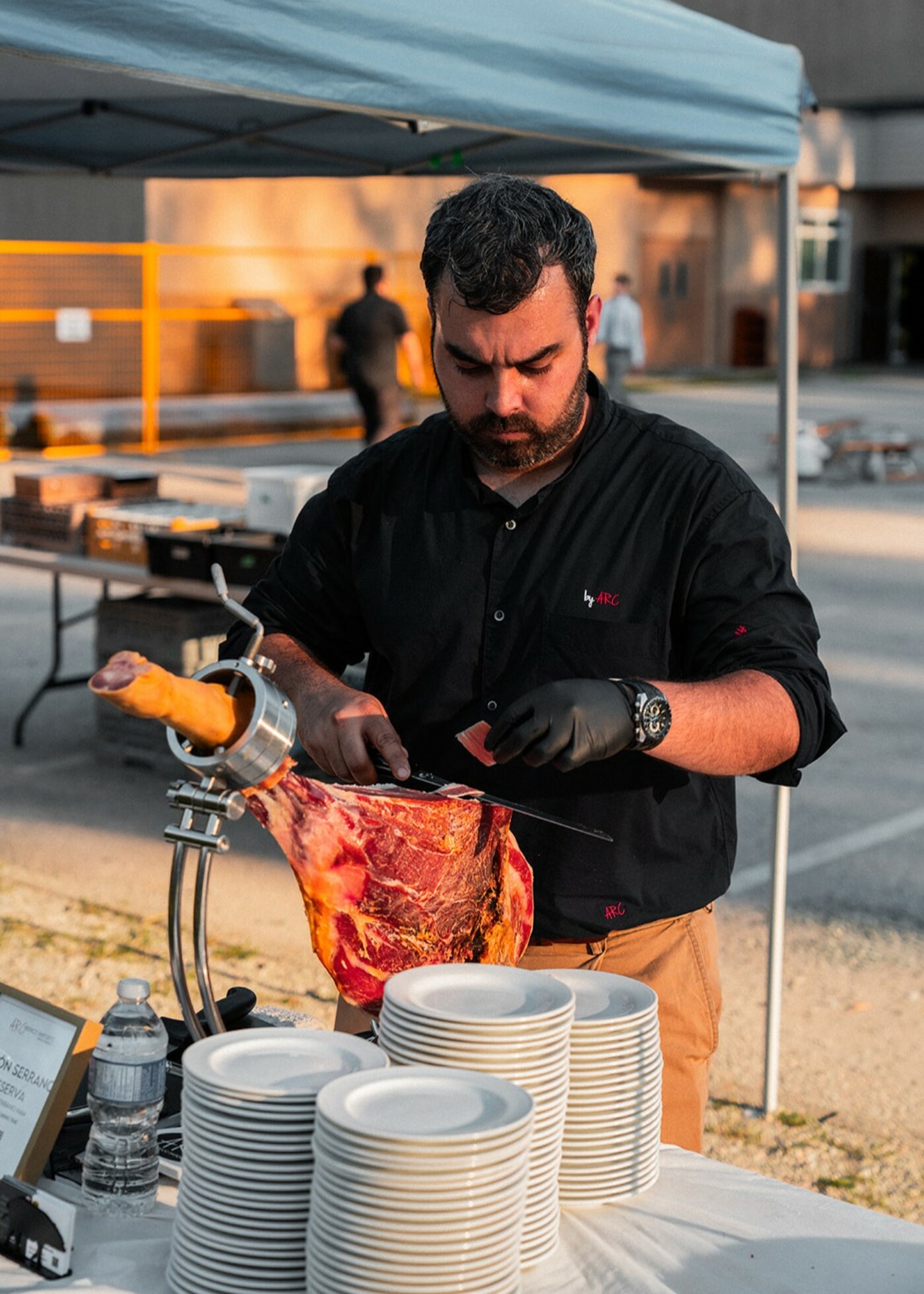
Titled Night Under the Stars, it featured an evening of dancing and culinary delight, featuring a main course brought to you by The Paella Guys, jamón by Jamoneria by Arc, and ice cream.
The Weather was perfect, and attendees enjoyed the evening with sparkers and a bon fire.






Your voice matters! Join the conversation by submitting a Letter to the Editor here.
‘Thank God for Catholic media’
There was a popular book in the 1980s titled All I Really Need to Know I Learned in Kindergarten. In it, author Robert Fulghum shared wisdom for the ages that he learned as a child, such as, “When you go out into the world, watch out for traffic, hold hands, and stick together.” And, pre-Jordan Peterson: “CLEAN UP YOUR OWN MESS!”
The book was an international best-seller for two years and was translated into dozens of languages. Its popularity likely had an influence on today’s society, where many still seemingly believe that all they really need to know they learned in (fill in the blank).
Whether it’s religion, politics, current events, or the mysteries of life, a quick visit to Twitter will confirm that many people are still relying on information they learned way back when.
I remember once talking with a friend about Catholic matters and saying that while I could accept the idea of women priests, I didn’t believe in married priests. “You’ve got it backwards,” he said. While there have been married priests in the past and could be in the future, female priests are a non-starter. His explanation opened the door to my relearning my Catholic faith.
Whatever you know, or think you know, about a topic depends on when you received that knowledge. If you rely on mainstream news organizations, you’re in a shrinking group. In a recent Abacus Data poll, nearly half of Canadians agreed with the statement that “much of the information they receive from news organizations is false.” A study by the Reuters Institute for the Study of Journalism at Oxford found that only 42 per cent of Canadians trust “most news, most of the time.”
Canadians who base their views on anything from news to faith and morals on what traditional journalism supplies are getting a filtered version of the truth.
In an article in a Catholic newspaper in Australia, Monica Doumit noted that the country is heading down the same road of euthanasia that Canada has been on for nearly a decade. In an article titled “Thank God for Catholic media, or we’d never know the truth on euthanasia,” Doumit wrote in The Catholic Weekly, “With wall-to-wall euthanasia on the verge of being implemented across the country, you’d think that journalists would be looking to hold Australia’s governments to account.”
Yet in recent weeks, it’s become clear that those publications that openly question the “mercy” of state-sponsored killing are “like candles flickering in the gloom,” she wrote.
Doumit writes extensively about the situation in B.C., particularly highlighting the work of The B.C. Catholic in reporting what no one else will.
Father Larkin, who encouraged his flock’s cultural identity, dies at 86
Father Terrance Larkin, a diocesan priest for the Archdiocese of Vancouver and a missionary, passed away on Sept. 10 at the age of 86.
Father Larkin was remembered for the care and attention he gave to parishioners, to the point of trying to memorize all their names. Even later in life, as an assistant pastor at Holy Rosary Cathedral, it wasn’t unusual to hear him offer Communion to visitors by name when he recognized them from parishes he had served throughout his 58 years as a priest.
In 1969, Father Larkin volunteered to serve in a mission in Lima, Peru, run by the Archdiocese of Vancouver. He remained there until the mission’s objective, to allow local priests to take over the running of the parish, was completed in 1973.
Father Larkin paid special care to the cultural identity of his flock. When he was made pastor of St. Joseph’s in Vancouver in 1980, he encouraged the unique devotions of the growing Filipino community and even travelled to the Philippines to study Tagalog.
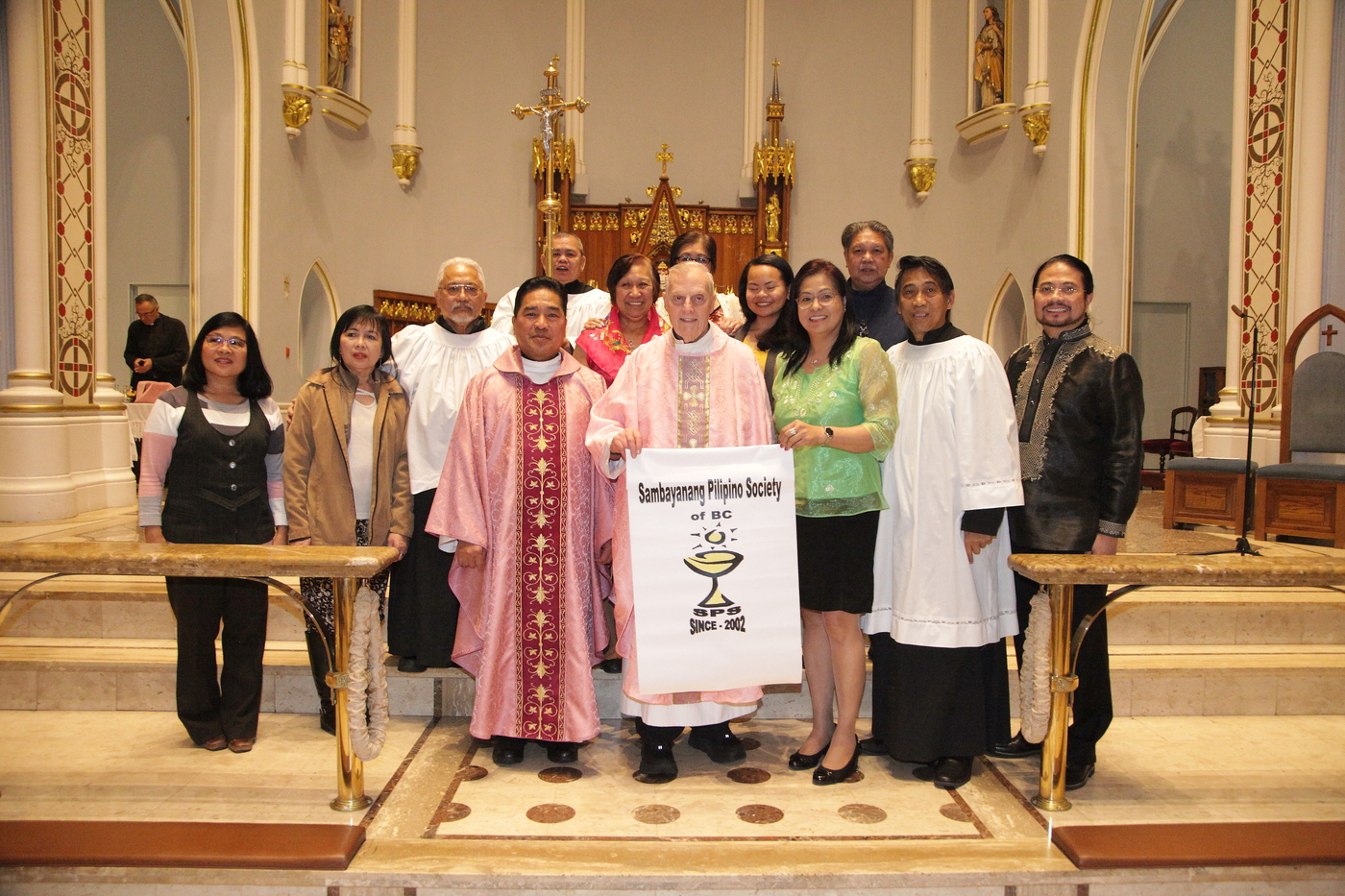
During that period, he also took charge of the Hispanic Mission at St. Joseph’s after it was moved there in 1984.
Throughout his priesthood, Father Larkin served as pastor of Holy Trinity in North Vancouver, Precious Blood in Surrey, and St. Joseph’s in Vancouver. He also served as assistant pastor at St. Francis de Sales in Burnaby, St. Joseph’s in Powell River, St. Anthony’s in West Vancouver, Star of the Sea in White Rock, and Holy Rosary Cathedral.
He spent his final days in Honoria Conway assisted-living facility near Holy Name of Jesus in Vancouver, where he would get to Mass with the help of a walker.
Holy Name pastor Msgr. Gregory Smith wrote an emotional farewell in the parish bulletin.
“The news of Father Terry Larkin’s death comes as a great sadness to our parish family, of which he was a treasured member. He was known for his ever-joyful spirit, participation at all our social events, and for singing weekly in the choir at 5pm, always ending the Gloria on a triumphant note!”
Father Larkin was a long-time reader and supporter of The B.C. Catholic, occasionally sending an appreciative email. His most recent said, “All Brave Heart personnel at BC Catholic are doing a super Brave Heart good job.”
He will be missed.
Your voice matters! Join the conversation by submitting a Letter to the Editor here.