
Building up resilience in fleeting moments
We only have one life on earth and one eternal one—hopefully in heaven.
If we always wait for the right conditions, things will never change. Will we ever be open to the possibilities that exist now? Will we experience the great joys amidst the challenges in daily life?
Time for us is calculated. It is measured out for us by God. He is the keeper of our days as we dance and breathe on this wild earth.
There are many moments that tell the story of our lives:
- Being held for the first time as a baby cuddled in the arms of our parents.
- Our first taste of fresh pasta.
- Wading into the ocean with bare feet in the sand and rocks.
- Traveling to a different country and meeting friendly locals.
- Driving for the first time.
- Accomplishing a goal on our bucket list, like publishing a book.
- A whispered prayer for help.
- Laughing with our spouse about an inside joke.
- Seeing our loved one’s beauty with new eyes.
Living with chronic mental illness, I have to constantly remind myself not to overthink and replay negative thoughts. I am so glad the Lord knows my final day. I wouldn’t want to know when it is coming, though I do want to be prepared for it.
My gratitude for the sacraments inspires me to attend to my spiritual needs. Confession is a routine check up that never disappoints me. God’s mercy flows into my heart and humbles me. Again and again I mess up. I feel like a stinking disaster. The Lord Jesus cleanses me of disordered desires, fixes my childhood wounds, and gives me the grace to start living in peace.
One battle we face in life is hanging on and letting go. May we live as Jesus calls us to and believe in love that conquers sin. Letting go of what we can’t change is a better posture to take.
I can’t change my diagnosis but I can change my prognosis—the likely course of how I live with a medical condition. A healthy interior life and positive mindset are a recipe for resilience. St. Joan of Arc said, “one life is all we have and we live it as we believe in living it. But to sacrifice what you are and to live without belief, that is a fate more terrible than dying.”
Every day I wake up and roll out of bed is a blessing. I believe in God’s timing. His plans are bigger and better than what I could try to design.
As I water the roses and lavender in our garden in the early morning or late evening, I praise the Lord for my beautiful life.
U.S. bishops, Holy See offer prayers following attempt on Donald Trump’s life
In a statement issued in the wake of Saturday’s attack on former U.S. President Donald Trump, the president of the United States Conference of Catholic Bishops, Archbishop Timothy Broglio, said, “Together with my brother bishops, we condemn political violence, and we offer our prayers for President Trump, and those who were killed or injured. We also pray for our country and for an end to political violence, which is never a solution to political disagreements.”
Archbishop Broglio invited “all people of goodwill to join us in praying for peace in our country,” and invoked the prayers of Mary, Mother of God and Patroness of the Americas.
The Bishop of Pittsburgh, David Zubik, whose diocese includes the town of Butler, where the attack took place, expressed deep shock at the news of the shooting, which occurred “right across the street from one of our churches.”
He invited prayers “for the health and safety of all, for healing and peace, and for an end to this climate of violence in our world.”
In a statement issued late Sunday morning, the Holy See expressed its “concern about last night’s episode of violence, which wounds people and democracy, causing suffering and death.”
The statement went on to say that the Holy See is “united in the prayer of the US bishops for America, for the victims, and for peace in the country, that the motives of the violent may never prevail.”
U.S. presidential candidate Donald Trump raised his fist in defiance as blood poured down his face after the assassination attempt at an election rally in Butler, Pennsylvania.
“I knew immediately that something was wrong in that I heard a whizzing sound, shots, and immediately felt the bullet ripping through the skin. Much bleeding took place,” the former president later wrote on his social media site.
The presumed attacker was immediately shot and killed by Secret Service agents.
One spectator was killed in the attack, and two others were wounded. Trump was rushed to a local hospital with a bullet wound to his right ear and was later flown to New Jersey.
The attempted assassination was met with universal condemnation. President Joe Biden, Trump’s opponent in the upcoming election, spoke with his rival after the attack, and later wrote on social media site X, “I’m grateful to hear that [Trump is] safe and doing well. I’m praying for him and his family and for all those who were at the rally, as we await further information.”
He added, “There’s no place for this kind of violence in America. We must unite as one nation to condemn it.”
Prayers also came from Canadian politicians, including Conservative Leader Pierre Poilievre.
Young adults defying secularism trend in Canadian Church
Reports of dwindling religious practice among Catholics in Canada may be more prevalent each year, but a different trend showing increased interest from young adults is giving hope for a possible resurgence of the Church in the near future.
A 2022 research report from Cardus titled The Shifting Landscape of Faith in Canada revealed religious indicators among those who identify as Roman Catholic have overall declined since 2017. Those indicators included believing in God, reading Scripture regularly, having an experience of God in one’s life, praying regularly, and attending religious services (apart from weddings and funerals) regularly.
However, the report found an exception in younger Canadian Catholics.
“We are seeing what seems to be a bit of a revival within the Church and that goes against the old secularism thesis that as a society becomes more secularized, it becomes less religious,” said Father Deacon Andrew Bennett, director of the Faith Communities Program at Cardus.
“We live in probably one of the most secularist countries in the world and we see that a lot of young men and women are far from leaving the Church; they are actually entering into it instead.”
Father Deacon Bennett is adamant that the more Canada swells its secular society, the more Catholicism becomes an attractive option for young adults (roughly aged 18–34) as a form of rejection rather than an escape.
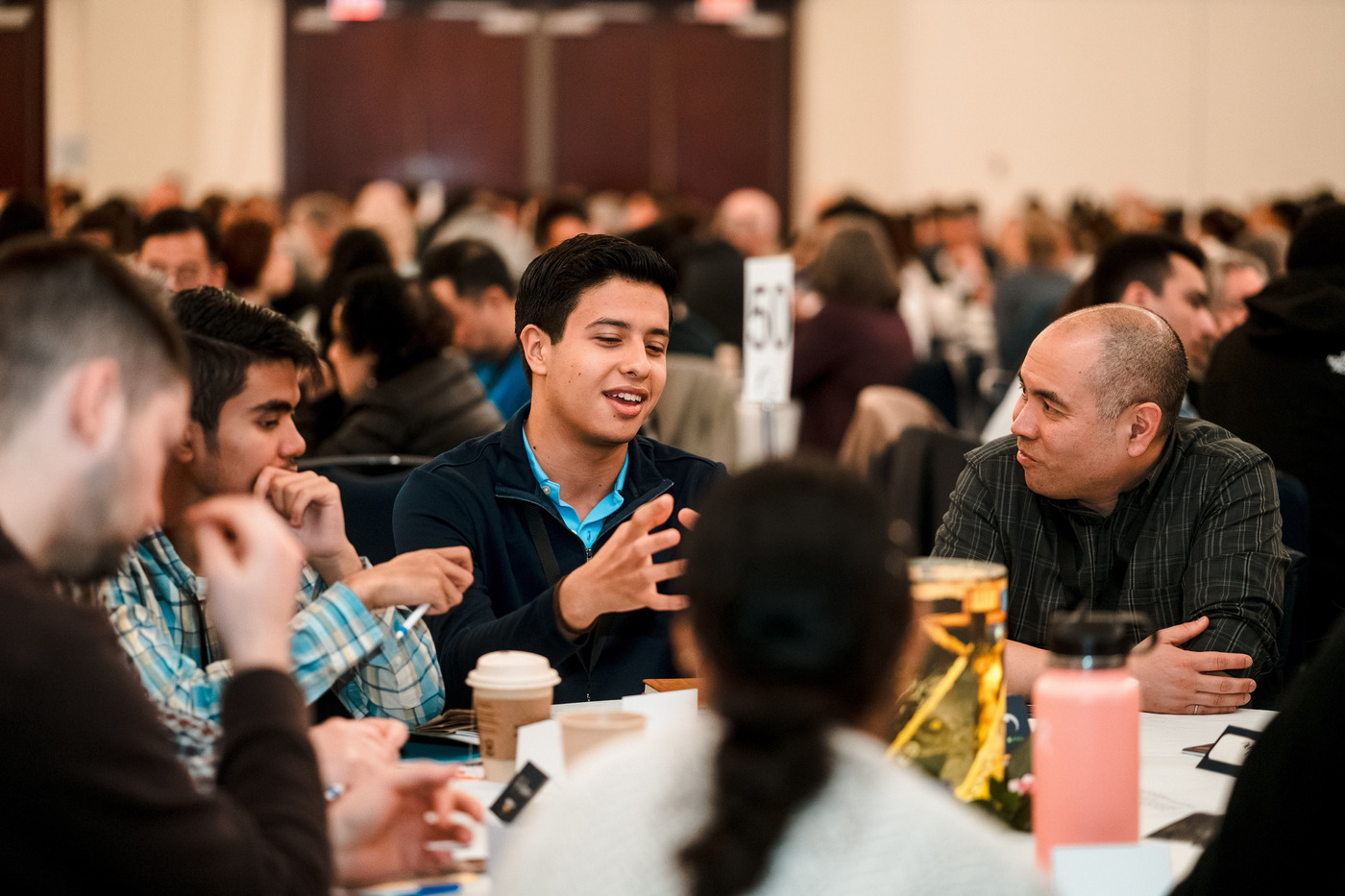
“Increasingly we have seen a number of young people, whether it is in high schools, universities, or workplaces, not buying into society’s highly subjective idea of truth. They are seeking integrity, authenticity, and something with real staying power,” he continued.
“This sees them come to or return back to the Church they were raised in where they see that the Catholic faith holds an objective and universal truth, one that is not a philosophy that changes with the wind, but rather the person of Jesus Christ.”
The Cardus report showed Canadians identifying as Roman Catholic under 40 years of age were nearly twice as likely as older Roman Catholics to attend religious services at least once a month. Additionally, 81 per cent of young Roman Catholics showed a belief in life after death, with 91 per cent of females under 35 having this belief, compared to 60 per cent of their senior counterparts.
While analyzing specific demographics can be tricky (and in Archdiocese of Vancouver these records are the responsibility of individual parishes), the report highlights that certain belief indicators can give realistic insight into who identifies as Catholic.
Sin constantly threatens the unity of the flock
16th Sunday in Ordinary Time, Year B
First Reading: Jer 23:1-6
Second Reading: Eph 2:13-18
Gospel Reading: Mk 6:30-34
The apostles “had no leisure even to eat,” says the Gospel Reading. When they tried to “rest awhile,” the people followed them.
I retired as a pastor in 2015, when I was 73. Since then, I have continued teaching, hearing confessions, saying Mass, and “filling in” for other pastors. Now that I am almost 82, I can testify that being a pastor (Latin for “shepherd”) is not easy!
Perhaps the most grievous difficulty (in the original sense of “causing grief”) is the shattering of the peace St. Paul speaks of in the Second Reading.
The Bible describes loving shepherds who search for lost sheep and lead them to fresh green pastures. However, it also describes foolish sheep who have gone off on their own or followed shepherds who left them prey to wolves. The first is a comforting image of Christ the good shepherd. The second is a humiliating image of ourselves.
Sheep are stupid, as I remember from my childhood. They go after green grass under a thorny hedge and entangle their fleece; freed, they go straight back. Without a shepherd, they scatter, following anyone (including another sheep) who seems to be a leader, even into danger. They have no conception of their own welfare.
Archbishop James Carney (the Vancouver archdiocese’s archbishop from 1964-1990), must have known what sheep are like when he chose his episcopal motto: Servare unitatem (“To preserve the unity”).
Bishop Gary Franken of St. Paul Alberta, who, as a young priest, looked after Archbishop Carney in his last days, said that as the archbishop approached his death Sept. 16, people started wondering which day God would choose: perhaps September 14, the Exaltation of the Cross, or September 15, Our Lady of Sorrows. The actual day—Sts. Cornelius and Cyprian—was perhaps the most appropriate, Bishop Franken said, for both these men suffered martyrdom in defence of the Church’s unity.
“Sin and the burden of its consequences constantly threaten the gift of unity,” says the Catechism of the Catholic Church. From the very beginning, St. Paul had to exhort Christians to “make every effort to preserve the unity that has the [Holy] Spirit as its origin and peace as its binding force.”
The Pope, the successor of St. Peter, is “the first servant of unity,” said Pope St. John Paul II.
“If a man does not hold fast to this oneness of Peter, does he imagine that he still holds the faith?” St. Cyprian asked. “If he deserts the Chair of Peter upon whom the Church was built, has he confidence that he is in the Church?”
Letters: MAiD and compassion
As expected, our June 10 MAiD edition generated reader response, including from readers who didn’t like the content. We want to hear all perspectives, even those we disagree with, so a selection is printed here. Because their views are so contrary to Catholic belief in the sanctity of life, our response is provided. The writers’ names have been removed.

It was all I could do to tolerate the total co-opting of the June 10 issue of the paper with MAiD articles in order to reach the crossword puzzle! In the past the paper has provided space for differing views on a topic. This was not the case in this issue.
Every article displayed blatant expressions of selfish imposition of the personal views of the writers, superseding anything felt by the people suffering from whatever unfortunate events in their lives led them to pursue MAiD. Everyone working in health care in any capacity knows very well that the boundaries between maintaining a patient’s comfort in their declining time, and “killing” such patients, as was repeatedly referred to in the articles, is blurry at best.
Having had a family member journey through a vicious fight with cancer, ultimately losing the battle, and subsequently choosing MAiD with its accompanying stringent criteria, I would not ever argue against such a decision!
I look forward to content in this paper demonstrating a more patient-centred approach to end-of-life issues!
•
To characterize ending someone’s life due to chronic and hopeless outlook as a killing tells me you are engaging in religious dogma. Jesus was said to be compassionate.
People end up with chronic conditions and for longer periods. They may not be able to look after themselves, they may be bedridden, depending entirely on others. Palliative care can go only so far.
Government help in assisted dying or dying with dignity has strict rules. You will not get help if you are simply tired of living. You need to make a decision for it yourself while of sound mind.
You had a letter which characterized the procedure as an execution. That shows complete ignorance of the rules and indeed an agenda.
•
The readers are encouraged to read Terry O’Neill’s report on Pages 2 and 3 to see how the Catholic response to suffering is the truly compassionate one. As pro-life advocate Stephanie Gray Connors says, “When someone feels useless, we need to help them find their value.” Those who want MAiD list the inability to engage in meaningful activities (86.3 per cent) as main suffering they want to avoid. The Catholic response is to not abandon people in their suffering, whether it’s physical, emotional, or spiritual.
Love and logic are the Catholic response to MAiD, international pro-life apologist says
“The pro-life response to assisted suicide is not only the right response,” says pro-life apologist Stephanie Gray Connors. “It’s the beautiful and inspiring one.”
Catholics needn’t be demoralized by the onslaught of Canada’s “extreme” euthanasia regime, because logical argument and compassionate action offer effective ways to counter the culture of death, Gray Connors told about 200 people at Our Lady of Assumption Church in Port Coquitlam.
Gray Connors lives in Florida with her husband and two young children, but is from Chilliwack and attended St. John Brebeuf Regional Secondary. She has been a leading pro-life speaker, debater, and author for a quarter of a century and is back in the Vancouver area for the summer.
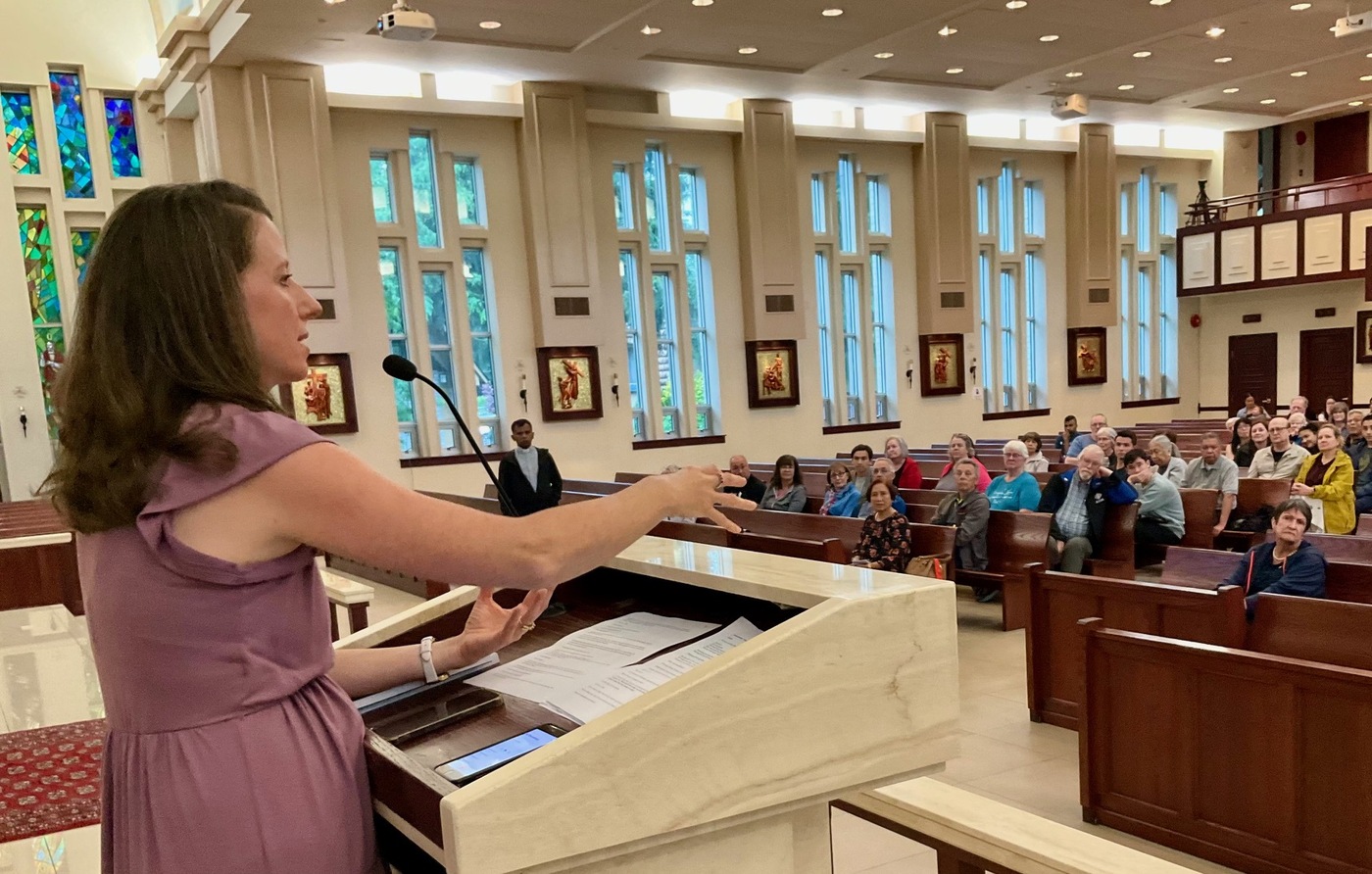
Gray Connors said a fundamental response to any pro-euthanasia argument should respond to the despair and fear that often underlie a death wish, reflecting a patient’s feeling that their suffering has no meaning.
As philosopher Viktor Frankl wrote, “Everything can be taken from a man but one thing: the last of the human freedoms – to choose one’s attitude in any given set of circumstances, to choose one’s own way,” Gray Connors said in an interview.
Her speech recounted stories of people who have gone through great suffering but found profound meaning in their situations. “Following the insight of Frankl has given me hope, and I wanted to share those stories to give others hope as well,” she said.
That hope starts with a foundation of prayer on which Catholics can build a structure of compassionate yet logical responses and actions, she told the audience.
She offered a hypothetical example. If the law permits assisted suicide, why do we withhold such assistance when someone threatens to jump off a bridge?
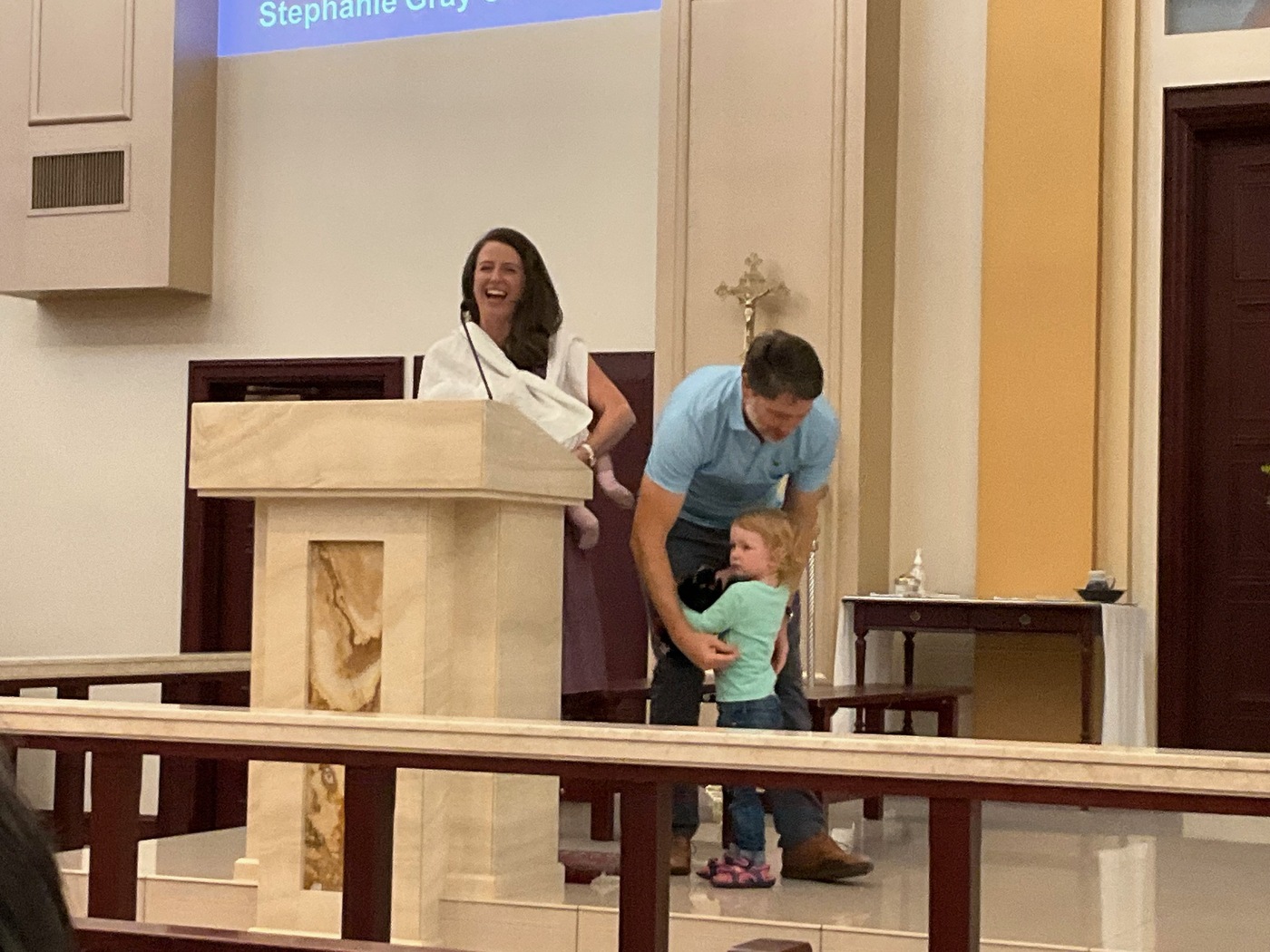
“Either everyone gets suicide assistance, or no one does,” she said.
Individuals seeking euthanasia often cite their fear of pain, but most pain can be alleviated through treatment, Gray Connors said. “Shouldn’t we alleviate the pain rather than eliminate the person who is experiencing it?”
Someone who is hoping for death because of mental anguish can be offered responses that focus on repairing the broken relationships that are often at the root of their despair, she said.
Likewise, a response to euthanasia-seeking patients who say they don’t want to be a burden on others should be an offer “to lighten their burdens,” not to eliminate the individual who feels saddled with burdens.
Johnny Cash and D-Day: nostalgia on stage and screen this summer
As we travel life’s journey, most of us gather warm memories of entertainment icons. For those of us of a certain age (and older!) there is now a welcome opportunity to revisit and delight in memories, by way of both stage and screen, of some such icons.
While I have never been an avid fan of country music, I readily admit that I often find it has a simple and direct appeal. Its love songs, often tinged with sadness or regret, its comments on the simple and sometimes difficult moments of daily life, and its straightforward embrace of the basic tenets of Christianity all speak directly and tunefully of the familiar experience of ordinary people like ourselves. This is certainly true of the music of Johnny Cash.
Now the Arts Club on Granville Island is providing a delightful chance to visit and revisit a number of Cash’s songs in a thoroughly engaging production. While not in any way a straightforward biography of the singer-songwriter, Ring of Fire, through the songs, both familiar and unfamiliar, traces the general trajectory of his life, from his poverty-marked childhood on a cotton farm, through his meteoric rise to stardom as a country singer, and on to his checkered adult life. The songs bear testimony both to the man and his talent.
Director Rachel Peake and choreographer Nicol Spinola help the talented cast of six actor-musicians bring to memorable life the lively toe-tapping, tuneful melodies as they exhibit an impressive ability to sing well, play a range of instruments, and deliver the entire show with infectious and engaging good humour.
For Cash’s numerous fans, and for those who are not, this is a perfect show for a summer entertainment. It is an engaging, infectiously spirited production and one not to be missed.
In an entirely different vein, the film The Great Escaper (available in theatres and on a wide range of streaming services) is one which will doubtless appeal to filmgoers of all ages, but which will have a particular resonance with more senior viewers.
Based on a true story, it tells of Bernard Jordan, an almost 90-year-old veteran, who, determined to attend the 70th anniversary celebrations of D-Day in Normandy, managed to “escape” from his nursing home, get across the channel, and pay homage to his former World War II colleagues. By the time he returned to his nursing home in the U.K., he had become a media sensation.
Script-writer William Avery has fleshed out this story by including a number of imagined episodes, so that the film becomes a meditation on the waste of war and the brutality of D-Day (especially as it was experienced by forces on both sides of the conflict); a beautiful asseveration of the need always to live life to the fullest, no matter what age one is; a tender tribute to devoted marital love; a timely reminder of the multitude of people in our daily lives, regardless of nationality, race, or sex, who are caring, thoughtful, and supportive; and above all an inspiring tribute to the human spirit of those who truly know how to live, no matter how old they are.
Evaluating the Effects of Social On My Own Soul
We become like the things we spend the most time with.
At the beginning of this year, I made a goal for myself to stop reading journalism with shallow or narrow perspectives. I didn’t like the way it was forming me to think and I wanted to be more proactive about the things I let into my mind. I canceled my news subscription and signed up for a print magazine. I don’t agree with everything this magazine publishes but I like the way it makes me think.
I’ve had a habit for a little while now of checking their top stories each day and reading them. Over time, I’ve noticed that the more I read their articles, the more I start to embrace their way of thinking. Their view of the world, culture, and social issues has impacted how I consider and evaluate issues in my own life and I appreciate the way it’s deepened my ability to think critically.
We become like the things we spend the most time with.
This reality was something that the Hebrew educational system in Jesus’ time seemed to take very seriously. An ancient Hebrew proverb says something to the effect of “may you be covered in the dust of your Rabbi.” The image here evokes someone who follows so closely behind their teacher that the dust from his feet is kicked up onto them and covers them. This was the educational system Jesus chose to invite His followers into, one where the dust from His feet would cover them as they followed Him ever more closely.
This image of discipleship has been top of mind for me over the last few years as I’ve considered the things that I allow to shape and form me. I’ve been led to ask myself the difficult question: “is there anything or anyone I allow to ‘disciple me’ more than Jesus does?” If I’m honest, there is one thing that competes most successfully for my attention.
The global daily average for time spent on screens is 6 hours, 58 minutes. Statistics such as this one are often presented in an alarming way. I don’t believe this is always warranted – it’s a fact of life that in our digital age, we will spend much time working, communicating, and recreating through digital devices. At the same time, I fear that many Christians who hope to seriously follow Jesus, have not given enough thought to how these digital devices are forming and shaping them. In other words, do I ever consider what kind of person my technology is making me into?
Here are some of the questions I have used over the last few years to evaluate the impact technology is having on my life, as well as a practice recommended by my spiritual director that has been instrumental in helping me make room for Jesus to be the one who forms me first.
For Grandparents
We are told to honor our mother and father…but what about our grandparents? Well they get a special shout-out today, in the readings, and in our lives. Preached on a mission at St. John the Baptist Church in Oklahoma City, Oklahoma on March 11, 2015.
© 2024 Busted Halo®, All rights reserved.
5 Ways to Embrace Your Vocation as a Grandparent
I stepped through the door of the newborn intensive care unit (NICU) trembling. When I found my daughter’s son, Allen Joseph, I froze. It was the first time I had ever seen him. I’d never expected a moment like this, his premature, tiny body swaddled in a blanket and connected to machines all around him. As I placed my finger on his cheek, tears streamed down my face. Welcome to the world, Allen Joseph.
That’s when it happened. My heart stretched and grew a whole new chamber. From the very first moment I saw him, I loved every single ounce of my first grandson. And I knew I would never be the same.
Today we have four grandsons, and we have dreams for each one: Allen, Sam, Matthew, and Michael. Our deepest desire is that they each will lead great lives. We want them to be happy. We pray each will find life in Jesus and his Church.
God has great dreams for each child. And he calls grandparents to help our grandchildren achieve them. God has given us this new vocation, the life of a grandparent.
Here are five simple ways to play a significant role in shaping your grandchild’s life and faith:
1. Love lavishly
Children value and follow those they trust and love. If you want to help shape your grandchild’s life, they will have to trust you first. To trust you, they will first need to experience your love.
This love is experienced most of all in time spent being fully present with your grandchild. Hug your grandson. Tell your granddaughter you love her every time you talk to or see her. Let your home be a place of refuge and security. Send cards or gifts. Make video calls. Text messages of love. Visit as often as you can. Play together. Listen attentively to everything they say.
Your undivided attention shows children that they matter and are loved, and secure love lays the foundation for faith.
2. Pray passionately
Just imagine what your family would look like if you made it your one goal to pray each day for their faith and their lives. Every family needs a prayer champion. Imagine the confidence your grandson or granddaughter will feel throughout their life by simply knowing that their grandparent prays for them each day by name.
3. Dream deeply
Dreams are powerful, and each of us has them. Kids dream naturally. In those dreams, they find their purpose for life and their passions for living.
How do you help your grandchild to dream? Ask questions. Ask them about what they want to be, what they hope for, or what makes them excited.